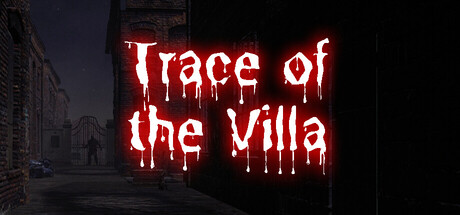
Trace of the Villa — Rooms as Puzzle Spaces and Story Containers
Trace of the Villa casts players into Jin’s search for a missing sister, starting at a remote, decaying mansion where manifests and hints suggest she may still be alive. Released on 28 May, 2026 by Steadyturtle Co., Ltd., the game uses the mansion’s rooms as tightly written puzzle arenas that slowly disclose a larger, disturbing operation.



Quick Facts
| Title | Trace of the Villa |
|---|---|
| Developer | Steadyturtle Co., Ltd. |
| Publisher | Steadyturtle Co., Ltd. |
| Release date | 28 May, 2026 |
| Genres | Action, Adventure, Indie |
| Steam categories | Single-player; Color Alternatives; Custom Volume Controls; Playable without Timed Input; Subtitle Options; Family Sharing |
| Steam page | View on Steam |
Who this is for
Players who prefer atmospheric mystery adventure and slow-burn suspense will find the game’s room-scale focus appealing. If you enjoy environmental storytelling, psychological investigation, and puzzle systems that reward careful note-taking and object logic rather than twitch reflexes, Trace of the Villa is aimed at that audience.
What the game is
Trace of the Villa follows Jin, a protagonist who has spent years searching for his missing sister. The short official Steam premise describes how Jin’s investigation leads to a remote mansion where recovered manifests and hints indicate the sister may still be alive. Inside, the house is furnished as if occupants vanished mid-routine; secured systems, safes, and encrypted documents become the mechanics through which the narrative is revealed.
When and where — the Steam context
Trace of the Villa launched on Steam on 28 May, 2026. It lists Steadyturtle Co., Ltd. as both developer and publisher and appears on the Steam store with single-player and accessibility categories such as subtitle options and custom volume controls.
Why the mansion setting matters
The mansion is more than background: it’s a tightly constrained playfield and a story container. Rooms that appear lived-in but empty let the game stage small, human puzzles — locked drawers, partial manifests, powered-down systems — that cumulatively outline a larger pattern. Because identities and records are stripped in the setting, every clue carries narrative weight: a ledger entry, a safe’s contents, or a powered terminal is simultaneously a mechanical obstacle and a piece of the plot.
How clue reading, object logic, and story puzzles shape the experience
Trace of the Villa appears to lean on three interlocking puzzle pillars:
- Clue reading — players catalog fragmented evidence (manifests, transfer records) and connect dots across rooms to form timelines.
- Object logic — tangible items and furniture act as logical tools: keys, safes, and powered systems require players to reason about cause and effect within a contained environment.
- Story puzzles — solutions reveal narrative fragments rather than just mechanical rewards, so each solved lock or decrypted file advances both progression and understanding of what the mansion was used for.
Combined, these systems encourage methodical exploration over speed. The game’s categories note “Playable without Timed Input,” which supports a contemplative approach to reading and piecing together evidence.
Rooms as puzzle spaces and story containers (the editorial angle)
Thinking of rooms as discrete chapters helps describe Trace of the Villa’s core design choice. Each room is a micro-narrative: lighting, placement of personal effects, and sealed storage all hint at a prior routine interrupted. As you restore power and open hidden compartments, the room shifts from stage set to document — puzzles force you to manipulate the space and, in doing so, rewrite its immediate story. That interplay of spatial puzzles and incremental revelations defines the game’s pacing and tone.
Player scenarios — who should wishlist it
- You enjoy slow-burn, story-rich adventure: Expect investigation that rewards patient note-taking and cross-referencing clues across rooms.
- You like environmental storytelling more than combat: The mansion’s artifacts and powered systems are the narrative drivers rather than set-piece battles.
- You prefer puzzles tied to narrative meaning: Solutions reveal fragments of a larger social/financial operation rather than isolated brainteasers.
- You need accessibility and comfort features: Steam categories list subtitles and options like custom volume and color alternatives, useful for players who value accessible UI and sensory controls.
Comparison (editorial discovery)
| Title | Genres | Atmosphere / Story Tone | Puzzle focus | Exploration style | Pacing / Player fit |
|---|---|---|---|---|---|
| Trace of the Villa | Action, Adventure, Indie | Mansion mystery; erased identities and procedural concealment | Clue reading, object logic, encrypted docs/safes | Room-by-room investigative exploration | Slow-burn, narrative-driven; for players who prefer careful inspection |
| The Room | Adventure, Indie | Mysterious, tactile cabinet-box puzzles | Mechanically intricate single-room puzzles (safe/lock mechanisms) | Focused, singular-location puzzle rooms | Short-session puzzle solving with tactile curiosity |
| The Room Two | Adventure, Indie | Cryptic, atmospheric exploration with layered mechanical puzzles | Sequential mechanical puzzles across linked spaces | Linear progression through interconnected puzzle spaces | Methodical puzzle players who like escalating complexity |
| Escape Simulator | Adventure, Casual, Indie, Simulation | Playful to tense escape-room variety; community-made rooms | Highly interactive object manipulation; physics and inventory | Room-focused, often cooperative; hands-on interaction | Casual to social players who enjoy tactile experimentation |
| Unpacking | Casual, Indie, Simulation | Zen, domestic, quietly narrative | Block-fitting and contextual object placement reveal life-stories | Domestic spaces that build a narrative through items | Players who like low-pressure, story-by-environment pacing |
YouTube discovery
For trailer and gameplay search results, use this YouTube discovery link (search results only): Search Trace of the Villa on YouTube. This link is a discovery path; any specific video shown there should be evaluated for source and authenticity by the viewer.
View Trace of the Villa on Steam
Referenced titles and trademarks belong to their respective owners. Comparisons are editorial discovery only and not claims of endorsement or official affiliation.
Leave a Reply