
Trace of the Villa — an inspection-heavy mansion mystery for players who think like locksmiths
Trace of the Villa (Steadyturtle Co., Ltd.) is an atmospheric mystery adventure built around clue chains, object logic, and environmental reading. Released on 28 May, 2026 for Steam, it casts you as Jin investigating a remote, decaying mansion where manifests, locked systems and erased identities point to a larger, concealed operation.

Quick facts
| Title | Trace of the Villa |
|---|---|
| Developer / Publisher | Steadyturtle Co., Ltd. |
| Release date | 28 May, 2026 |
| Genres | Action, Adventure, Indie |
| Key Steam categories | Single-player; Playable without Timed Input; Subtitle Options; Color Alternatives; Custom Volume Controls; Family Sharing |
| Steam page | Trace of the Villa on Steam |
Who should wishlist this
- Players who prefer slow-burn, inspection-heavy play — the Steam categories include “Playable without Timed Input,” which suggests puzzles reward patience and careful reading over reflexes.
- Fans of environmental storytelling and narrative puzzle design who enjoy piecing together timelines from discarded documents, manifests and secured systems.
- Solo players who like detective work rather than action set-pieces — the game is single-player and structured around investigation, not multiplayer interaction.
What the game is (and what the steam page emphasizes)
The official short description sets up Jin’s personal search for his missing sister and the discovery of manifests and hints at a remote, deliberately forgotten mansion. The longer official description highlights restored power revealing secured systems, hidden compartments, safes and fragments of encrypted documents — all language that places object logic and clue links at the narrative core rather than combat or timed challenges.
When and where
Trace of the Villa launched on Steam on 28 May, 2026. The store listing and visual assets on Steam (header image and multiple screenshots) are the primary public references for the game’s tone and scope; the Steam page also lists its developer and publisher as Steadyturtle Co., Ltd.
Why the mansion setting matters for puzzle design
Mansion mysteries are a natural fit for inspection-heavy puzzles because they create contained micro-environments: each room can host a self-contained clue chain that contributes to a larger timeline. Trace of the Villa’s official text points to falsified identities, transfer records and arrivals without records — narrative elements that reward chaining small discoveries (a manifest here, a safe fragment there) into a coherent hypothesis. That approach emphasizes object logic: items are meaningful, layouts imply routines, and the environment functions as both archive and lockbox.
How you’ll likely progress — reading the scene and chaining clues
Based on the Steam description and the categories attached to the title, expect progression to depend on three complementary practices:
- Close inspection: examining personal effects, manifests and system logs for discrete data points that map to other objects or locations in the house.
- Object logic: using found items, notes or restored systems to unlock new access — safes and hidden compartments are explicitly mentioned in the official copy, implying gear-and-key style puzzle interactions tied to narrative fragments.
- Clue chaining across environments: the mansion isn’t a set of isolated puzzles but appears designed so solutions and clues interlock — a recovered manifest might recontextualize a locked door, or an encrypted fragment may point to a room where a mechanical override can be activated when power is restored.
The Steam listing’s inclusion of “Playable without Timed Input” supports an experience where inspection and careful inference are core to forward momentum rather than split-second timing.
Images that show the tone

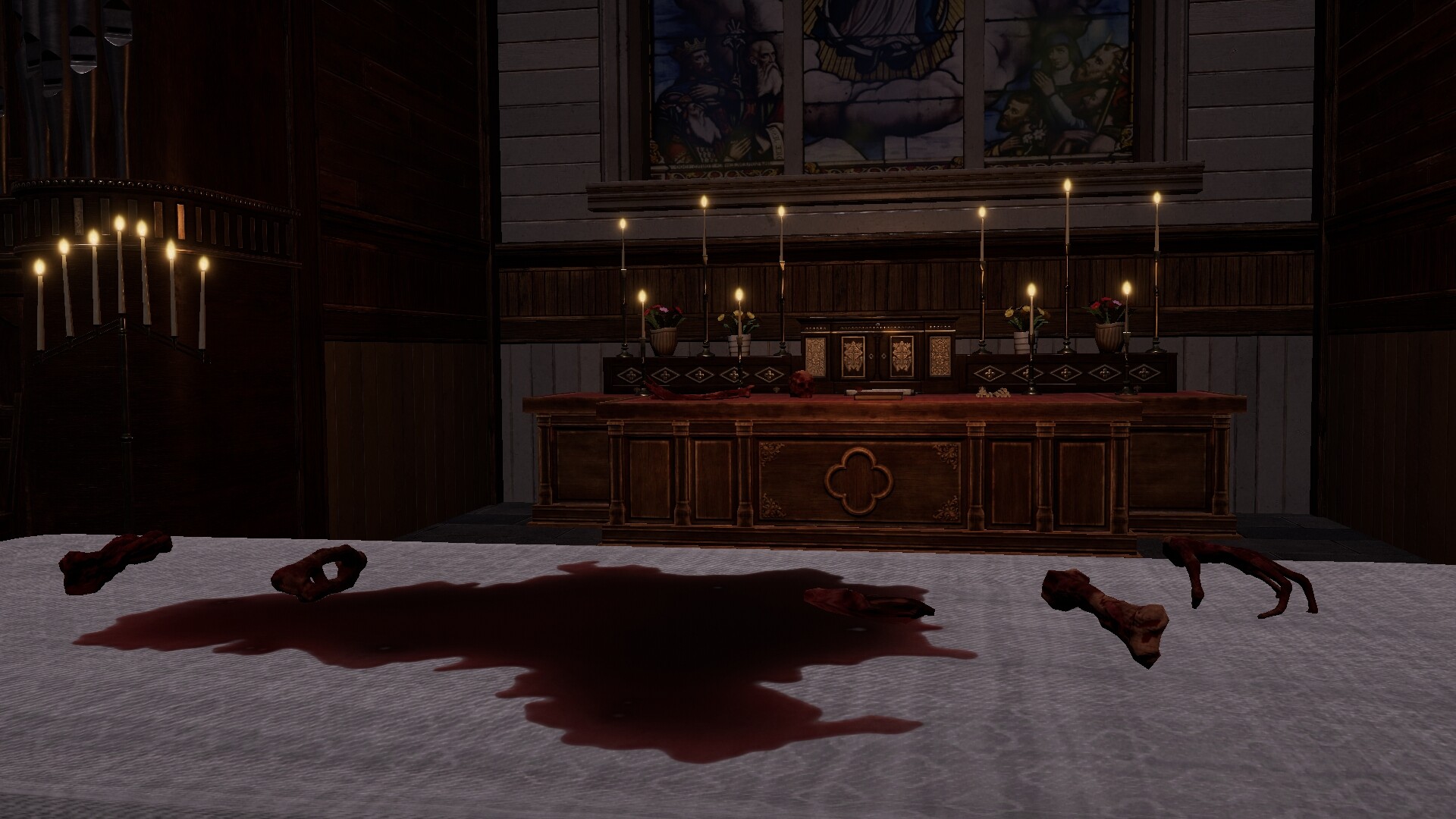
Player scenarios — who will get the most out of Trace of the Villa
- The methodical detective: You enjoy cataloguing documents, cross-referencing manifests and constructing theories from small evidence. Expect to spend time reading and re-reading items to unlock the next logical step.
- The environmental reader: You infer story from furniture placement, power routing and architectural clues. The game’s premise about a house “erased” rather than simply abandoned plays to players who accept the environment as a storyteller.
- The patient explorer: You prefer no-timed-input puzzle solving where careful observation, not luck, opens doors. Steam categories suggest that timed pressure is not a core mechanic.
- The narrative puzzle fan: You want puzzles that reveal plot as much as open gates — safes and encrypted fragments are narrative devices as much as mechanical obstacles here.
How it compares to nearby mystery/puzzle titles
Below is a compact editorial comparison focused on genre, atmosphere, puzzle focus, exploration style, story tone and pacing. These comparisons are descriptive, not claims of superiority.
| Title | Genre / Atmosphere | Puzzle focus | Exploration & Pacing |
|---|---|---|---|
| The Room | Adventure / Enigmatic, tactile | Intimate mechanical puzzles, box-and-lock inspection | Single-room focus with gradually revealed mechanics; deliberate pacing |
| The Room Two | Adventure / Cryptic, atmospheric | Layered physical puzzles with multi-step solutions | Expands The Room’s reach across linked spaces; slow-burn discovery |
| Escape Simulator | Adventure / Interactive, physics-driven | Highly interactive objects, physics, community-made rooms | Room-based, often playful and sandbox-like; variable pacing depending on room |
| Trace of the Villa | Action-Adventure / Mansion mystery, investigative | Inspection-heavy clue chaining, object logic tied to narrative fragments | House-scale exploration with story-driven progression; designed for patient, methodical play |
Practical notes from the store listing
- Developer / Publisher: Steadyturtle Co., Ltd.
- Steam categories include accessibility and quality-of-life options such as Subtitle Options, Color Alternatives and Custom Volume Controls.
- The “Playable without Timed Input” tag is a clear signal this is for players who want to inspect and think rather than react to timers.
YouTube discovery
If you want to see footage or trailers before deciding, use this YouTube search path (search results may include trailers and gameplay videos; this link is for discovery and not a claim of an official video): Search Trace of the Villa trailer & gameplay on YouTube.
View Trace of the Villa on Steam
Referenced titles and trademarks belong to their respective owners. Comparisons are editorial discovery and descriptive in nature; they do not imply endorsement or official association.
Leave a Reply