Trace of the Villa — an inspection-heavy mansion mystery for players who think in clues
Trace of the Villa is a slow-burn, story-rich adventure that centers on methodical clue-chains, locked-room thinking, and environmental reading inside a decaying mansion. Built around object logic and forensic exploration, it asks players to reconstruct a concealed timeline by examining rooms, restoring systems, and following fragments of evidence.
What Trace of the Villa is (and where to find it)
Developed and published by Steadyturtle Co., Ltd., Trace of the Villa launched on Steam on 28 May, 2026. The official short description frames the premise precisely: “Jin has spent years searching for his missing sister, pursuing leads that took him to a remote, decaying mansion where he recovered manifests and hints that indicate his sister may still be alive, somewhere at the end of the trail he is about to follow.” The game is listed on Steam under Action, Adventure, and Indie and includes single-player options, subtitle support, color alternatives, custom volume controls, and a “playable without timed input” accessibility note.

How the game asks you to think: object logic, environmental puzzles, locked-room thinking
The Steam description emphasizes investigation through restoration and inspection: when Jin restores power, “secured systems come back online,” “hidden compartments unlock,” and “safes yield fragments of encrypted documents.” Those lines map directly to puzzle types: player-driven systems reactivation, search-and-interact item chains, and multi-step decryption tasks tied to environmental cues.
Expect puzzles that reward methodical reading of spaces rather than reflexes. The “playable without timed input” category confirms pacing geared to inspection-heavy play: you’ll gather manifests and fragments, follow financial trails and falsified identities, and use each recovered clue to open the next locked door. That is locked-room thinking in practice — treat rooms as layered arguments where an object, a wiring fix, or a document is evidence that advances your hypothesis about what happened.

Who should wishlist it (player scenarios)
- Locked-room puzzle fans: If you enjoy stepwise problem chains where one opened compartment or recovered document seeds the next deduction, this is aimed at that style of reasoning.
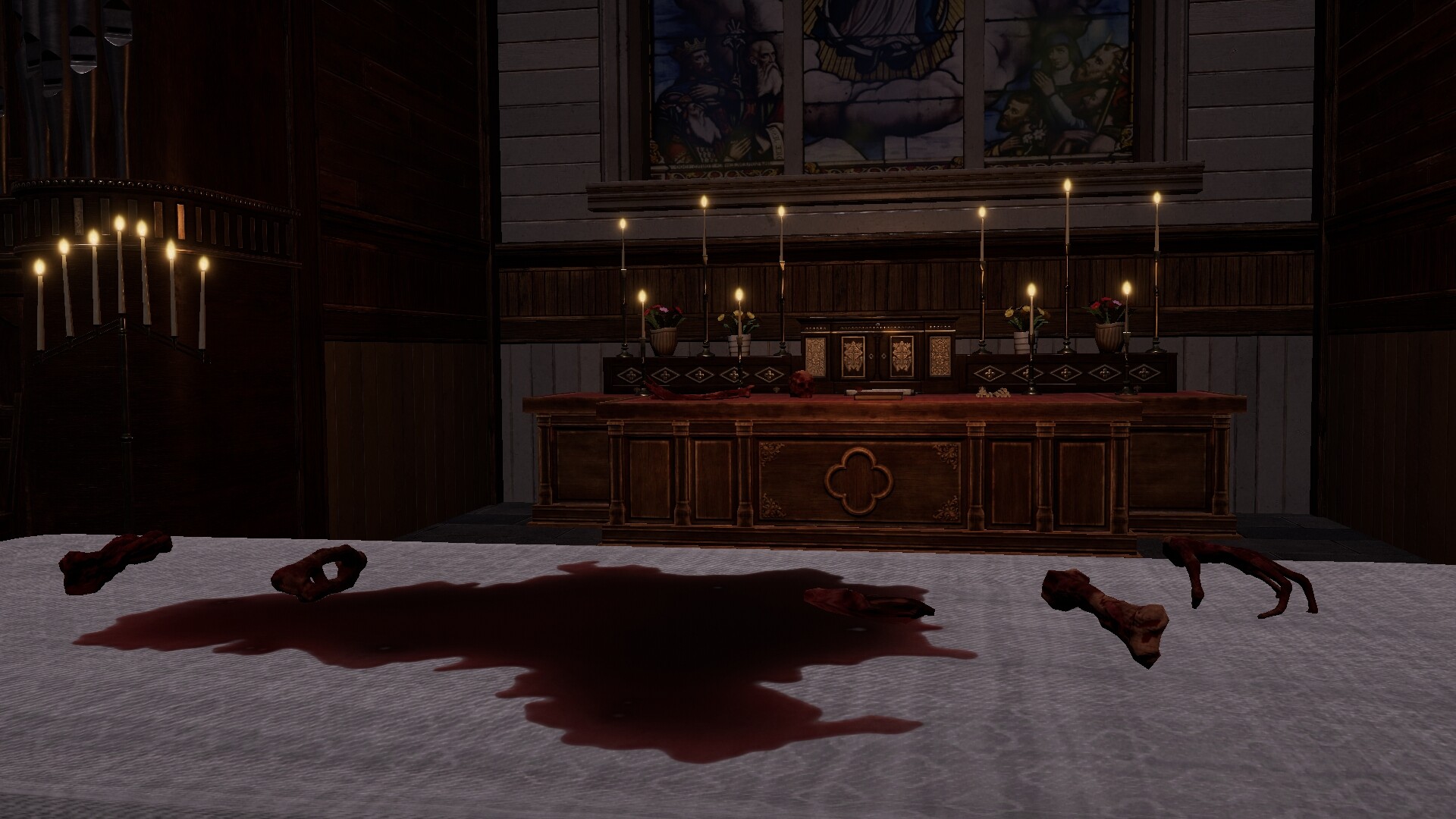
- Environmental storytellers: Players who prefer storytelling through furnished rooms, missing histories, and subtle props over explicit cutscenes will find the mansion’s “erased” identities and staged spaces compelling.
- Slow-burn narrative players: If you like patient, investigative pacing with emphasis on reading and deduction rather than combat or fast action, the game’s “playable without timed input” status supports that preference.
- Accessibility-minded players: The Steam page lists subtitle options, color alternatives, and custom volume controls — useful signals for those who prioritize accessibility in narrative puzzle games.
Why the theme matters
The narrative hooks — a vanishing sister, falsified identities, and a property “deliberately forgotten” — make the investigations feel forensic rather than purely supernatural. The design emphasis on restored systems and recovered documents ties puzzle mechanics to the story: solving puzzles is how the house reveals the timeline, and that mechanical-story coupling is central to the game’s tone of psychological investigation and atmospheric mystery adventure.
Compact facts: Trace of the Villa
| Title | Trace of the Villa |
|---|---|
| Steam AppID | 3483660 |
| Developer | Steadyturtle Co., Ltd. |
| Publisher | Steadyturtle Co., Ltd. |
| Release Date | 28 May, 2026 |
| Genres | Action, Adventure, Indie |
| Categories / Features | Single-player; Color Alternatives; Custom Volume Controls; Playable without Timed Input; Subtitle Options; Family Sharing |
| Official short description | Jin has spent years searching for his missing sister, pursuing leads that took him to a remote, decaying mansion where he recovered manifests and hints that indicate his sister may still be alive, somewhere at the end of the trail he is about to follow. |
How it compares (editorial discovery)
Below are compact, factual comparisons with a few other puzzle-focused games to help readers decide fit. These comparisons use public genre, tone, and puzzle emphasis rather than claims of quality.
| Title | Genre / Focus | Puzzle emphasis | Play style / Tone |
|---|---|---|---|
| The Room | Adventure, Indie | Single-object safe/box puzzles; tactile mechanical puzzles | Intimate, claustrophobic puzzle box atmosphere with focused object interaction |
| The Room Two | Adventure, Indie | Expanded mechanical puzzles across multi-room scenarios | Cryptic, atmospheric exploration with layered puzzle devices |
| Escape Simulator | Adventure, Casual, Indie, Simulation | Highly interactive rooms; physical object manipulation; community-made rooms | Varied tone depending on room, more physics/interactivity-driven and often quicker puzzle loops |
Editorial note: Trace of the Villa sits closer to the investigative, environmental end of this spectrum. Where The Room series is often about singular mechanical devices and Escape Simulator emphasizes interaction and community content, Trace of the Villa trades on staged rooms, document fragments, and progressively uncovered systems to build its mystery.
When and where to learn more
Trace of the Villa is available on Steam as of 28 May, 2026. For trailers and gameplay clips, use this YouTube search (search results may include official and community videos): Search Trace of the Villa on YouTube.
Deciding whether to wishlist
Wishlist Trace of the Villa if you enjoy patient, clue-driven exploration, environmental storytelling, and puzzles that reward careful inspection and chained deductions. If you prefer physics-driven interaction or rapid puzzle-action loops, you may want to compare the game’s slower mystery pacing against titles that emphasize interactivity over forensic reading of spaces.
View Trace of the Villa on Steam
Referenced titles and trademarks belong to their respective owners. Comparisons are editorial discovery only and not claims of endorsement or affiliation.
Leave a Reply