
Trace of the Villa — inspection-heavy, locked-room mystery for clue-driven players
Trace of the Villa casts you as Jin, an investigator whose search for a missing sister leads to a remote, decaying mansion where restored systems, hidden compartments and encrypted manifests slowly stitch a vanished life back together. The game foregrounds object logic, chained clues and environmental reading: expect slow-burn exploration that rewards careful inspection over reflexes.

Quick facts
| Title | Trace of the Villa |
|---|---|
| Release date | 28 May, 2026 |
| Developer / Publisher | Steadyturtle Co., Ltd. |
| Genres | Action, Adventure, Indie |
| Steam categories / features | Single-player; Color Alternatives; Custom Volume Controls; Playable without Timed Input; Subtitle Options; Family Sharing |
| Steam app | Trace of the Villa on Steam |
| Premise (official) | Jin has spent years searching for his missing sister; a lead to a decaying mansion yields manifests and hints that she may still be alive, somewhere at the end of the trail he follows. |
Who this is for
If you prefer detective games that make you read the scene, not rely on combat or reflexes, Trace of the Villa is aimed squarely at you. The Steam page lists “Playable without Timed Input” and features like subtitle options and custom volume controls — signals that the design favors paced, inspection-heavy play. Players who enjoy slow, atmospheric mystery adventures and psychological investigation will get the most out of Jin’s methodical reconstruction of the estate’s history.
What the game is
Trace of the Villa is an atmospheric mystery adventure (listed on Steam under Action, Adventure, Indie) where you restore power, unlock secured systems and collect fragments of encrypted documents and transfer records. The mansion acts as the primary puzzle space: rooms are furnished as if occupants vanished mid-routine, and the story unfolds by piecing together physical manifests, safes and hidden compartments rather than through combat or timed sequences.
When and where
Trace of the Villa released on 28 May, 2026 and is available on Steam for PC. The Steam app page includes images, trailer thumbnail, and the store listing with the features cited above.
How inspection-heavy progression works (object logic & clue chains)
The core progression model described on Steam focuses on environmental systems coming back online as you restore power — secured systems unlock, safes yield fragments, and manifests point to further leads. That implies a chaining puzzle design: one solved object or recovered file becomes the clue for the next locked area. Expect:
- Object logic puzzles: physical items, switches and safes that behave predictably once you deduce their purpose.
- Clue chains: recovered documents and manifests that reference locations, account transfers or identity inconsistencies and point toward the next objective.
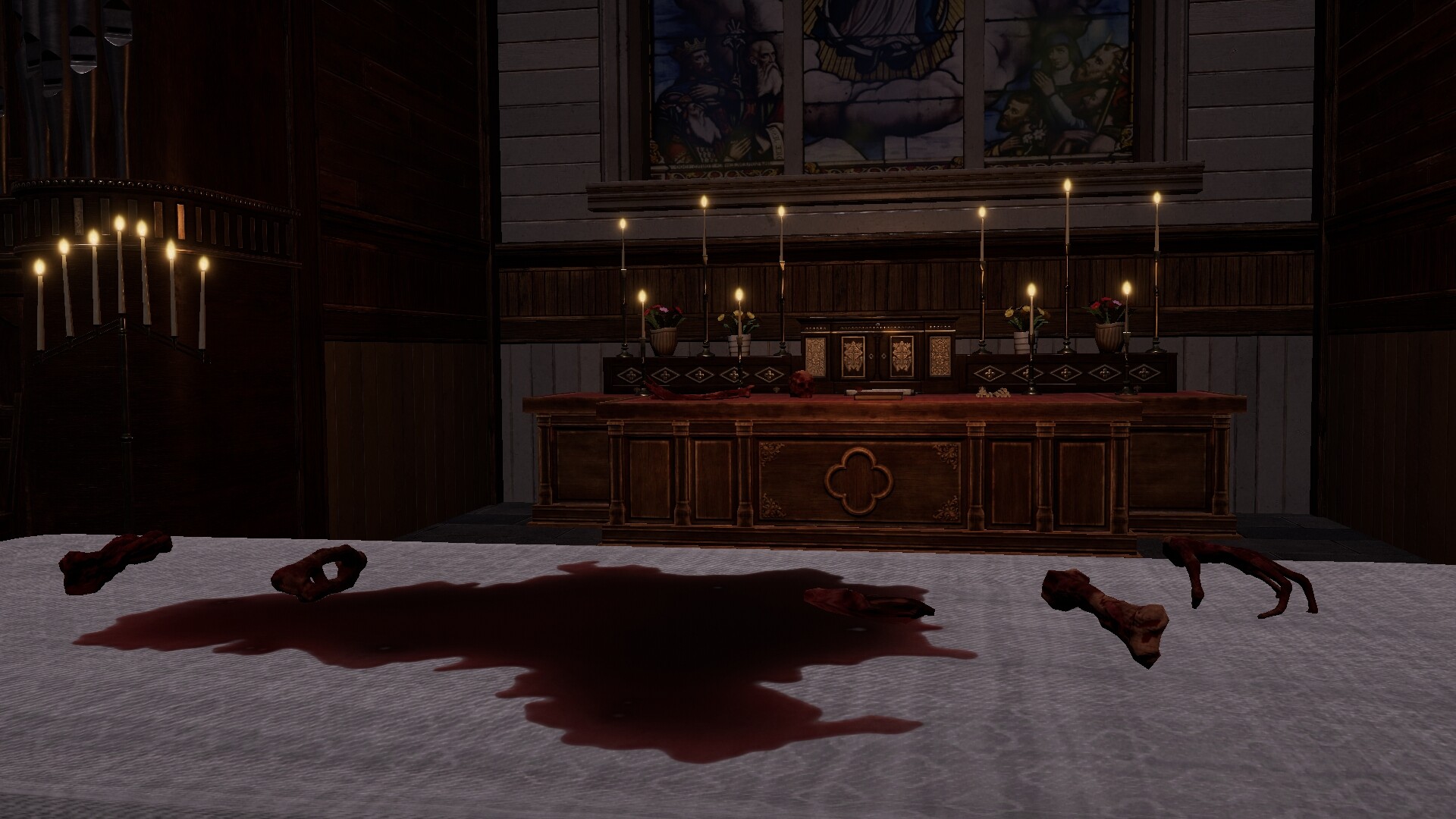
- Environmental reading: furnished rooms with purposeful absences (no photographs, anonymized belongings) that function as narrative puzzles in themselves.
Reading the space: what to inspect
Because the mansion is written as “less abandoned than erased,” attentive players should expect to inspect:
- Electrical panels and utility systems — restoring power is explicitly part of the premise and triggers new opportunities.
- Safes, locked cabinets and hidden compartments — the Steam description highlights these as sources of encrypted documents and suspicious records.
- Paperwork and manifests — the story unfolds through transfers, falsified identities and movement patterns you reconstruct from fragments.

Player scenarios: concrete examples of fit
- Slow-burn investigator: You enjoy tracing a narrative from small physical fragments and re-checking rooms after each new discovery. This game’s manifest-driven reveals should reward that loop.
- Puzzle-first explorer: You prefer object-based puzzles where the solution is embedded in the environment rather than abstract minigames. The emphasis on safes, restored systems and physical clues maps to that preference.
- Story-focused but patient: You want a story that unfurls through items and records rather than cutscenes; if you like reconstructing timelines from documents, this will suit you.
- Not for you if: you want fast action, multiplayer co-op, or heavy combat, since the Steam listing emphasizes single-player, non-timed interactions and environmental investigation.
How it sits beside similar mystery/puzzle games
Below is a focused editorial comparison that looks at genre, atmosphere, puzzle emphasis, exploration style, story tone and pacing so you can decide whether Trace of the Villa matches your tastes.
| Title | Genre / Core focus | Atmosphere | Puzzle emphasis | Exploration style | Story tone / Pacing | Player fit |
|---|---|---|---|---|---|---|
| Trace of the Villa | Action / Adventure / Indie (PC, single-player) | Mansion mystery, slow-burn, psychological investigation | Object logic, locked-room safes, clue chains from manifests | Inspection-heavy, return-to-rooms as systems are restored | Gradual reveal via documents and systems coming back online | Players who like paced, clue-driven environmental storytelling |
| The Room | Adventure / Indie | Claustrophobic, tactile, eerie | Mechanical safes and tactile object puzzles | Single-room or contained-space focus | Concentrated puzzle-to-reveal pacing | Fans of tight, mechanical puzzle boxes and tactile solutions |
| The Room Two | Adventure / Indie | Mystical, cryptic, immersive | Pedestal and object puzzles with layered locks | Series of contained, meticulously designed spaces | Escalating complexity, still puzzle-forward | Players who enjoyed the original’s focused puzzle rooms |
| Escape Simulator | Adventure / Simulation / Indie | Bright, playful to varied depending on room | Highly interactive object manipulation; community rooms | Room-by-room sandbox with physical manipulation | Flexible pacing; can be fast or methodical depending on room | Players who like interactive, physics-forward escape rooms (solo or co-op) |
| Hi‑Fi RUSH | Action | Stylised, high-energy, music-driven | Puzzle elements not central; rhythm/action focus | Linear, action-oriented levels | Fast, beat-synced pacing | Players seeking rhythm-action and energetic combat over detective work |
Why the theme matters
The Steam description frames the mansion as a place that erases identity — no photographs or names — which shapes the type of detective work the game asks of you. Instead of interviewing characters or following obvious leads, you reconstruct identity through transactional traces, encrypted fragments and material absence. That narrative choice makes careful observation and object-level reasoning central to both gameplay and tone.
YouTube discovery
If you want trailer or gameplay clips, search for Trace of the Villa on YouTube: Trace of the Villa trailer & gameplay search. This link is a discovery path
Leave a Reply