
Trace of the Villa — an escape-room style, locked-house mystery on Steam
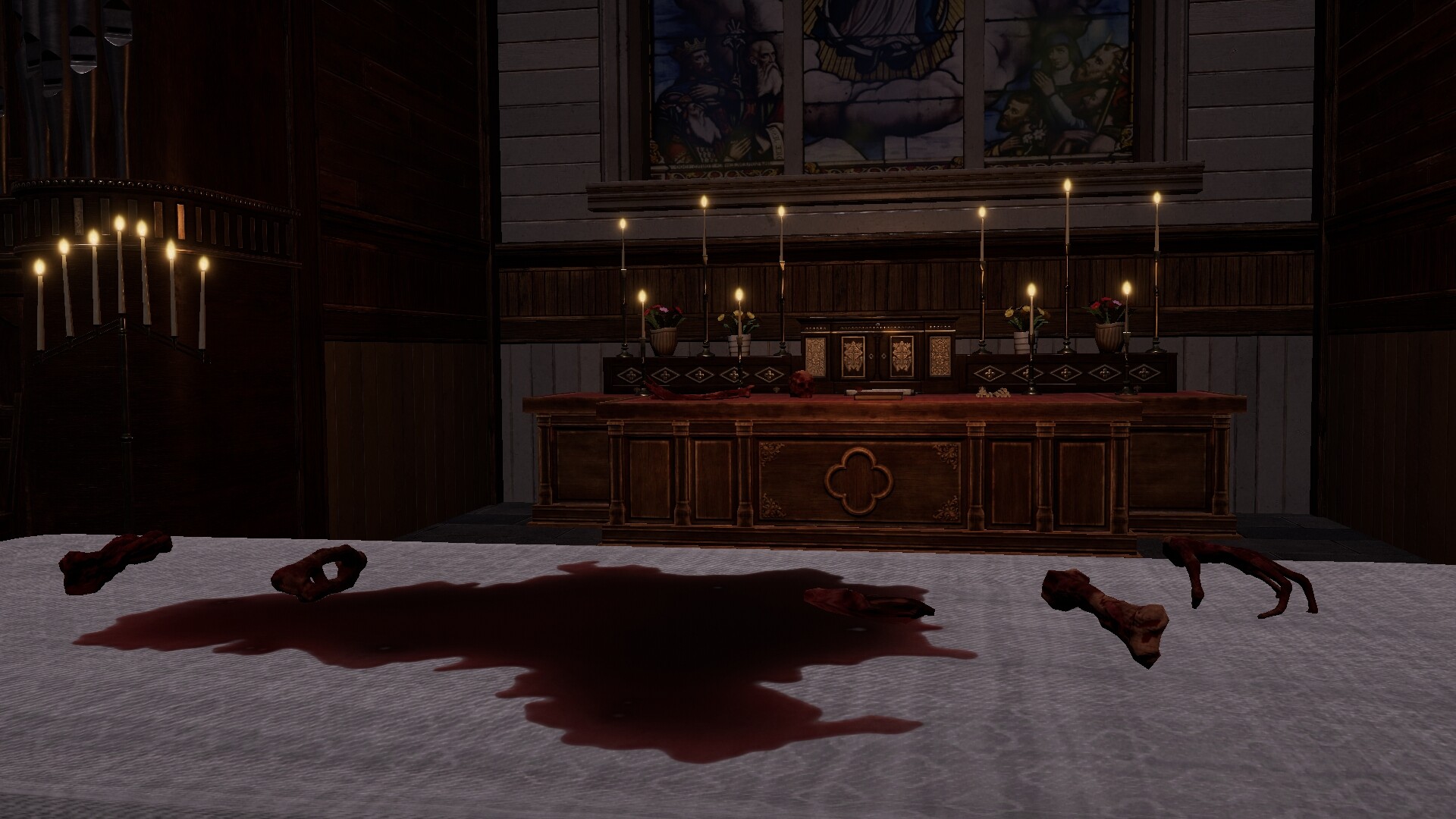
Trace of the Villa puts you in Jin’s shoes: years of searching for a missing sister end at a remote, decaying mansion where manifests, safes and partial records hint the trail hasn’t entirely gone cold. Restoring power to the estate is the central pivot—systems reboot, locked compartments open, and fragments of encrypted documents layer into a chain of clues that demand careful environmental reading.

Who this is for
If you favor story-rich, atmospheric mystery adventures that unfold through environmental storytelling rather than combat, Trace of the Villa is aimed at you. The official Steam description and metadata list the game as Action / Adventure / Indie and single-player, but the core reading suggests a slow-burn, clue-driven exploration for players who enjoy locked-room thinking: piecing together evidence across rooms, restoring systems to unlock new information, and tracing financial or identity corruption through documents and safes.
What the game is (official facts)
Trace of the Villa is a single-player story that follows Jin as he investigates a decaying mansion after a lead that could point to his missing sister. In the mansion, signs of occupancy appear erased—personal effects remain but names and photographs are gone. When Jin restores power, secured systems and safes produce fragments of encrypted documents and suspicious transfer records that reveal a larger, concealed operation.
| Title | Trace of the Villa |
|---|---|
| Release date | 28 May, 2026 |
| Developer | Steadyturtle Co., Ltd. |
| Publisher | Steadyturtle Co., Ltd. |
| Steam AppID | 3483660 |
| Genres | Action, Adventure, Indie |
| Categories / Features | Single-player, Color Alternatives, Custom Volume Controls, Playable without Timed Input, Subtitle Options, Family Sharing |
When and where
Trace of the Villa released on Steam on 28 May, 2026 and is available on the Steam store page (app ID 3483660). The store metadata highlights accessibility options like subtitle options, custom volume controls, and a setting for no timed input—useful signals for players who prefer to parse clues at their own pace.
Why the locked-room mechanics and systems matter
The official description centers the act of restoring power as a gameplay and narrative fulcrum. That design choice naturally supports two interlocking approaches familiar to escape-room and detective-style players:
- Clue chains: items recovered from safes and systems are explicitly described as fragments—encrypted documents and transfer records—that must be assembled into a coherent trail. That implies puzzles built around reconstructing partial evidence across multiple locations.
- Environmental reading: rooms are “furnished as if occupants vanished mid-routine” yet lack identifiers. That absence forces players to treat objects, layout and systems as primary storytelling devices—readings of space reveal motive and timeline rather than exposition-heavy text dumps.
How you’ll progress — playstyle and puzzle flow (based on official premise)
Progression, according to the official description, follows a predictable but satisfying lock-and-key rhythm suited to escape-room sensibilities. Steps you can expect:
- Regain power to reactivate secured systems — a literal switch that advances the house’s state and opens new investigative paths.
- Search for and open locked compartments and safes that yield partial, encrypted documents and suspicious transaction records.
- Link fragments across locations to form timeline and motive—financial trails, falsified identities and movement logs are the kinds of pieces the description highlights.
That sequence supports slow-burn interrogation of the environment: systems and safes act as mechanical gates, environmental details supply context, and extracted documents provide the connective tissue for larger revelations.

Specific player scenarios — decide whether to wishlist
- You’re a slow-burn mystery fan who prefers reading the scene: You value environmental storytelling where objects and room layout are the primary narrative drivers.
- You like puzzle chains that reward cross-referencing: If assembling fragmented documents and following suspicious transfer records appeals to you, Trace of the Villa leans into that investigative satisfaction.
- You need accessibility and a deliberate pace: Steam tags indicate subtitle options and “playable without timed input,” which suits players who want to examine everything without pressure.
- You expect high-octane action or competitive multiplayer: The game is single-player and described in investigative terms; if you want arcade-style combat or co-op escape rooms, this may not match that expectation.
How it compares (editorial comparison)
Below is a practical, editorial comparison against nearby puzzle and genre-adjacent titles. This is a functional guide to differences in puzzle focus, tone and pacing—not a ranking.
| Title | Genre / Atmosphere | Puzzle focus | Exploration style | Story tone / Pacing | Player fit |
|---|---|---|---|---|---|
| Trace of the Villa | Action / Adventure / Indie — mansion, erased identities | Document fragments, safes, system restores (clue chains) | Environmental, room-by-room investigation | Slow-burn, investigative, suspenseful | Players who want narrative puzzles and environmental storytelling |
| The Room | Adventure / Indie — locked-room, occult safe puzzles | Mechanical, object-based puzzles centered on a single, ornate safe | Focused, single-room puzzle exploration | Concentrated, tactile puzzle tension | Players who like tactile, object-focused puzzle boxes |
| The Room Two | Adventure / Indie — cryptic halls and pedestal puzzles | Sequential object puzzles with layered mechanical devices | Sequential rooms with connected puzzle progression | Atmospheric, steadily escalating mystery | Players who enjoy layered mechanical puzzles and atmosphere |
| Escape Simulator | Adventure / Casual / Indie — interactive escape rooms | Highly interactive object manipulation, community-made rooms | Room-scale, physics and manipulation-heavy | Varies widely by room; often playful and hands-on | Players who want sandboxed interaction and co-op options |
| Hi‑Fi RUSH | Action — rhythm-driven combat and set-pieces | Combat and rhythm mechanics, not document puzzles | Steam page
View Trace of the Villa on Steam YouTube discoveryFor trailer and gameplay discovery, use YouTube search rather than relying on unverified embeds: Find Trace of the Villa trailer and gameplay searches on YouTube. CommentsMore posts |
Leave a Reply