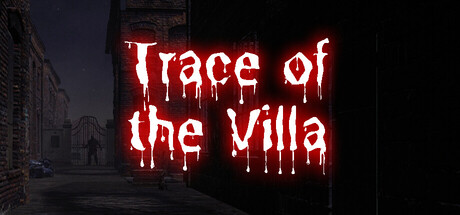
Trace of the Villa — when puzzles become evidence and story logic
Trace of the Villa places you in Jin’s shoes, searching a decaying mansion for clues that might explain his missing sister’s disappearance. Released on 28 May, 2026 by Steadyturtle Co., Ltd., it frames puzzles as forensics: objects, manifests and locked systems act as evidence that advance both mystery and motive.

At a glance — quick facts
| Title | Trace of the Villa |
|---|---|
| Developer / Publisher | Steadyturtle Co., Ltd. |
| Release date | 28 May, 2026 |
| Steam genres | Action, Adventure, Indie |
| Categories | Single-player; Color Alternatives; Custom Volume Controls; Playable without Timed Input; Subtitle Options; Family Sharing |
| Official short premise | Jin searches a remote, decaying mansion after leads suggest his missing sister may still be alive. |
Who is this for?
If you prefer atmospheric mystery adventure and story-rich exploration where puzzles reveal context rather than just gate progress, Trace of the Villa is aimed at you. The Steam description sets up a slow-burn, investigative tone: players who like environmental storytelling, psychological investigation and clue-driven exploration will likely appreciate how the game treats objects and documents as evidentiary pieces.
What the game is (and what it isn’t)
Trace of the Villa is presented on Steam as an action-adventure indie about a search for a missing sister inside an isolated mansion. The official description emphasizes restored power, encrypted documents, falsified records and a house that appears “less abandoned than erased.” Puzzles are embedded in locked systems, safes and hidden compartments — each solution yields fragments of a larger operation to be pieced together.

When and where
Trace of the Villa launched on Steam on 28 May, 2026. The Steam store page lists the title’s developer and publisher as Steadyturtle Co., Ltd., and identifies it under the Action / Adventure / Indie tags with the single-player, accessibility and playback categories noted above.
Why the theme matters: puzzles as evidence
What sets the tone is how puzzles are framed: not as abstract riddles but as pieces of an investigation. The official description repeatedly frames solved puzzles as unearthing financial trails, falsified identities and hidden transfers — clues that turn inventory into testimony. That narrative logic makes each object feel like a witness: restoring power or unlocking a safe doesn’t only open a new route, it supplies documentary evidence that shifts what Jin — and the player — can reasonably conclude about the mansion’s purpose.
How you read clues and progress
The Steam text highlights a layered approach: systems come back online, hidden compartments unlock, and safes yield encrypted documents. From that, the likely play loop is examination → inference → mechanical puzzle → narrative update. Players who enjoy reconstructing timelines from scraps of text, manifests and interface readouts will find the progression rewarding because each solved puzzle functions as corroborating evidence, altering the interpretive frame of subsequent discoveries.
Player scenarios — would you wishlist this?
- Investigative slow-burner: If you like methodical progression and narratives built from recovered documents and systems, wishlist it. The game foregrounds forensic puzzle work over fast twitch action.
- Atmosphere-first explorer: If environmental storytelling and the feel of a lived-in-but-erased space appeal to you, this fits. The mansion’s furnishings and sealed rooms are meant to convey absence as much as presence.
- Action-lite puzzler: The title is listed under Action and Adventure, but categories emphasize single-player and non-timed input, so players who dislike reflex-based challenges but enjoy investigative mystery should be comfortable.
- Not for you if: you want bright, puzzle-box mechanics divorced from story beats; the premise makes clear puzzles serve the narrative of concealment and control, not purely abstract puzzles for their own sake.
How Trace of the Villa compares to nearby puzzle-mystery titles
Below is a compact editorial comparison based on Steam descriptions and the topics these games emphasize. Comparison is intended to help readers decide fit, not to claim superiority or endorsement.
| Title | Shared qualities | Key differences (based on Steam descriptions) | Best for |
|---|---|---|---|
| The Room | Strong single-player puzzle focus; tactile object puzzles; mystery atmosphere | The Room centers on intricate, mechanical puzzle boxes and tactile interactions; Trace of the Villa frames puzzles as documentary evidence within a mansion investigation. | Players who like mechanical, tactile puzzle boxes (The Room) vs. players who want narrative-forensics (Trace of the Villa) |
| The Room Two | Continues mechanical puzzle tradition; slow reveal of larger mystery | The Room Two transports players between distinct locations and puzzle tableaux; Trace of the Villa emphasizes a single, decaying estate and document-driven revelations. | Those who enjoy curated puzzle tableaux (The Room Two) vs. a continuous investigative environment (Trace of the Villa) |
| Escape Simulator | Exploration and item-based puzzle solving; object interaction | Escape Simulator focuses on highly interactive escape-room scenarios (including community-made rooms and co-op); Trace of the Villa appears narrative-first, with puzzles serving story discovery rather than user-created rooms or co-op play. | Players who want collaborative or modular room puzzles (Escape Simulator) vs. single-player narrative mystery (Trace of the Villa) |
| Unpacking | Environmental storytelling through objects; slow, contemplative pace | Unpacking uses domestic routines and object placement to reveal life stories; Trace of the Villa uses objects and documents as investigative evidence in a darker, more suspenseful context. | Fans of quiet, narrative object work (Unpacking) vs. players seeking forensic puzzle-work and suspense (Trace of the Villa) |
| hack_me | Emphasis on simulated systems and “hacking” mechanics | hack_me centers on hacking simulations and cyber tasks per its description; Trace of the Villa integrates restored systems into a mansion investigation rather than a pure hacking sim. | Those who want explicit hacking tools and simulation (hack_me) vs. narrative evidence recovered through in-world systems (Trace of the Villa) |
Screenshots — interior scenes

How to find the trailer / gameplay videos
If you want to see clips or a trailer, search YouTube using this discovery link (useful for trailers and player gameplay footage; not an affirmation that any single video is official): YouTube: Trace of the Villa trailer & gameplay.
Deciding checklist — should you wishlist?
- Do you enjoy atmospheric mansion mysteries where reading objects changes narrative assumptions? — Wishlist.
- Do you prefer multiplayer or community-made puzzle rooms? — Consider Escape Simulator instead.
- Do you want tactile mechanical puzzles without narrative framing? — Consider The Room series.
- Do you like contemplative object narratives without suspense? — Unpacking is closer in tone.
View Trace of the Villa on Steam
Disclaimer: referenced titles and trademarks belong to their respective owners. Comparisons above are editorial discovery based on Steam descriptions and are not endorsements, sponsorships, or claims of official association.
Leave a Reply