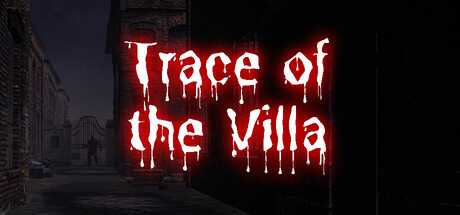
Trace of the Villa — Puzzles as Evidence in a Mansion Mystery
Trace of the Villa frames its puzzles as items of proof: manifests, encrypted fragments and locked compartments that together reconstruct what the mansion has tried to erase. Released on 28 May, 2026 by Steadyturtle Co., Ltd., it asks players to read objects and documents the way an investigator reads a crime scene, where every solved mechanism is a line of testimony toward a larger narrative.

Quick facts
| Title | Trace of the Villa |
|---|---|
| Steam AppID | 3483660 |
| Release date | 28 May, 2026 |
| Developer / Publisher | Steadyturtle Co., Ltd. |
| Genres | Action, Adventure, Indie |
| Categories | Single-player; Color Alternatives; Custom Volume Controls; Playable without Timed Input; Subtitle Options; Family Sharing |
Who should wishlist Trace of the Villa?
This is for players who enjoy slow-burn, story-rich mystery with a detective’s mindset: you want to piece together motive and logistics from physical evidence rather than rely on cutscenes or combat to carry the plot. If you prize environmental storytelling, object logic (how a misplaced ledger or a locked safe reframes an entire hypothesis), and puzzles that double as narrative clues, Trace of the Villa is aimed at your playstyle.
What the game is, and why the theme matters
Officially billed as Jin’s search for his missing sister, Trace of the Villa places you in a remote, decaying mansion where “manifests and hints” suggest the investigation continues past apparent dead ends. The game treats each puzzle like evidence: restoring power, unlocking compartments, and decrypting documents reveal traces of falsified identities, transfer records, and a pattern of arrivals and departures that the house itself tried to erase. That framing matters because it makes puzzle solutions do double duty — they both open new areas and shift your interpretation of the story.
How you progress: reading clues, object logic, and story puzzles
Trace of the Villa’s official description stresses investigative actions you can expect: restoring power to bring systems back online, finding hidden compartments, and opening safes that yield fragments of encrypted documents and suspicious transfer records. Progress feels like building a case: one solved lock yields a receipt; one receipt reframes a manifest; together they produce a timeline. That design rewards careful observation and a habit of treating mundane items as potential testimony.


Player scenarios — who will enjoy this and who might not
- For evidence-driven investigators: You like reconstructing timelines from small clues and enjoy when puzzle solutions directly change your understanding of the plot.
- For atmospheric explorers: You value environmental storytelling — rooms staged as if occupants vanished mid-routine, the absence of names and photos, and a slow reveal as systems come back online.
- Less likely to fit: Players who want fast pacing or combat-forward progression should note Trace of the Villa emphasizes narrative puzzle design and investigative payoff over continuous action.
How it compares — editorial table
| Title | Puzzle focus | Atmosphere / tone | Exploration style | Pacing / player fit |
|---|---|---|---|---|
| Trace of the Villa | Clue-driven puzzles as evidence (manifests, safes, encrypted documents) | Mansion mystery, slow-burn, investigative | Room-to-room reconstruction; restoring systems reveals new content | Players who prefer narrative investigation and environmental storytelling |
| The Room | Mechanical puzzle boxes and inspection-based solutions | Mysterious, tactile, intimate | Focused scenes with layered devices | Fans of precise object logic and clever mechanical design |
| The Room Two | Sequential inspection puzzles with a broader scope | Cryptic and atmospheric, exploratory | Linked locations with narrative transitions | Players who enjoy escalating, handcrafted puzzle sequences |
| Escape Simulator | Interactive escape-room mechanics; emphasis on manipulation | Varied tone (often playful), room-based | Highly interactive object interaction and physics | Good for players who like tactile puzzle interaction and co-op |
| Unpacking | Domestic, item-placement puzzles that tell a life story | Zen, reflective, slice-of-life | Steady, domestic scene-building | Players who like narrative inferred from objects and atmosphere |
These comparisons aim to highlight differences in atmosphere, puzzle emphasis, and player fit rather than offer judgments of quality.
When and where to buy
Trace of the Villa is available on Steam; the official release date is 28 May, 2026. The developer and publisher listed on Steam are Steadyturtle Co., Ltd.
YouTube discovery
If you prefer to watch trailer or gameplay clips before deciding, use the Steam-provided YouTube search path for discovery: Search Trace of the Villa trailers on YouTube. This link is a search/discovery path and not confirmation of an official video.
Final take — why puzzles as evidence change the experience
When puzzles function as evidence, they transform curiosity into method. Instead of unlocking a door purely as gatekeeping, each solution in Trace of the Villa reframes suspects, timelines, and motives; the mansion’s objects are testimonies you must interrogate. For players who enjoy connecting forensic-like dots and letting object logic steer emotional beats, Trace of the Villa offers a clear fit.
Referenced titles and trademarks belong to their respective owners. Comparisons above are editorial discovery and not endorsements.
Leave a Reply