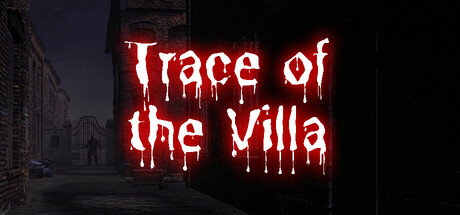
Trace of the Villa — how puzzles work as evidence and narrative logic
Trace of the Villa puts you in Jin’s shoes: a single investigator drawn to a decaying mansion by fragments of a life that may still be salvageable. The game strings together clue-reading, object logic, and layered story puzzles so that every solved lock and restored system reads like forensic evidence in a slow-burning mystery.

Who, what, when, where
Who: Players who prefer atmospheric mystery adventure and methodical, clue-driven exploration — those who value reading environments like evidence rather than fast reflex puzzles.
What: Trace of the Villa is an action-adventure indie on PC that frames its puzzles as investigative steps: Jin follows manifests, restored systems, locked safes, and falsified records to reconstruct a timeline and chase a possible lead on his missing sister.
When / Where: The game launched on Steam on 28 May, 2026 and is listed as a PC Steam release by Steadyturtle Co., Ltd.
Quick facts
| Title | Trace of the Villa |
|---|---|
| Steam App ID | 3483660 |
| Developer / Publisher | Steadyturtle Co., Ltd. |
| Release date | 28 May, 2026 |
| Genres | Action, Adventure, Indie |
| Notable categories / accessibility | Single-player; Color Alternatives; Custom Volume Controls; Playable without Timed Input; Subtitle Options; Family Sharing |
| Steam page | Trace of the Villa on Steam |
Why the theme matters: puzzles as evidence
Trace of the Villa treats each puzzle like a piece of a case file. The official description emphasizes restored power, secured systems coming back online, hidden compartments, and safes yielding fragments of encrypted documents and suspicious transfer records. That language matters: puzzles aren’t arbitrary obstacles, they are methods of uncovering proof.
When puzzles are evidence, the player’s role shifts from door-opener to investigator. Solving a mechanical lock reveals not just access but a ledger or a note that changes how you interpret previous rooms. The consequence is narrative logic — your deductions redirect exploration rather than merely granting progress tokens.
How you read clues and progress
Based on the Steam description, expect three interlocking puzzle modes:
- Environmental clue-reading — items and room states act as testimony: furnishings frozen mid-routine, missing photographs, and altered records create narrative gaps you must explain.
- Object logic — safes, encrypted documents, and secured systems require pattern recognition and item manipulation; restoring power is an explicit gameplay beat that changes what the house reveals.
- Story puzzles — financial trails, falsified identities, and transfer records are not just flavor text; they form a timeline that you assemble to reach conclusions about who passed through and why.
Progression therefore follows a logic of implication: find an evidence node, interpret its meaning, then use that interpretation to search adjacent spaces or unlock the next layer of the mansion’s operation.


Who should wishlist it (player profiles)
- Forensic explorers: You enjoy treating environments like crime scenes where each object is testimony and puzzles reconstruct a timeline.
- Slow-burn mystery fans: You prefer games that reward careful note-taking and connecting disparate clues over twitch-based challenges.
- Story-first puzzle players: If encrypted documents, falsified records, and narrative logic hold more interest than fast mechanical puzzles, this aligns with your taste.
- Accessibility-minded players: The Steam listing shows subtitle options and settings for color alternatives and no timed inputs, making it approachable for players who prefer readable, controlled pacing.
Comparison: where Trace of the Villa sits among puzzle-driven mysteries
The table below compares Trace of the Villa to a few other puzzlers on lawful editorial grounds: genre, atmosphere, puzzle focus, exploration style, and pacing. Use this to decide which fit matches your preferences.
| Game | Genre / Atmosphere | Puzzle focus | Exploration style | Player fit |
|---|---|---|---|---|
| Trace of the Villa | Action / Adventure / Indie — mansion mystery, psychological investigation | Clue-reading, object logic, document-based story puzzles | Room-to-room forensic exploration; restored systems change access | Players who want puzzles as narrative evidence and slow-burn suspense |
| The Room | Adventure / Indie — intimate, tactile mysterious objects | Mechanical puzzle boxes and tactile locks | Focused, single-room/object encounters | Players who like handcrafted mechanical puzzles and tactile solutions |
| The Room Two | Adventure / Indie — cryptic and atmospheric | Layered mechanical and environmental puzzles | Progressive scenes tied to set pieces | Those seeking cinematic, puzzle-focused vignettes |
| Escape Simulator | Adventure / Casual / Indie — playful, interactive escape rooms | Highly interactive object puzzles and cooperative mechanics | Room-based puzzles with physics interactions | Players who enjoy tactile experimentation and co-op or community rooms |
| Unpacking | Casual / Indie — zen, slice-of-life atmosphere | Spatial organization and environmental storytelling | Calm, room-by-room narrative through objects | Players who prefer gentle pacing and story glimpses via possessions |
Player scenarios — how the game will feel in practice
- Evening investigator: You play in short sessions, taking notes on screenshots or manual notes, returning to a puzzle later when new paperwork or access alters your hypothesis.
- Power-restoration beat: You prioritize restoring electricity early to unlock new reads on devices and safes; the house shifts from “frozen scene” to “active evidence network.”
- Deductive completionist: You collect manifests and encrypted fragments not only for progress but to map an arrival/departure timeline that answers the central question about Jin’s sister.
Where to preview trailers and gameplay
For videos and community previews, use the YouTube discovery path: Search Trace of the Villa trailer & gameplay on YouTube. This link is a search/discovery route and does not assert a particular video is official.
Leave a Reply