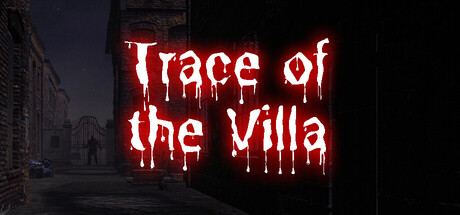
Trace of the Villa — reading puzzles as evidence in a mansion mystery
Trace of the Villa is a slow-burn, clue-driven adventure about Jin’s search for his missing sister inside a decaying, deliberately forgotten mansion. Released on 28 May, 2026 by Steadyturtle Co., Ltd., it leans on environmental storytelling and puzzle logic to make every found object feel like forensic evidence.

Who
Who should consider this on their Steam wishlist: players who prefer narrative puzzle design over action spectacle, those interested in atmospheric mystery adventure and psychological investigation, and anyone who likes piecing together story from discarded belongings and archival traces. The game is developed and published by Steadyturtle Co., Ltd. and listed on Steam under Action, Adventure, Indie.
What
What the game is: Trace of the Villa places you in Jin’s investigation of a secluded mansion where manifests, locked compartments and encrypted documents suggest a hidden operation — and the possibility that Jin’s sister may still be alive. Puzzles are not isolated toys; they’re fragments of an evidentiary timeline that reveal identities, falsified transfers, and the house’s erased history when solved.
When & Where
When and where you can play: Trace of the Villa launched on Steam on 28 May, 2026. It’s presented as a single-player PC experience with standard accessibility options listed on its Steam page, including subtitle options, color alternatives, and custom volume controls.
Why the theme matters
The mansion mystery frames puzzles as pieces of a case file — the game asks you to read rooms like witness statements. That approach shifts emphasis from puzzle novelty to interpretive reward: a safe’s contents or a restored power circuit matter because they change the narrative ledger and alter the next line of inquiry. For players who value story tone and slow-burn suspense, this method makes solutions feel consequential.
How you progress: clue reading, object logic, and story puzzles
Trace of the Villa organizes progression around three puzzle modes that serve the narrative:
- Clue reading — manifests, transfer records and fragmented documents are treated as primary sources. You aren’t just matching symbols; you’re building a timeline from partial evidence.
- Object logic — physical inventory and environmental interaction matter. Objects function as tools and as testimony: a locked drawer, a disconnected circuit, or a personal item can simultaneously unlock mechanics and reveal motive.
- Story puzzles — solutions trigger narrative payoffs (locked systems coming online, hidden compartments revealing fragments), so puzzle success advances both gameplay and the investigative story.
Player scenarios — which kind of player will enjoy it
- If you enjoy methodical, interpretive detective work: You’ll appreciate puzzles that read like evidence and a pace that privileges examination over rapid action.
- If you want narrative reward from every solved problem: Expect each solved device or decoded file to recontextualize earlier clues and redirect the investigation.
- If you prefer fast puzzles and arcade challenge: This is likely slower than mainstream puzzle-action hybrids; the emphasis is storytelling through discovery.
- If accessibility options matter: The Steam listing shows Subtitle Options, Color Alternatives, and Custom Volume Controls among its categories, and the game is playable without timed input.
Compact facts — Trace of the Villa
| Title | Trace of the Villa |
|---|---|
| Developer / Publisher | Steadyturtle Co., Ltd. |
| Release date | 28 May, 2026 |
| Steam AppID | 3483660 |
| Genres | Action, Adventure, Indie |
| Key categories | Single-player; Playable without Timed Input; Subtitle Options; Color Alternatives; Custom Volume Controls; Family Sharing |
How it compares — short editorial table
| Title | Primary puzzle focus | Atmosphere / Pacing | Player fit |
|---|---|---|---|
| Trace of the Villa | Clue-driven evidence, object logic, narrative-unlock puzzles | Slow-burn mansion mystery, investigative tone | Players who want story consequences for each solved puzzle |
| The Room | Mechanical safes and tactile puzzle boxes | Focused, tactile, intimate puzzles with a single-room feel | Players who like handcrafted mechanical puzzles and a tight puzzle loop |
| The Room Two | Expanded mechanical puzzles across connected environments | Atmospheric and claustrophobic with layered puzzles | Fans of multi-stage mechanical puzzles and escalating mystery |
| Escape Simulator | Highly interactive escape-room style puzzles, physics-driven | Varied pace; often cooperative or community-created rooms | Players who want hands-on interaction and sandbox puzzle rooms |
| Unpacking | Slice-of-life, object-placement used to tell a life story | Quiet, reflective, methodical | Players who prefer narrative revealed through domestic objects and pace |


YouTube discovery
If you want trailers or player footage, search YouTube for Trace of the Villa trailer or gameplay: Trace of the Villa trailer & gameplay (YouTube search). This link is a discovery path; individual videos should be checked for official status.
View Trace of the Villa on Steam
Disclaimer: Referenced titles and trademarks belong to their respective owners. Comparisons in this article are editorial discovery only and are not endorsements or claims of affiliation.
Leave a Reply