
Trace of the Villa: puzzles as evidence in a slow-burn mansion mystery
Trace of the Villa casts you as Jin, a searcher following frayed trails through a remote, decaying mansion to determine whether his missing sister might still be alive. Released on 28 May, 2026 and developed/published by Steadyturtle Co., Ltd., the game leans on environmental clues, object logic, and layered story puzzles to make every solved lock feel like a piece of testimony.

Who, what, when, where, why, how
Who is this for?
Players who prefer atmospheric mystery adventure on PC: those who enjoy methodical exploration, narrative puzzle design, and reading evidence rather than action-oriented threat mechanics. If you like story-rich adventures that reward attention to detail and patient reasoning, this fits your lane.
What is the game?
Trace of the Villa is an Action/Adventure/Indie title on Steam where Jin investigates a deliberately forgotten mansion. The house’s furnishings and locked systems suggest organized concealment; solving puzzles reveals manifests, encrypted fragments, and money-transfer records that gradually expose a larger operation.
When and where is it available?
Trace of the Villa released on 28 May, 2026 and is on Steam. Developer and publisher: Steadyturtle Co., Ltd.
Why does the puzzle-as-evidence approach matter?
The game frames puzzles not as abstract obstacles but as pieces of forensic material. Restoring power, unlocking safes, and assembling decrypted fragments are treated like investigative acts: each solved puzzle adds context and pushes the narrative forward. That makes the player’s logic the primary engine of storytelling—what you deduce from objects becomes the proof that reconstructs events.
How you progress — reading clues and object logic
The official description notes that when Jin restores power “secured systems come back online” and “safes yield fragments of encrypted documents and suspicious transfer records.” Progress is therefore a mix of environmental interaction (restoring utilities, finding hidden compartments), object-based logic (manifests, encrypted fragments that must be interpreted), and narrative assembly: puzzles supply evidence that rearranges the house’s timeline and meaning.
Visuals
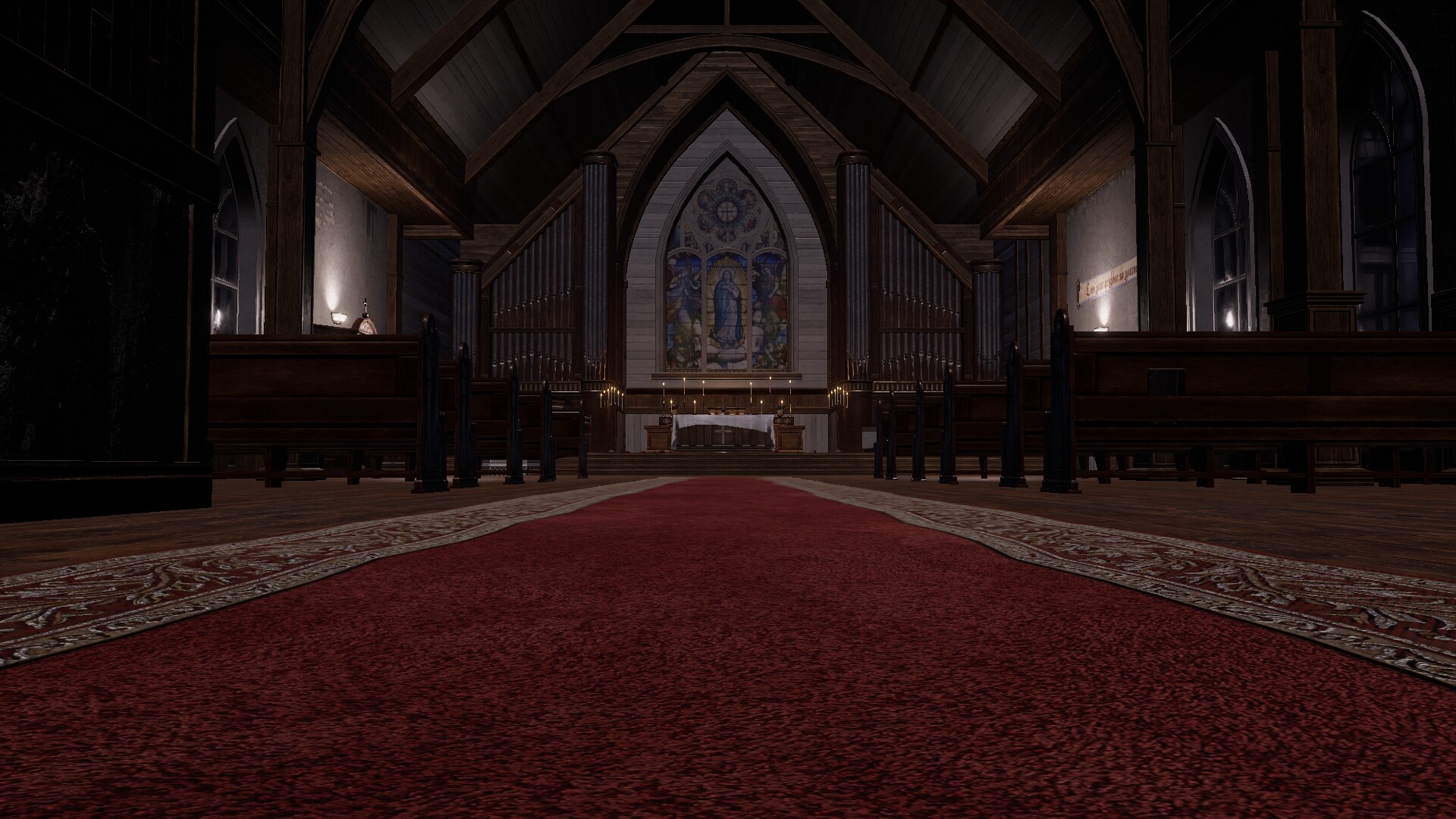

Quick facts
| Title | Trace of the Villa |
|---|---|
| Steam AppID | 3483660 |
| Release date | 28 May, 2026 |
| Developer / Publisher | Steadyturtle Co., Ltd. |
| Genres | Action, Adventure, Indie |
| Steam categories | Single-player; Color Alternatives; Custom Volume Controls; Playable without Timed Input; Subtitle Options; Family Sharing |
How Trace of the Villa fits (and how it differs)
If you judge mystery games by how tightly their puzzles map to narrative truth, Trace of the Villa sits with titles that make object work and document-reading central to discovery. It is less about spectacle and more about the slow accumulation of corroborating detail.
| Title | Genre / Focus | Atmosphere | Puzzle focus | Exploration style | Story tone / pacing | Player fit |
|---|---|---|---|---|---|---|
| The Room | Adventure / Indie | Claustrophobic puzzle chambers | Mechanical puzzle boxes and tactile problem solving | Single-room, object-focused | Dense, puzzle-forward, deliberate pacing | Players who like intricate, self-contained puzzles |
| The Room Two | Adventure / Indie | Mysterious, evocative environments | Progressive tactile puzzles with layered reveals | Sequential rooms with escalating complexity | Slow-burn puzzle escalation | Fans of carefully designed, puzzle-led storytelling |
| Escape Simulator | Adventure / Casual / Indie | Varied, playroom-style escape rooms | Highly interactive objects and physics-enabled puzzles | Room-to-room escape challenges; sandbox in some modes | Faster, gameplay-first pacing; cooperative options | Players who want tactile, physics-enabled interaction and co-op |
| Unpacking | Casual / Indie / Simulation | Quiet, domestic, reflective | Placement and contextual clues as narrative devices | Room-by-room environmental storytelling | Gentle, episodic, reflective pacing | Players who prefer slow narrative revealed through objects |
| hack_me | Indie / Simulation | Technical, terminal-driven | Hacking mechanics and command-line puzzles | Interface- and tool-driven problem solving | Procedure-focused; less environmental atmosphere | Players who enjoy simulated systems and technical puzzles |
Player scenarios: who should wishlist it
- You want a slow-burn, investigative puzzle adventure: you enjoy reconstructing sequences from documents, power systems, and locked safes rather than timed reflex challenges.
- You appreciate environmental storytelling: the mansion’s furnishings and missing identities are meant to be read as evidence, so attention to detail is rewarded.
- You prefer single-player, accessible play: the Steam listing includes categories like Playable without Timed Input, Subtitle Options, and Custom Volume Controls — useful signals for players who need accommodation while playing at a measured pace.
YouTube discovery
For trailers and gameplay searches, Steam’s internal strategy suggests using YouTube search/discovery. Try this search path (results may include fan or publisher uploads): Trace of the Villa trailer & gameplay on YouTube.
Where to find it on Steam
Visit the store page to wishlist or purchase: Trace of the Villa on Steam
Final notes and disclaimer
Trace of
Leave a Reply