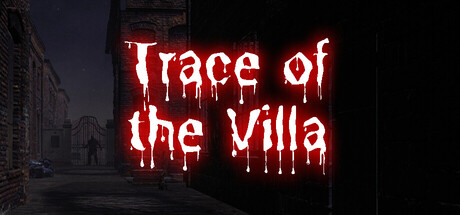
Trace of the Villa: how clues, objects and narrative puzzles build a mansion mystery
Trace of the Villa casts you as Jin, a man who’s followed a cold trail to a remote, decaying mansion and discovered manifests and hints that suggest his missing sister may still be alive. Released on 28 May, 2026, from Steadyturtle Co., Ltd., the game blends action-adventure framing with close, clue-driven exploration and environmental puzzle design to shape a slow-burn, investigative experience.

Quick facts
| Title | Trace of the Villa |
|---|---|
| Steam AppID | 3483660 |
| Release date | 28 May, 2026 |
| Developer / Publisher | Steadyturtle Co., Ltd. |
| Genres | Action, Adventure, Indie |
| Key categories | Single-player; Color Alternatives; Custom Volume Controls; Playable without Timed Input; Subtitle Options; Family Sharing |
| Official short premise | Jin has spent years searching for his missing sister, pursuing leads that took him to a remote, decaying mansion where he recovered manifests and hints that indicate his sister may still be alive. |
Who this is for
Players who prioritize atmospheric mystery adventure and story-led investigation will find the central appeal here. If you enjoy environmental storytelling — reading rooms and objects as evidence — and prefer puzzles that unlock narrative threads rather than simply gate progress, Trace of the Villa is aimed at that crowd. The Steam listing also positions it within Action/Adventure/Indie categories, so expect moments that mix exploration with tension rather than pure, turn-based puzzle work.
What the game is
Trace of the Villa is a single-player, narrative-focused adventure about restoring a forgotten property’s systems and uncovering carefully concealed operations. According to the official Steam description, Jin restores power to the estate, reactivating secured systems, unlocking hidden compartments, and opening safes that produce fragments of encrypted documents and suspicious transfer records. Each solved puzzle reveals additional layers of falsified identities, financial trails, and a pattern of arrivals and departures that were never meant to be discovered.


When and where
Trace of the Villa was released on Steam on 28 May, 2026. It’s presented on the Steam store as a single-player PC title; the Steam page lists developer and publisher as Steadyturtle Co., Ltd., and includes accessibility and control options such as subtitle options and the ability to play without timed input.
Why the clue-and-object approach matters
Games that treat puzzles as evidence — where each solved object or decoded manifest functions as a piece of proof — change how players think about progression. In Trace of the Villa, puzzles yield fragments of encrypted documents and transfer records rather than abstract keys or purely mechanical rewards. That makes every solved puzzle also a narrative beat: it shifts the timeline, suggests motives, or exposes falsified identities. For players who enjoy detective-style reasoning, that alignment of puzzle design and story logic creates a stronger sense that the world is testifying to past events rather than simply blocking your path.
How you read clues and progress
The Steam description emphasizes restoring estate power, reactivating secured systems, and revealing hidden compartments and safes. Practically, that implies a progression loop of investigation: find an actionable object or terminal, use environmental evidence to decode or unlock it, then read the new fragment to reinterpret prior clues. Players advance by building a timeline from isolated artifacts — manifests, transfer records, encrypted fragments — and using the object logic of the mansion to connect dots. Puzzle solutions therefore act as corroborating evidence rather than isolated wins.
Player scenarios — who should wishlist this
- Casework players: You enjoy piecing together timelines from small textual clues and physical evidence; the game’s reveal structure rewards patient, deductive play.
- Environmental storytellers: If reading rooms and belongings as narrative shorthand is your forte, the mansion’s “erased” identity moments will be compelling.
- Atmosphere-first players: Prefer slow-burn suspense and investigation over fast-paced combat or arcade puzzles? This leans into mood and discovery.
- Not ideal if: You want high-action, fast loops, or multiplayer escape-room-style chaos; the listing centers on single-player investigation and narrative puzzle design.
How it sits among nearby mystery/puzzle experiences
Below is a compact, editorial comparison to help readers decide whether Trace of the Villa fits their tastes. These comparisons use lawful editorial criteria — genre, atmosphere, puzzle focus, exploration style, story tone and pacing — not claims of superiority.
| Title | Genre / Tone | Puzzle focus | Exploration style | Pacing |
|---|---|---|---|---|
| Trace of the Villa | Action / Adventure / Indie — mansion mystery, investigative | Clues-as-evidence: manifests, encrypted fragments, hidden compartments | Room-to-room mansion exploration; systems restoration reveals new areas | Slow-burn, narrative-led |
| The Room | Adventure / Indie — tactile, locked-object mystery | Mechanical, object-based puzzles (locks, safes, contraptions) | Focused, single-location puzzle chambers | Measured, puzzle-centric |
| The Room Two | Adventure / Indie — expanded tactile mysteries | Complex object puzzles with layered mechanisms | Multi-location, still puzzle-room focused | Atmospheric, puzzle-driven |
| Escape Simulator | Adventure / Simulation — cooperative escape-room design | Highly interactive physics and item-combination puzzles | Modular rooms; player-driven manipulation and creativity | Variable; can be fast or slow depending on room |
| Unpacking | Casual / Indie — zen, narrative through possessions | Spatial, contextual clue reading about a life (non-confrontational) | Domestic spaces reveal story through items placement | Calm, reflective, scene-by-scene |
In short: if you prefer contraption-focused puzzle boxes, The Room series is a clearer match. If you like item-driven domestic storytelling, Unpacking moves toward atmosphere and life-details. Trace of the Villa sits between those poles: it uses object and system puzzles as narrative evidence to reconstruct a larger, sinister operation.
Short YouTube discovery
Search for trailers and gameplay footage with this YouTube discovery URL: Trace of the Villa trailer & gameplay (YouTube search). Note: use this as a search path; do not assume any specific video is the official trailer unless verified on the Steam page.
Final notes and decision guide
Who, what, when, where, why, and how
Leave a Reply