
Trace of the Villa — an escape-room style mystery that rewards locked-room thinking
Trace of the Villa drops you into a decaying mansion where Jin, the protagonist, follows manifests and hints that suggest his missing sister may still be alive. It’s a story-rich adventure built around environmental reading, chained puzzles, and slow-burn suspense that asks you to treat every object as evidence.

At a glance
| Title | Trace of the Villa |
|---|---|
| Developer / Publisher | Steadyturtle Co., Ltd. |
| Release date | 28 May, 2026 |
| Official short description | Jin has spent years searching for his missing sister, pursuing leads that took him to a remote, decaying mansion where he recovered manifests and hints that indicate his sister may still be alive, somewhere at the end of the trail he is about to follow. |
| Genres | Action, Adventure, Indie |
| Steam categories / features | Single-player; Color Alternatives; Custom Volume Controls; Playable without Timed Input; Subtitle Options; Family Sharing |
| Steam appid | 3483660 |
Who should wishlist this
If you enjoy atmospheric mystery adventure and psychological investigation that privileges careful observation over twitch reactions, add this to your wishlist. Trace of the Villa suits players who like locked-room thinking—those who enjoy reconstructing a timeline from objects, unlocked compartments, and encrypted fragments rather than combat-driven progression.
What the game is, and what it asks you to do
Official materials frame Trace of the Villa as an investigation: Jin arrives at a property “cut off from the grid and deliberately forgotten,” and the house itself reads like a chain of clues. Rooms are furnished as if occupants vanished mid‑routine; locked doors and secured systems hide fragments of encrypted documents, transfer records, and falsified identities. The game asks you to power systems back on, find hidden compartments, and follow evidence that links one puzzle to the next.
When and where
Trace of the Villa released on 28 May, 2026 and is available on Steam for PC. The store page lists developer and publisher as Steadyturtle Co., Ltd., and standard Steam conveniences such as subtitle options and family sharing are present.
Why the mansion setting matters
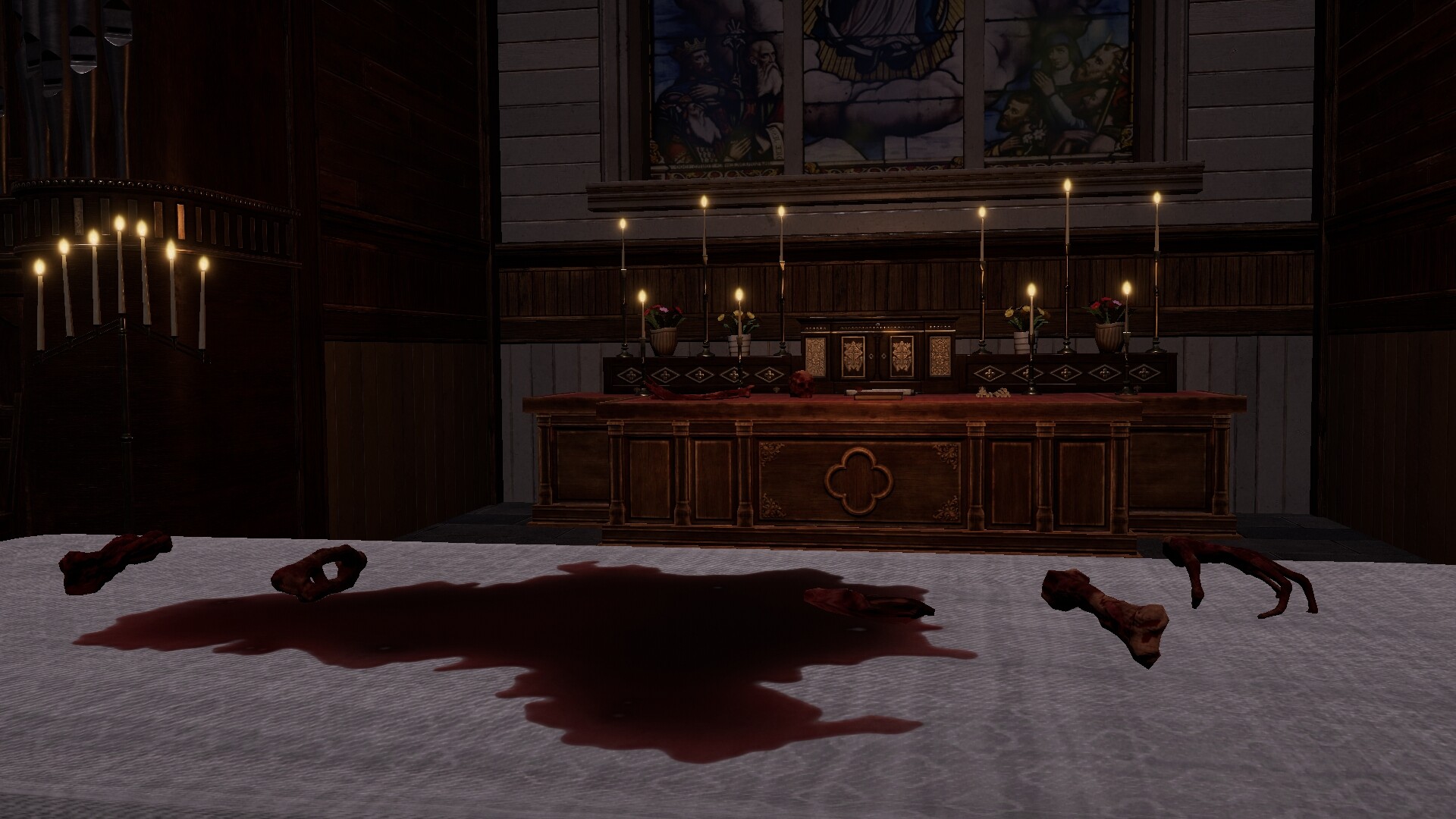
Mansion mysteries work when environment and objects feel purposeful; here the absence of photographs and names is treated as a design choice that turns mundane props into primary narrative devices. That missing-person throughline (Jin searching for his sister) gives each clue weight — a ledger entry or a locked safe isn’t just a puzzle step, it’s an investigative lead. For players who value environmental storytelling, that tone makes every unlocked compartment feel like progress in an actual inquiry.
How progress and puzzle chains are structured
From the official description: when Jin restores power, “secured systems come back online” and “safes yield fragments of encrypted documents.” Expect momentum driven by discovery: one solved device or decrypted fragment opens the next line of inquiry. This is classic clue-chain design—each object can be a key to a new system or a new room, and reading the environment accurately moves the story forward.

Player scenarios — who will like the game and how to approach it
- Locked-room puzzlers: If your satisfaction comes from chaining mechanical solutions into a larger reveal, play slowly and catalogue objects. The game threads small discoveries into a broader narrative.
- Environmental storytellers: Treat each room like testimony—what is missing can be as meaningful as what’s present. Look for cues in set dressing and power-dependent devices.
- Slow-burn suspense fans: Expect atmosphere and pacing that prioritise creeping understanding over constant action; patience and note-taking are rewards here.
- Action-oriented players: While the game is listed under Action/Adventure/Indie, the Steam page emphasises investigation and puzzle-unlock systems—if you prefer combat-first pacing, this title skews toward investigative design.
How it compares to other puzzle‑mystery games
Below is a concise editorial comparison on lawful criteria: genre, atmosphere, puzzle focus, exploration, and pacing. These are to help you decide which style of mystery suits you.
| Game | Genre | Atmosphere | Puzzle focus | Exploration style | Pacing / Player fit |
|---|---|---|---|---|---|
| The Room | Adventure / Indie | Claustrophobic, tactile | Mechanical safes and object-based puzzles | Single-room progression with layered reveals | Methodical; ideal for players who enjoy close-up object puzzles |
| The Room Two | Adventure / Indie | Mystical, puzzle-driven tension | Complex mechanical puzzles and interconnected objects | Multi-location but still object-centric exploration | Slow to medium; for players who like escalating puzzle complexity |
| Escape Simulator | Adventure / Casual / Indie / Simulation | Open, playful, highly interactive | Physics and inventory-enabled puzzle variety | Room-by-room with heavy interactivity and mod support | Flexible; great for social or sandbox puzzle play |
| Trace of the Villa | Action / Adventure / Indie | Atmospheric mansion mystery, investigative | Clue-chain, environmental evidence, encrypted fragments | Exploration tied to systems that come back online and hidden compartments | Deliberate, investigative; for players who prioritise narrative puzzle design |
Trailer and further discovery
Search for trailers and gameplay footage if you want to see puzzle pacing and mood before you buy: YouTube search: Trace of the Villa trailer & gameplay. This is a discovery link only; check the Steam page for official assets.
View Trace of the Villa on Steam
Referenced titles and trademarks belong to their respective owners; comparisons are editorial discovery only.
Leave a Reply