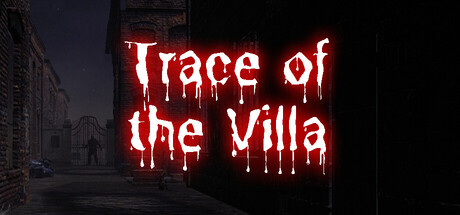
Trace of the Villa — an atmospheric, clue-driven mansion mystery for PC
Steadyturtle’s Trace of the Villa drops players into a decaying, off-the-grid mansion where Jin follows fragmented manifests and locked doors to a possible lead on his missing sister. Released on Steam on 28 May, 2026, the game frames investigation as slow-burn suspense: restore systems, pry open safes, and let environmental storytelling build momentum from one puzzle to the next.

Quick facts
| Title | Trace of the Villa |
|---|---|
| Steam AppID | 3483660 |
| Developer / Publisher | Steadyturtle Co., Ltd. |
| Release date | 28 May, 2026 (Steam) |
| Genres | Action, Adventure, Indie |
| Categories / Features | Single-player; Color Alternatives; Custom Volume Controls; Playable without Timed Input; Subtitle Options; Family Sharing |
| Official short description | Jin has spent years searching for his missing sister, pursuing leads that took him to a remote, decaying mansion where he recovered manifests and hints that indicate his sister may still be alive, somewhere at the end of the trail he is about to follow. |
| Steam user reviews | No user reviews on Steam at time of publishing |
Who this is for
If you gravitate toward atmospheric mystery adventure and narrative puzzle design — players who prefer environmental reading over constant combat — Trace of the Villa is aimed at you. The game’s single-player focus and category flags like “Playable without Timed Input” suggest a methodical, unhurried pace that rewards observation and deduction rather than twitch reactions.
What the game is
Trace of the Villa is a story-rich adventure set in a deliberately forgotten mansion. The official description frames the experience as a psychological investigation and mansion mystery: rooms frozen mid-routine, secured systems that react when power is restored, safes and encrypted fragments that reveal a larger, concealed operation. Rather than a straight action romp, the title positions itself around clue chains and exploratory puzzle momentum.
When and where
The game launched on Steam on 28 May, 2026. It’s listed with standard PC-friendly accessibility options (subtitles, custom volume, color alternatives) and is distributed by Steadyturtle Co., Ltd. Players in the United States and other English-speaking markets can find it on the Steam storefront.
Why the theme matters
Trace of the Villa trades on slow-burn suspense: the idea that identities and records have been erased turns ordinary household objects into evidence. That lends the game its environmental storytelling strength — you’re not just solving isolated puzzles, you’re reconstructing a timeline. In games like this, locked-room thinking isn’t just a design conceit; it’s the narrative engine that converts each discovered object into the next hypothesis.
How you read clues and progress
The official text highlights mechanics that inform progression: restoring power powers up secured systems, hidden compartments and safes reveal encrypted documents and transfer records, and manifests provide leads. Practically speaking, that suggests a loop of finding an object, using it or combining it to unlock a device or recording, then following a new clue to another sealed space. Expect puzzle-chain momentum: one solved lock commonly yields evidence that points to another sealed area or system.
Player scenarios — which kind of sessions suit this game?
- Quiet evening of methodical exploration: You like to play without time pressure, read notes, and piece together high-level conspiracies from small details. The game’s single-player, no-timed-input design fits this.
- Detective-style play: You enjoy making annotated timelines and cross-referencing manifests with found records; the mansion’s falsified identities and financial trails reward that approach.
- Visual and atmospheric players: If environmental storytelling — how a room’s state implies a vanished routine — is your main draw, Trace of the Villa’s setting will appeal more than action‑heavy titles.
- Not for speedrunners or twitch-oriented gamers: The emphasis appears to be on piecing together layered clues, not fast-paced combat or timed reaction tests.
How it compares to nearby puzzle/mystery titles
Below is a focused editorial comparison on genre, atmosphere, puzzle focus, exploration style, and pacing to help judge fit. These comparisons are descriptive, not endorsements.
| Title | Genre / Tone | Puzzle focus | Exploration style | Pacing |
|---|---|---|---|---|
| Trace of the Villa | Action / Adventure / Indie — mansion mystery, psychological investigation | Clue chains, safes, encrypted documents, environmental clues | Single-player, methodical room-to-room reconstruction | Slow-burn, investigative momentum |
| The Room | Adventure / Indie — intimate, tactile mystery | Mechanical puzzle boxes, single-focus object puzzles | Contained-room, object-centric exploration | Measured and intentionally focused |
| The Room Two | Adventure / Indie — broader locales, expanding mystery | Complex mechanical puzzles, layered devices | Linked rooms and locales with a linear puzzle path | Steady escalation across chapters |
| Escape Simulator | Adventure / Casual / Indie — interactive escape rooms | Highly interactive object puzzles, sandbox interactions | Room-scale puzzles; can be community-made and varied | Varies widely; can be short and playful or intricate |
Visuals — a few official frames


Where to find gameplay footage
If you want trailers or gameplay captures, search YouTube using this discovery link (useful for trailers and community uploads): Trace of the Villa trailer & gameplay on YouTube. This is a search path; individual videos should be verified for official status if that matters to you.
View Trace of the Villa on Steam
Editorial note and disclaimer
All facts here come from the game’s Steam listing and supplied store data: title, developer/publisher (Steadyturtle Co., Ltd.), release date (28 May, 2026), genre and categories, and the official short/extended descriptions. No user reviews were present on Steam at the time of writing. Referenced comparison titles belong to their respective owners; comparisons are editorial discovery only and not endorsements.
Referenced titles and trademarks belong to their respective owners. Comparisons are editorial discovery only.
Leave a Reply