
Trace of the Villa — where locked-room logic and clue-chain momentum power a mansion mystery
Trace of the Villa is a story-driven, clue-driven adventure about Jin’s search for his missing sister inside a remote, decaying mansion; it deploys environmental reading, locked doors, safes and restored systems to push you from one revealed secret to the next. Released on 28 May, 2026 by Steadyturtle Co., Ltd., the game positions its puzzles as narrative beats—the solution to one mystery becomes the key to discovering the next.

What Trace of the Villa is (and what the Steam page shows)
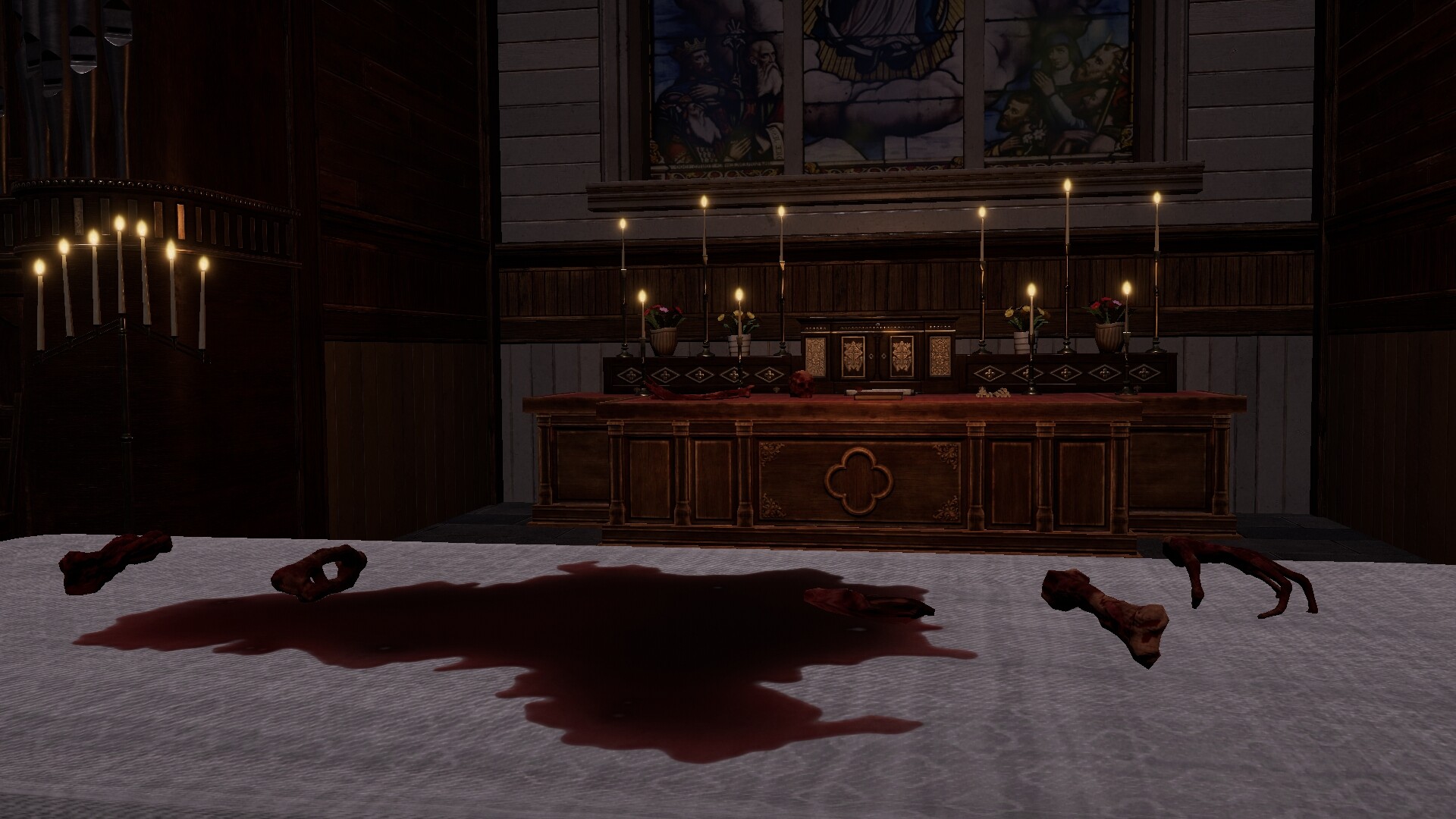
On its Steam page Trace of the Villa is presented as an Action / Adventure / Indie title from Steadyturtle Co., Ltd. The official short description explains the premise in plain terms: Jin has been pursuing leads about his missing sister and follows a trail to a remote, deliberately forgotten mansion where manifests and hints suggest she may still be alive. The plain description emphasizes rooms left as if occupants vanished mid-routine, locked doors, safes, encrypted fragments, and the house revealing its secrets when power is restored.

Five quick facts
| Title | Trace of the Villa |
|---|---|
| Release date | 28 May, 2026 |
| Developer / Publisher | Steadyturtle Co., Ltd. |
| Genres | Action · Adventure · Indie |
| Notable Steam categories | Single-player; Color Alternatives; Custom Volume Controls; Playable without Timed Input; Subtitle Options; Family Sharing |
| Steam store | Trace of the Villa on Steam |
Who this is for
- Players who prefer environmental storytelling over combat-forward pacing: the Steam page foregrounds rooms left mid-routine, locked doors and personal belongings that act as clues.
- Puzzle players who like chained solutions: the official description repeatedly frames puzzles as triggers that reveal the next layer—restoring power, unlocking safes, decrypting fragments.
- Accessibility-aware single‑player players: Steam categories include Playable without Timed Input, Subtitle Options, Color Alternatives and Custom Volume Controls.
- Anyone interested in slow-burn mansion mysteries with a personal motive at the center—Jin’s search for his sister—rather than an action-only spectacle.
Why the mansion setting matters for puzzle design
The mansion isn’t just a backdrop—according to the official description, its layout and post-occupancy state are the game’s puzzle language. Rooms that look lived-in but erased of names, secured systems that come back online, hidden compartments and safes are all devices that let the designers turn environmental detail into a chain of reasoning. That locked-room thinking encourages players to read the room closely: an out-of-place ledger entry, a disconnected power switch, or an encrypted document fragment becomes a linking clue rather than decoration.
How progression and puzzle chains work (what to expect)
The Steam text highlights a clear pattern of escalation: when Jin restores power the house begins to reveal what it was hiding—secured systems reactivate, hidden compartments unlock, and safes yield fragments of encrypted documents and suspicious transfer records. That phrasing implies a puzzle-chain momentum where solving a mechanical or environmental problem produces tangible narrative consequences, which then open the next investigative avenue. Expect to alternate between mechanical puzzles (power, safes, locks) and interpretive work (reading manifests, tracing falsified identities, following financial trails).
Specific player scenarios
- Solo detective night: You play after hours, methodically toggling breakers and cataloguing documents. Ideal if you enjoy taking notes and mapping relationships between objects.
- Accessibility-first playthrough: You value subtitle options, color alternatives and the absence of timed inputs—the Steam page lists those options explicitly.
- Atmosphere-focused run: You prioritize ambience and slow-burn reveals; you’ll spend time inspecting furnishings and unlocked rooms rather than speed‑running objectives.
- Puzzle-chain completionist: You like uncovering every fragment—encrypted documents and manifests are described as layered discoveries that thread into a larger, concealed operation.
How Trace of the Villa compares (editorial comparison)
Below is a compact editorial comparison with nearby mystery/puzzle experiences. Columns use lawful criteria: genres, puzzle focus, atmosphere, exploration style and pacing.
| Title | Genre | Puzzle focus | Atmosphere / tone | Exploration style / pacing |
|---|---|---|---|---|
| Trace of the Villa | Action · Adventure · Indie | Clue chains, locked doors, safes, restored systems; environmental-to-narrative links | Remote mansion mystery, personal stakes (search for Jin’s sister), erasure of identity | Slow-burn, investigative; each solved puzzle reveals further layers |
| The Room | Adventure · Indie | Mechanical puzzle-boxes, tactile object interaction | Mysterious, intimate puzzle-chamber tone | Focused puzzle-box progression; concentrated, chamber-by-chamber pacing |
| The Room Two | Adventure · Indie | Expanded puzzle-box sequences with unique events | Cryptic, exploratory mystery with evolving locales | Sequential puzzle chambers with a developing sense of scale |
| Escape Simulator | Adventure · Casual · Indie · Simulation | Highly interactive escape-room mechanics; physics and object manipulation | Bright, tactile escape-room style (player-created rooms available) | Variable; room-sized puzzles that can be short or elaborate, community content |
When and where
Trace of the Villa released on 28 May, 2026 on Steam. The Steam store page is the primary source for system requirements, media and purchase:
YouTube discovery
For trailer and gameplay discovery, use YouTube search rather than relying on unverified embeds: Find Trace of the Villa trailer and gameplay searches on YouTube.
Leave a Reply