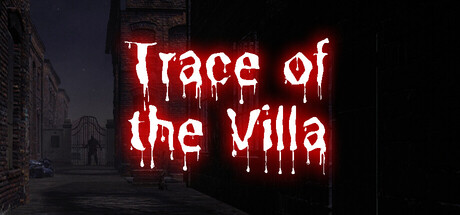
Trace of the Villa — where locked‑room logic, clue chains and environmental reading meet
Trace of the Villa places you in a decaying, deliberately forgotten mansion and asks you to reconstruct a timeline from objects, secured systems and partial records. Released on 28 May, 2026 by Steadyturtle Co., Ltd., it shapes a slow, investigative rhythm where each recovered fragment pulls you one step farther down a trail that may lead to Jin’s missing sister.

Who this is for
If you favour atmospheric mystery adventure and puzzle-driven investigation on PC, Trace of the Villa is aimed squarely at you. It suits players who prefer:
- slow‑burn suspense and environmental storytelling over twitch action;
- object‑level clue work and chained puzzles that build momentum rather than one-off riddles;
- single‑player, story‑focused experiences that reward careful reading of rooms and records.
What the game is — the official premise
From the Steam page: “Jin has spent years searching for his missing sister, pursuing leads that took him to a remote, decaying mansion where he recovered manifests and hints that indicate his sister may still be alive, somewhere at the end of the trail he is about to follow.”
Developer and publisher: Steadyturtle Co., Ltd. Genres listed on Steam: Action, Adventure, Indie. Categories include Single‑player, Color Alternatives, Custom Volume Controls, Playable without Timed Input, Subtitle Options and Family Sharing.
When and where — Steam details
Trace of the Villa released on 28 May, 2026 and is available on Steam (app ID 3483660). The Steam page includes header art and multiple in‑game screenshots that emphasize the mansion’s interiors and the game’s investigative tone.
Why the locked‑room/mansion theme matters
Locked‑room thinking in investigative games is less about physically being trapped and more about information closure: what is known, what’s been concealed, and how partial evidence can be chained into a narrative. Trace of the Villa uses the mansion as a curated archive — rooms appear “erased” of identity, personal effects left mid‑routine, doors intentionally secured — which encourages players to read the environment as an evidentiary record.
The official description cites key beats that define the game’s investigative texture: restoring power to the estate, secured systems coming back online, hidden compartments unlocking, safes yielding fragments of encrypted documents, and financial trails and falsified identities. Those elements point toward a design that layers object clues into progressively larger revelations rather than relying on isolated puzzle novelties.
How you read clues and keep puzzle‑chain momentum
Trace of the Villa appears built around several complementary puzzle principles:
- Object clues: Personal belongings, manifests and transfer records function as primary evidence. Treat items as both tools and testimony: their placement, condition and absence all carry meaning.
- Environmental reading: Rooms “frozen” in time are narrative devices. Lighting, power states and furnished arrangements are cues for sequence and priority: restoring power, for example, is a literal unlock that both reveals new content and changes how you read space.
- Clue chains and escalation: The official text describes safes and encrypted fragments that suggest layered puzzles: solve one unit to get a fragment, use fragments to reconstruct credentials or timelines, then use that reconstruction to access deeper locks. That creates a forward-driving momentum where each solved problem opens another investigative avenue.
Practically, players comfortable with methodical note‑taking, cross‑referencing names and dates, and using environmental context to infer missing data will find the intended rhythm rewarding. The presence of options like Playable without Timed Input and Subtitle Options also signals a design focused on thoughtful examination rather than reflexive timing challenges.

Player scenarios — who should wishlist it
- The evidence‑first detective: You like cataloguing items, building timelines, and solving a mystery by inference. Trace of the Villa’s manifest fragments and encrypted documents will reward that approach.
- The atmospheric single‑player explorer: You prioritise mood and narrative beats over constant action. The mansion’s “erased” occupants and slow revelations suit players who want story paced by discovery.
- The puzzle‑chain player: You enjoy puzzles that connect (open a safe → find a ledger → trace a transfer → unlock a terminal). If chained problem solving is your satisfaction loop, this is a fit.
- Not ideal for: players seeking fast‑paced multiplayer, competitive elements, or mainstream horror jumps — Trace of the Villa is presented as a single‑player, investigation‑forward experience.
Compact facts — Trace of the Villa
| Title | Trace of the Villa |
|---|---|
| Steam app ID | 3483660 |
| Developer | Steadyturtle Co., Ltd. |
| Publisher | Steadyturtle Co., Ltd. |
| Release date | 28 May, 2026 |
| Genres | Action, Adventure, Indie |
| Steam categories | Single‑player; Color Alternatives; Custom Volume Controls; Playable without Timed Input; Subtitle Options; Family Sharing |
How it compares — quick editorial table
| Title | Primary focus | Puzzle / exploration style | Pacing & tone |
|---|---|---|---|
| The Room | Single‑room mechanical puzzles | Object manipulation, tactile safe/box puzzles | Compact, tactile, puzzle‑first; concentrated atmosphere |
| The Room Two | Expanded cryptic environments | Sequential object puzzles across connected spaces | Still puzzle‑centric but with broader locales and creeping mystery |
| Escape Simulator | Highly interactive escape rooms (solo or co‑op) | Physics interactions, item combining, community rooms | Variable pacing; community content ranges from casual to fiendish |
| Hi‑Fi RUSH | Action rhythm combat and set‑piece pacing | Puzzle elements are minimal; gameplay centers on combat and music timing | Fast, energetic, music‑driven — a contrast to slow investigative games |
| Football Manager 2022 | Sports management simulation | Data, timelines and systems thinking, but not environmental puzzle reading | Analytical and long‑term planning; not atmospheric or narrative puzzle‑focused |
Leave a Reply