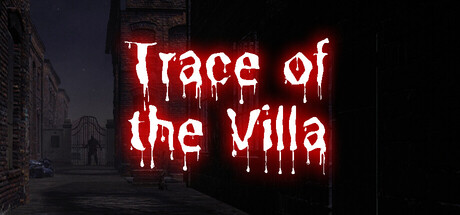
Trace of the Villa — rooms as puzzle spaces and story containers
Trace of the Villa is a slow-burn, atmospheric mystery adventure about Jin’s search for his missing sister inside a decaying, deliberately forgotten mansion. Released on 28 May, 2026 and developed and published by Steadyturtle Co., Ltd., the game stages rooms as both mechanical puzzles and fragments of a larger, erased history.

Who, what, when, where, why, how
Who is this for?
Players who prefer story-rich adventure with environmental storytelling, slow-burn suspense, and a puzzle design that asks you to read clues rather than brute-force solutions. The Steam listing classifies the title under Action / Adventure / Indie and lists accessibility options such as Color Alternatives, Custom Volume Controls, Playable without Timed Input, Subtitle Options, and Family Sharing — useful signals for players who want a single-player, PC mystery that lets them take their time.
What is the game?
Trace of the Villa follows Jin, who discovers manifests and hints in a remote mansion that suggest his sister may still be alive somewhere along the trail. Rooms appear furnished as if occupants vanished mid-routine; identities and records have been scrubbed. As Jin restores power and systems come back online, secured systems, hidden compartments and safes reveal fragments of encrypted documents and suspicious transfer records. The game frames each room as a tightly composed puzzle space that also carries narrative beats.
When and where can you play it?
Trace of the Villa was released on 28 May, 2026 and is available on Steam for PC. Its Steam appid is 3483660.
Why the mansion theme matters
The mansion setting does narrative work that goes beyond atmosphere: every furnished room, locked door and missing photograph becomes a data point in Jin’s investigation. The house is described as “less abandoned than erased,” and that erasure — absent names, falsified identities, and masked movements — is the story puzzle. Rooms become containers for both object logic (how items fit, how locks open) and clue reading (what manifests, transfer records, and encrypted fragments imply about people who passed through). That overlap of object-level puzzles and emergent narrative is central to the experience.
How you progress — clue reading, object logic, and story puzzles
According to the official description, progression is a mix of:
- Restoring estate systems (power, secured electronics) so the environment reveals new interactions;
- Solving contained mechanical puzzles, opening safes and hidden compartments to recover manifests and encrypted documents;
- Interpreting discovered records — financial trails, falsified identities, or absence of records — to form a timeline and point to the next location.
In practice, that means rooms function as both discrete puzzle arenas and narrative beats: working a lock or bringing a console back online often supplies the next clue, and the game expects you to treat objects as evidence as much as tools.

Compact facts — Trace of the Villa
| Title | Trace of the Villa |
|---|---|
| Steam AppID | 3483660 |
| Release Date | 28 May, 2026 |
| Developer | Steadyturtle Co., Ltd. |
| Publisher | Steadyturtle Co., Ltd. |
| Genres | Action, Adventure, Indie |
| Key Categories / Accessibility | Single-player; Color Alternatives; Custom Volume Controls; Playable without Timed Input; Subtitle Options; Family Sharing |
How rooms change the puzzle and story rhythm
Think of each room as a small chapter. Furnishings and interrupted routines give you immediate clues about what to examine; locked doors and powered-off systems gate access until you solve object-level puzzles or restore electricity. Because the house “reveals what it was hiding” only after systems come back online, the pacing leans toward methodical investigation: you’ll often be circling a room multiple times, each pass unlocking a new action or a new read on the evidence. That makes rooms feel layered — simultaneously spatial puzzles and narrative micro-essays on a vanished life.
Player scenarios — who should wishlist this
- Investigative slow-burn fan: You enjoy environmental storytelling where the payoff is piecing records together rather than a parade of scripted reveals.
- Puzzle player who likes grounded object logic: If you prefer reading manifests, working safes, and restoring systems to advance, Trace of the Villa’s mechanics are tailored to that workflow.
- Mystery players wary of speedruns: Accessibility options and “playable without timed input” suggest a single-player experience that won’t punish careful reading or exploration.
- Atmosphere and narrative-oriented players: The mansion’s erased identities and falsified records reward attention to detail and narrative inference over reflex-based gameplay.
Comparison — where Trace of the Villa sits among nearby puzzle-adventure titles
| Title | Genre / Tone | Puzzle focus | Exploration style | Player fit |
|---|---|---|---|---|
| Trace of the Villa | Action / Adventure / Indie — atmospheric mansion mystery | Clue reading, object logic, safes, restored systems, document fragments | Room-by-room investigative pacing; systems unlock new interactions | Fans of narrative puzzles and environmental storytelling |
| The Room | Adventure / Indie — tactile, puzzle-box atmosphere | Tightly focused mechanical puzzles and safe/box manipulation | Single-room or chained-room puzzle progression | Players who like tactile, self-contained puzzle challenges |
| The Room Two | Adventure / Indie — cryptic, exploration through puzzle sequences | Mechanical puzzle chaining with focused set-pieces | Sequential puzzle environments with an unfolding mystery | Those who want layered puzzle boxes with escalating reveals |
| Escape Simulator | Adventure / Casual / Indie — interactive escape room play | Highly interactive props, physics, community rooms; sandboxy | Room-scale, physics-driven exploration and manipulation | Players who prefer freedom to interact with everything, solo or co-op |
| Unpacking | Casual / Indie — zen, domestic storytelling via objects | Spatial, block-fitting and contextual object placement | Room-by-room domestic spaces used to tell a life story | Players who enjoy calm, narrative-driven object puzzles |
| hack_me | Indie / Simulation — hacker-simulator premise | Simulation of hacking tools and techniques (cmd, bruteforce, SQL) | Interface-driven, simulation-focused exploration | Players looking for simulation of hacking rather than environmental narrative |
YouTube discovery
For official trailers and gameplay search results, use this YouTube discovery link: Search Trace of the Villa — trailer & gameplay. This is a search/discovery path; consult the Steam page for official trailers and publisher-provided media.
Leave a Reply