Trace of the Villa: How Rooms Shape Puzzle and Story in a Mansion Mystery
Trace of the Villa is a story-rich, clue-driven mystery that places you inside a decaying mansion as Jin, a man following a lead that might finally explain his sister’s disappearance. Released on 28 May, 2026 by Steadyturtle Co., Ltd., the game folds environmental puzzles, object logic, and narrative fragments into rooms that act as both mechanical challenges and containers of story.

Who: Who should consider Trace of the Villa?
This is for players who favor atmospheric mystery adventure on PC: people who enjoy slow-burn suspense, environmental storytelling, and puzzles that reward careful reading of clues rather than twitch reflexes. The Steam page lists the title under Action / Adventure / Indie and includes single-player accessibility options such as subtitle options, custom volume controls, color alternatives, and “playable without timed input,” which supports a measured, investigative pace.
What: What kind of game is it?
Officially described on Steam, Trace of the Villa follows Jin as he investigates a remote, deliberately forgotten mansion where rooms feel “less abandoned than erased.” Gameplay centers on restoring power, unlocking secured systems, decrypting documents and piecing together manifests and hints that may point to Jin’s missing sister. The game’s structure frames rooms as sealed puzzle microcosms—each space holds objects, secured compartments, and fragments of falsified identities or financial trails that slowly reveal a larger, controlled operation.
When & Where: Availability and Steam context
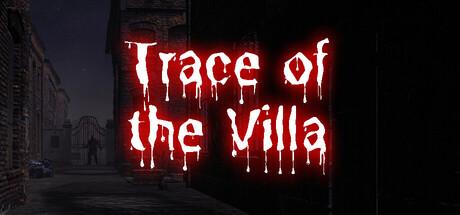
Trace of the Villa launched on 28 May, 2026 and is available on Steam for PC. The developer and publisher listed on Steam are Steadyturtle Co., Ltd. The Steam store page includes multiple screenshots and the header image shown above; if you want to view the Steam page directly, use the official store link below before the embedded widget.
Why: Why the mansion-as-room design matters
Rooms in Trace of the Villa act both as discrete puzzle arenas and as narrative containers. The physical boundaries of a room let designers concentrate a set of interlocking clues—objects, locked panels, power systems, and encrypted notes—so that solving a mechanical problem (restore power, open a safe) yields not only mechanical progression but also narrative payoff: a manifesto fragment, a transfer record, or a falsified identity. That tight coupling keeps puzzle-solving meaningful to the story: each solved mechanism shifts your understanding of what the mansion was used for and who might have passed through it without leaving a trace.

How: How you read clues, use object logic, and progress
Trace of the Villa asks players to interpret environmental evidence and treat objects as both tools and story tokens. The official description describes restoring power to the estate and watching “secured systems come back online,” which suggests a gameplay loop where interaction with tangible devices—breaker switches, safes, encrypted terminals—unlocks new layers of the narrative. Progression appears to follow these steps:
- Observe: rooms are staged with personal items but intentionally stripped of identity markers. Visual detail and placement matter.
- Interact: objects and consoles respond to player action; restoring power or opening a compartment triggers new content.
- Decode: fragments—manifests, transfer records, encrypted documents—require pattern recognition and logical inference to connect to the larger timeline.
- Synthesize: each room’s discoveries fold into a broader pattern (arrivals without records, departures without witnesses) that reframes the investigation.
That sequence makes rooms themselves the primary engine of both puzzle design and story momentum: a solved mechanism is a narrative reveal, and a narrative reveal points you toward the next room’s mechanical puzzle.
Player scenarios: Who will enjoy it — and who might not
- If you like: atmospheric mystery adventure, slow-burn suspense, environmental storytelling, and puzzles that prioritize logic and clue-reading — wishlist Trace of the Villa.
- If you want: high-octane combat or multiplayer action, this is not the primary draw; the Steam tags emphasize single-player and accessible puzzle-oriented controls.
- For players who value accessibility: the Steam page lists options like subtitles, color alternatives, and “playable without timed input,” which support different playstyles and pacing.
- For completionists: the game’s investigation-forward design rewards careful note-taking and connecting disparate documents across rooms rather than speedrunning mechanics.
Compact facts: Trace of the Villa
| Title | Trace of the Villa |
|---|---|
| Steam AppID | 3483660 |
| Release date | 28 May, 2026 |
| Developer / Publisher | Steadyturtle Co., Ltd. |
| Genres | Action, Adventure, Indie |
| Notable categories | Single-player; Color Alternatives; Custom Volume Controls; Playable without Timed Input; Subtitle Options; Family Sharing |
| Official short premise | Jin searches a remote, decaying mansion and recovers manifests and hints that his missing sister may still be alive. |
How it sits next to similar puzzle-adventure experiences
Below is an editorial comparison focused on genre, atmosphere, puzzle focus, exploration style, and player fit. This is an editorial discovery table, not a ranking.
| Title | Genre / Tone | Puzzle focus | Exploration style | Player fit |
|---|---|---|---|---|
| Trace of the Villa | Action / Adventure / Indie — mansion mystery, slow-burn | Clue-reading, object logic, restoring systems, decrypting documents | Room-by-room investigation; rooms double as story containers | Players who want atmospheric PC mystery with narrative-puzzle coupling |
| The Room | Adventure / Indie — tactile puzzle box atmosphere | Mechanical puzzles centered on intricate safes and devices | Focused, usually single-room puzzle objects with layered mechanisms | Players who enjoy handcrafted mechanical puzzles and tactile problem-solving |
| The Room Two | Adventure / Indie — expanded cryptic environments | Complex device-based puzzles with layered narrative fragments | Series of crafted locations each with a central puzzle object | Players seeking difficult, atmospheric single-player puzzle sequences |
| Escape Simulator | Adventure / Casual / Indie — interactive escape rooms | Highly interactive object manipulation and physics-based puzzles | Multiple designed rooms; community-made rooms expand variety | Players who want cooperative or solo interactive escape-room mechanics |
| Unpacking | Casual / Indie — zen, domestic narrative | Spatial, object-placement puzzles that reveal life stories | Room-to-room domestic spaces that tell a life through possessions | Players who prefer low-pressure, narrative-through-objects experiences |
YouTube discovery
If you want to see trailers or gameplay clips, search YouTube for Trace of the Villa trailers and gameplay using this link (useful for finding publisher or fan videos): YouTube search: Trace of the Villa trailer & gameplay. This is a discovery path rather than confirmation of a specific official video.
Leave a Reply