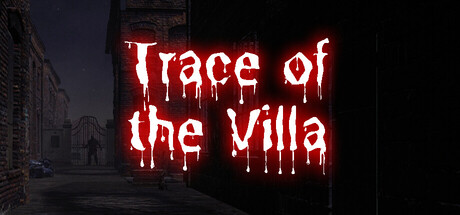
Trace of the Villa: rooms as puzzle spaces and story containers
Trace of the Villa (Steadyturtle Co., Ltd.) places you in a decaying mansion where Jin—searching for his missing sister—restores power and teases apart hidden systems, safes and encrypted fragments to follow a trail that may lead to her. Released on 28 May, 2026 for PC via Steam, the game blends clue-driven exploration, object logic and layered story puzzles inside deliberately staged rooms that act as both mechanical challenges and narrative vessels.

Who, what, when, where, why, how
Who is this for?
Players who prefer slow-burn atmospheric mystery adventures and narrative puzzle design over twitch action. If you like methodical clue-reading, piecing together documents and environmental hints, and solving object-based puzzles that unlock story beats, Trace of the Villa is pitched at that audience.
What is the game?
Trace of the Villa is an Action/Adventure indie on Steam developed and published by Steadyturtle Co., Ltd. The premise centers on Jin, who finds a remote, deliberately forgotten mansion and uncovers manifests, encrypted documents and secured systems that reveal a concealed operation as he restores power and opens locked compartments.
When and where is it available?
Trace of the Villa released on 28 May, 2026 and is available on Steam for PC. The Steam app page uses appid 3483660.
Why the theme matters
The mansion setting turns rooms into containers of absence: furnished spaces that imply interrupted lives, safes and secured systems that hold traces rather than explanations. That setup forces you to read objects and partial records as testimony—puzzles are not only barriers to progress but pieces of an investigative language the game asks you to learn.
How you progress — clue reading, object logic, story puzzles
According to the official description, progression hinges on restoring systems and reconciling fragments: restoring power brings systems online, hidden compartments and safes yield encrypted documents, and financial transfer records and falsified identities form the connective tissue of the mystery. That sequence implies a loop familiar to players of investigative puzzle games: observe a room, extract clues from props and documents, apply object logic to manipulate the environment, then decode narrative fragments to unlock the next sealed space.
Visuals: rooms staged for investigation


Quick facts
| Title | Trace of the Villa |
|---|---|
| Steam AppID | 3483660 |
| Release date | 28 May, 2026 |
| Developer | Steadyturtle Co., Ltd. |
| Publisher | Steadyturtle Co., Ltd. |
| Genres | Action, Adventure, Indie |
| Steam categories | Single-player, Color Alternatives, Custom Volume Controls, Playable without Timed Input, Subtitle Options, Family Sharing |
How rooms function here — three design notes for puzzle players
- Rooms as evidence rooms: The mansion’s staged interiors keep traces (manifests, transfer records, encrypted fragments) in plain view but incomplete, forcing inference rather than brute-force searching.
- Systems matter: Restoring power and reactivating secured systems is part of the puzzle loop—interactions unlock new affordances and reveal layers of story that recontextualize earlier clues.
- Object logic over rote inventory juggling: The official description emphasizes safes, hides and encrypted documents; expect solutions that read like forensic puzzles—map clues to devices, not just combinations of unrelated items.
Player scenarios: who should wishlist this
Scenario A — The slow investigator
You appreciate atmospheric mystery, careful note-taking, and pattern recognition. You’ll enjoy reading manifests and financial traces as clues that incrementally reveal motive and method.
Scenario B — The environmental storyteller
If you prefer story delivered through space and objects—rooms that tell half a story and wait for you to stitch the rest—you’ll value how each unlocked compartment becomes a micro-chapter.
Scenario C — The puzzle-first player
You like puzzles that change the environment when solved. The restore-power → unlock → read → reinterpret cycle described in the official text fits players who enjoy mechanical escalation tied to narrative payoff.
How Trace of the Villa compares (editorial discovery)
Below is a compact, practical comparison to nearby puzzle-adventure experiences based on genre, atmosphere, puzzle focus and player fit.
| Title | Core puzzle style | Atmosphere / story tone | Exploration style | Player fit |
|---|---|---|---|---|
| Trace of the Villa | Clue-driven, room-based object puzzles, encrypted documents, system reactivation | Atmospheric mystery, slow-burn investigation of a forgotten mansion | Linear exploration through staged rooms and locked compartments | Players who favor environmental storytelling and forensic puzzle loops |
| The Room | Mechanical safes and tactile puzzle boxes | Mysterious, often uncanny single-location investigation | Focused, single-room/attic crypt exploration | Players who like tactile, object-focused puzzle design |
| Escape Simulator | Highly interactive escape-room puzzles; item manipulation and physics | Varies by room; often playful or tense depending on map | Room-to-room escape scenarios with strong interactivity and community rooms | Players who want high interactivity, solo or cooperative play and community content |
| Unpacking | Block-fitting, object placement as narrative puzzle | Low-pressure, domestic and reflective; life story through possessions | Slow, contemplative placement rather than locked-room unlocking | Players who prefer gentle, story-led puzzles and atmosphere over tension |
YouTube discovery
If you want trailer or gameplay clips, search YouTube with this query (use as a discovery path rather than an assertion of a single official video): Trace of the Villa trailer/gameplay on YouTube.
Ready to check the Steam page?
Notes and disclaimer
All descriptive details above come from the official Steam store data for Trace of the Villa (Steadyturtle Co., Ltd.). The other titles referenced are used for lawful editorial comparison only: comparisons focus on genre, atmosphere, puzzle style, exploration and pacing rather than claims of superiority. Referenced titles and trademarks belong to their respective owners; comparisons are editorial discovery only.
Leave a Reply