
Trace of the Villa — an inspection-first mansion mystery with locked-room logic
Trace of the Villa (Steadyturtle Co., Ltd.) is a story-rich, investigation-forward adventure that puts object logic and environmental reading at its core. Released on 28 May, 2026 for PC via Steam, it stages a slow-burn mansion mystery where restoring systems and piecing together manifests and encrypted fragments drive progression.

Who this is for
Players who prefer careful, inspection-heavy play — people who enjoy reading a room for meaning, following clue chains across objects and systems, and solving puzzles that require logical inference rather than twitch reflexes. If you like slow-burn suspense and narrative puzzle design set in an atmospheric mansion, Trace of the Villa fits that appetite.
What the game is
Trace of the Villa is an Action / Adventure / Indie title from Steadyturtle Co., Ltd. The official premise places you in the role of Jin, who follows leads to a remote, decaying mansion and recovers manifests and hints indicating his missing sister may still be alive. The estate is intentionally off-grid and appears “erased”: rooms look lived-in but lack identifying details. Gameplay revolves around restoring power, reactivating secured systems, and uncovering hidden compartments and encrypted documents as you piece together the timeline and motive behind the property.
When and where
Trace of the Villa launched on Steam on 28 May, 2026. It’s presented for single-player on PC — see the Steam store for system specifics and store options.
| Title | Trace of the Villa |
| Steam AppID | 3483660 |
| Release date | 28 May, 2026 |
| Developer / Publisher | Steadyturtle Co., Ltd. |
| Genres | Action, Adventure, Indie |
| Categories (selected) | Single-player, Color Alternatives, Custom Volume Controls, Playable without Timed Input, Subtitle Options, Family Sharing |
| Official short description | “Jin has spent years searching for his missing sister… a remote, decaying mansion where he recovered manifests and hints that indicate his sister may still be alive, somewhere at the end of the trail he is about to follow.” |
How progression works — object logic and environmental puzzles
The official store text describes a gameplay loop built around restoration and discovery: when Jin restores power, “secured systems come back online,” “hidden compartments unlock,” and “safes yield fragments of encrypted documents and suspicious transfer records.” That sequence reveals the design intent — clues are embedded in both objects and infrastructure. Expect puzzle chains where one solved mechanism reconfigures another area of the house, and where reading the environment (furniture placement, missing personal items, falsified records) provides narrative context for the next objective.

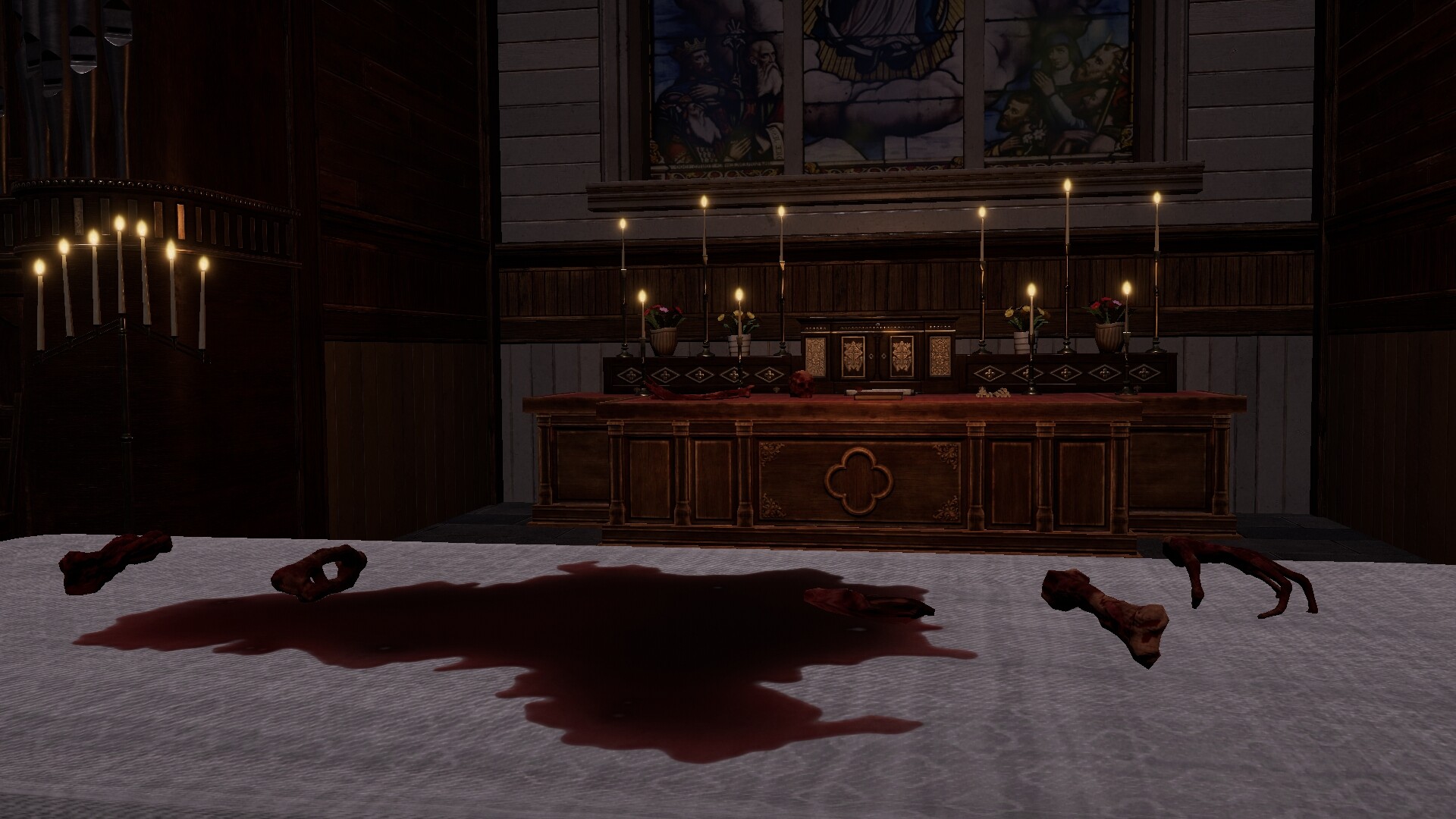
Why the theme matters — identity, erasure, and investigative pacing
The mansion’s hallmark—rooms that feel “erased” of identity—shapes the type of puzzles you’ll encounter. Rather than overt jump scares, the game’s tension emerges from the absence of personal artifacts (no photos or names) and from financial and identity trails that “lead nowhere,” according to the official description. That drives a specific investigative rhythm: assemble fragments, infer motivations from documents and layouts, and let the environment supply character through omission as much as detail.
Player scenarios — who should wishlist it
- Inspection-first players: You want to examine locks, safes, and infrastructure, and to derive answers by combining fragments across rooms.
- Narrative puzzle players: You value story beats revealed through environmental artifacts and encrypted documents rather than cutscenes.
- Slow-burn mystery fans: You enjoy methodical pacing, where restoring power and unlocking systems provide both mechanical and narrative payoff.
- Players who prefer no timing pressure: The Steam categories list “Playable without Timed Input,” so you can take a measured approach.
How to read clues: practical inspection advice
Approach rooms with a checklist mentality: look for items that break environmental patterns (an object that doesn’t belong), trace wiring or system cues (power conduits, panels that react when power returns), and collect fragments of documents for cross-referencing. The design suggests safe fragments and manifests will form chains of inference; catalog partial data and test hypotheses rather than assuming a single obvious solution.
Comparison: how Trace of the Villa sits among inspection-driven mystery games
| Title | Primary genre / release | Puzzle focus | Atmosphere & pacing |
|---|---|---|---|
| The Room | Adventure / Indie — released 28 Jul, 2014 | Object-focused mechanical puzzles; tactile inspection of a single locked device (store description: iron safe, carvings) | Claustrophobic, puzzle-box mystery with measured pacing |
| The Room Two | Adventure / Indie — released 5 Jul, 2016 | Continued object-centric puzzle design; exploration across connected mechanical set-pieces | Expands the puzzle-box into a broader, atmospheric journey |
| Escape Simulator | Adventure / Simulation / Indie — released 19 Oct, 2021 | Highly interactive rooms emphasizing physics, manipulation, and community-made puzzles | More playful and sandbox-like; allows faster trial-and-error and cooperative play |
| Trace of the Villa | Action / Adventure / Indie — released 28 May, 2026 | Inspection-heavy, environment-to-system puzzle chains; document encryption and power restoration are central | Slow-burn mansion mystery, investigative and atmospheric |
Where to find trailers and gameplay clips
If you want to see trailers or gameplay videos, use YouTube search to locate official or gameplay content: Search: Trace of the Villa trailer & gameplay on YouTube. (This is a discovery path; verify publisher uploads before assuming a clip is an official trailer.)
View Trace of the Villa on Steam
Referenced images and store details are credited to Steadyturtle Co., Ltd. / Steam. Comparisons use genre
Leave a Reply