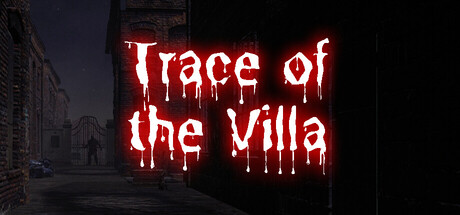
Trace of the Villa — rooms as puzzle spaces and story containers
Trace of the Villa drops you into a decaying mansion where Jin searches for his missing sister through recovered manifests, encrypted documents and locked rooms. Released on 28 May, 2026 by Steadyturtle Co., Ltd., it frames each room as both a mechanical puzzle and a container of erased lives.

Quick facts
| Title | Trace of the Villa |
|---|---|
| Release date | 28 May, 2026 |
| Developer / Publisher | Steadyturtle Co., Ltd. |
| Genres | Action, Adventure, Indie |
| Steam categories / features | Single-player; Color Alternatives; Custom Volume Controls; Playable without Timed Input; Subtitle Options; Family Sharing |
| Steam appid | 3483660 |
| Steam user reviews (public) | No user reviews |
What Trace of the Villa is
Trace of the Villa is a narrative puzzle adventure set in an off-grid mansion. The official short description frames the setup plainly: Jin has followed leads to a remote, decaying property and recovered manifests and hints that his sister may still be alive. The estate’s rooms are staged like interrupted routines—furnished but stripped of names and photos—so the main work of the player is reading those staged environments to unspool a hidden operation.
Who it’s for
This one is for players who prefer slow-burn suspense, atmospheric mystery adventure, and environmental storytelling over twitch reflexes. If you enjoy methodical clue-driven exploration, games that make object logic and inventory puzzles feel like forensic work, or a story that reveals itself room by room, this fits. Steadyturtle explicitly lists accessibility features like custom volume controls and subtitle options, which also signals a design aimed at careful reading rather than split-second action.
When and where
Trace of the Villa released on Steam on 28 May, 2026. It is available on PC via its Steam store page (appid 3483660) and listed by Steadyturtle Co., Ltd. as both developer and publisher.
Why the theme matters
The mansion-as-container motif is central. Rooms here do double duty: they gate progress mechanically and host narrative fragments that imply wider systems—falsified identities, encrypted transfers, and people moved through the estate under control. That structural choice turns clue-reading into an act of interpretation: each locked door or restored system doesn’t just open space, it opens context. For players who value psychological investigation and story-rich adventure, this design makes puzzles carry weight beyond the immediate solution.
How clue reading, object logic and story puzzles shape the experience
Trace of the Villa stages puzzles as investigation. Clue reading is the primary mode: manifests, safes, and secured systems reveal fragments that must be stitched together. Object logic—how items combine, where they fit in the environment, and how mechanical locks respond—anchors that investigation in tactile problem-solving. Story puzzles are crafted so solving one mechanical or inventory challenge often yields an encrypted document or a restored system that reframes prior discoveries. That layering makes progression feel like piecing together a timeline, not just opening the next door.


Player scenarios: who will enjoy it and why
- Slow-burn detectives: You enjoy reading manifests, decrypting documents, and letting a plot accrue from small, often offhand clues.
- Atmosphere-first players: You appreciate lighting, sound design and room composition that tell a story without exposition.
- Puzzle-motivated explorers: You want puzzles that connect to the narrative—opening a safe should reveal context that changes how you view another room.
- Accessibility-minded players: Features like subtitles and custom volume controls make it easier to focus on the investigative elements rather than UI hurdles.
How it differs from nearby puzzle/mystery titles
Below is a compact comparison focused on relevant editorial criteria: genre, atmosphere, puzzle focus, exploration style and pacing. This is meant as editorial discovery—not endorsement.
| Title | Genre / Tone | Puzzle focus | Exploration / Pacing |
|---|---|---|---|
| Trace of the Villa | Action / Adventure / Indie — mansion mystery, psychological investigation | Clue reading, object logic, encrypted documents and locked systems | Room-by-room, slow-reveal, investigative; progression tied to restored systems |
| The Room | Adventure / Indie — intimate mechanical puzzles | Mechanical safes and tactile puzzle boxes | Single-room/series focus with tight puzzle loops and strongly tactile solutions |
| Escape Simulator | Adventure / Casual / Indie — interactive escape rooms | Highly interactive object manipulation and physics-based puzzles | Room-focused with sandbox interactions; can be faster-paced and multiplayer |
| Unpacking | Casual / Indie — quiet, domestic storytelling | Spatial, placement and inference from possessions | Zen, vignette-based pacing; narrative emerges through object placement rather than encrypted evidence |
Deciding whether to wishlist
Wishlist Trace of the Villa if you prize atmospheric mystery adventure, careful environmental storytelling and puzzles that serve narrative reconstruction. If you prefer purely mechanical puzzle-boxes with no broader institutional mystery, or fast-paced action puzzles, this one’s built for a slower, investigative sensibility.
Trailer and gameplay discovery
Search for trailer and gameplay footage via YouTube: Trace of the Villa — YouTube search. Use that search path as a discovery tool; the result page is not guaranteed to be an official video unless verified on the Steam page.
Steam link
Visit the Trace of the Villa Steam page to wishlist or purchase: Trace of the Villa on Steam
Notes and disclaimer
Information in this article is based on official Steam app data and the game’s public store listing. Referenced third-party titles and trademarks belong to their respective owners; comparisons here are editorial discovery only and do not imply endorsement or official association.
Leave a Reply