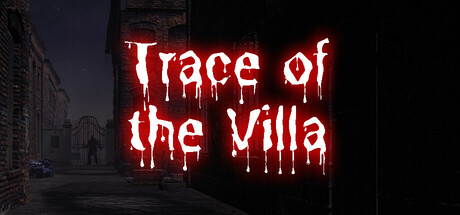
Trace of the Villa: rooms as puzzle spaces and story containers
Trace of the Villa places you in a remote, decaying mansion where rooms are both riddle and record — each furnished space hides mechanical logic, encrypted fragments, and the traces of people who have been purposely erased. Released 28 May, 2026 by Steadyturtle Co., Ltd., the game blends clue-driven exploration with narrative puzzle design to turn environmental detail into investigative sleuthing.

Who, what, when, where — the essentials
Who: Developed and published by Steadyturtle Co., Ltd. What: Trace of the Villa is an Action / Adventure / Indie title that frames investigative puzzle work inside a dilapidated mansion. When / Where: it released on Steam on 28 May, 2026 for PC (Steam storefront: see link and widget below). Why: its premise — Jin searching for a missing sister — makes the rooms feel personal, not just architectural. How: you restore systems, unlock compartments, and read manifests and encrypted fragments to follow a trail.
Compact facts
| Title | Trace of the Villa |
|---|---|
| Steam AppID | 3483660 |
| Release date | 28 May, 2026 |
| Developer / Publisher | Steadyturtle Co., Ltd. |
| Genres | Action, Adventure, Indie |
| Notable Steam categories | Single-player; Color Alternatives; Custom Volume Controls; Playable without Timed Input; Subtitle Options; Family Sharing |
How clue reading, object logic and story puzzles shape the experience
Trace of the Villa treats each room as a concentrated information node. Clues arrive as physical artifacts (manifests, transfer records), system restores (power bringing secured systems online), and environmental omission (rooms furnished but stripped of names or photographs). The act of reading is literal — parsing documents, matching fragments, and using recovered data to unlock the next compartment — and interpretive: players must infer what the absence of personal history implies.
Object logic governs progression: items and restored devices alter the affordances of a space. Switch a circuit back on and a locked desk opens; arrange components correctly and encrypted fragments reveal metadata. Story puzzles then stitch these solved mechanics into narrative beats. Solving a safe doesn’t just grant a key — it yields a document that reframes previous observations, changing how you read earlier rooms.
Rooms as puzzle spaces and story containers
In well-designed room-based puzzle games, architecture guides attention: furniture, wiring, and placement suggest which interactions are meaningful. Trace of the Villa emphasizes this by keeping rooms lived-in yet eerily depersonalized — the atmosphere is suffocating and hints at a larger operation behind the residence. Rooms function as self-contained puzzles that also serve as narrative beats; each completed area advances both the mystery and the protagonist’s investigation.


Who should wishlist this on Steam?
Wishlist Trace of the Villa if you favor atmospheric mystery adventure with slow-burn suspense, enjoy reading and assembling clues into timelines, and like puzzle design that ties mechanical solutions to narrative payoff. Players who prefer quick, action-first pacing or overt combat-heavy design should note the game’s emphasis on investigation and environmental storytelling.
Player scenarios — concrete examples
- You like to methodically reconstruct a life from objects: you’ll spend time scanning manifests, cross-referencing encrypted notes and watching how a restored security system reframes a hallway you already visited.
- You enjoy mechanical object puzzles that unlock narrative fragments: treat safes and secured systems as both logical locks and story beats that reveal the estate’s role in a larger operation.
- You prefer atmospheric, psychological investigation over jump scares: the mansion plays as unsettling and erased, rewarding close observation more than reflex-based play.
How Trace of the Villa compares to nearby puzzle-adventure titles
The following comparison focuses on genre, atmosphere, puzzle focus, exploration style, story tone, and pacing — editorial discovery rather than endorsement.
| Title | Release | Genre / Core focus | Atmosphere & Puzzle focus | Player fit |
|---|---|---|---|---|
| Trace of the Villa | 28 May, 2026 | Action / Adventure / Indie — clue-driven exploration | Mansion mystery, slow-burn suspense; rooms as narrative containers and mechanical puzzles | Investigation-focused players who read documents and piece timelines together |
| The Room | 28 Jul, 2014 | Adventure / Indie — tactile box puzzles | Lockbox and contraption puzzles with a tightly focused, tactile atmosphere | Players who love mechanical puzzle boxes and focused single-room mysteries |
| Escape Simulator | 19 Oct, 2021 | Adventure / Simulation / Indie — interactive escape rooms | Highly interactive rooms, physics-based experimentation; community-made variety | Players who want interactive object manipulation and co-op or puzzle variety |
| Unpacking | 1 Nov, 2021 | Casual / Indie / Simulation — object placement & environmental storytelling | Zen, domestic atmosphere; narrative emerges from item placement rather than encrypted documents | Players who enjoy quiet, reflective storytelling told through objects and spaces |
Why the mansion setting matters
The mansion is not only a backdrop but the primary storytelling device: it archives absence. Rooms that lack names or photographs emphasize removal of identity; recovered documents suggest a falsified system behind arrivals and departures. For players who value psychological investigation and environmental storytelling, the mansion’s architecture becomes a puzzle in itself — you don’t just solve it, you read it.
Where to learn more — Steam and trailers
View the Trace of the Villa Steam page and consider wishlisting: Trace of the Villa on Steam.
YouTube discovery
Search for gameplay or trailer uploads (use this as a discovery path): Trace of the Villa — YouTube search.
Final notes and disclaimer
Trace of the Villa is an action-adventure indie released 28 May, 2026 by Steadyturtle Co., Ltd., blending clue-driven exploration with story-linked puzzles housed in a mansion mystery. The comparisons above are editorial — based on genre, atmosphere and puzzle style — and intended to help readers decide whether the game’s investigative, room-focused design matches their tastes.
Leave a Reply