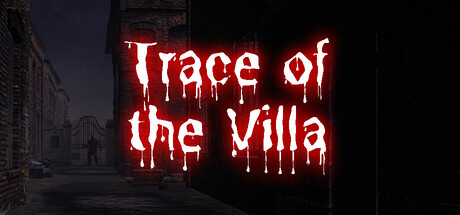
Trace of the Villa: Rooms as Puzzles and Story Containers
Trace of the Villa frames its mystery inside a decaying mansion, where emptied rooms become the game’s primary language for story and puzzle work. Released on 28 May, 2026 by Steadyturtle Co., Ltd., it positions Jin’s private search for a missing sister inside a house that slowly returns to life as you solve each layered lock and secret.

Quick facts
| Title | Trace of the Villa |
|---|---|
| Steam AppID | 3483660 |
| Release date | 28 May, 2026 |
| Developer | Steadyturtle Co., Ltd. |
| Publisher | Steadyturtle Co., Ltd. |
| Genres | Action, Adventure, Indie |
| Categories | Single-player; Color Alternatives; Custom Volume Controls; Playable without Timed Input; Subtitle Options; Family Sharing |
| Short description | Jin has spent years searching for his missing sister, pursuing leads that took him to a remote, decaying mansion where he recovered manifests and hints that indicate his sister may still be alive, somewhere at the end of the trail he is about to follow. |
Who is this for?
Players who prefer atmospheric mystery adventure on PC — those who value environmental storytelling and slow-burn suspense over twitch reflexes. If you enjoy detective-style detail work (reading documents, decoding transfer records, and interpreting staged, lived-in spaces) and want single-player, subtitle-enabled options, Trace of the Villa suits that profile.
What the game is
Trace of the Villa is a story-driven adventure set in an isolated, deliberately forgotten mansion. The protagonist, Jin, pursues a lead that reveals rooms staged as if occupants vanished mid-routine; restoring power reactivates secured systems, opens hidden compartments, and surfaces encrypted documents and manifests. Puzzles are anchored to those discoveries: safes, locked systems, and fragments of financial and identity traces that together form the investigative thread.
When and where
Trace of the Villa launched on Steam on 28 May, 2026. It appears on the Steam store page with header and screenshot assets, subtitle options, and accessibility-minded categories such as Playable without Timed Input and Color Alternatives.

Why the theme matters
Rooms in Trace of the Villa are not just backdrops — they’re containers for identity and absence. The official description emphasizes missing records, falsified identities, and evidence of people moved under control. That makes every dresser, ledger, and dead terminal potentially meaningful: the game asks you to read rooms as arguments, not just pretty sets. In a puzzle-adventure context, that fuels a psychological investigation feel where each solved puzzle is also an interpretive beat in a larger narrative.
How you read clues and progress
Progression is clue-driven and layered. The mansion’s systems return as you restore utilities; locked doors and safes yield encrypted fragments and manifests; these fragments cross-reference other objects and documents. Object logic matters — how an item can be combined, where a notation points on a map, which ledger entry unlocks a code. The interplay between environmental hints (furniture arrangement, missing photos, staged objects) and mechanical puzzles (safes, terminals, hidden compartments) is the primary design thread: solving one puzzle often changes the room itself, revealing further evidence and routes.
Player scenarios — who will get the most out of it
- Slow investigators: You like careful reading, cross-referencing notes, and taking time to understand a space before moving on.
- Atmosphere-first players: If mood, texture, and implied history carry more weight than combat or speed runs, this fits.
- Puzzle-story hybrids: You want puzzles that feel like forensic work — decrypting documents, restoring power, or unsealing safes that reveal story beats.
- Accessibility-minded players: Categories such as Playable without Timed Input and Subtitle Options make it a reasonable fit for players who need less reflex-heavy pacing and clearer reading options.
How it compares to nearby puzzle/adventure experiences
Below is a focused editorial comparison on lawful criteria: genre, atmosphere, puzzle focus, exploration style, story tone, and pacing.
| Title | Genre | Puzzle focus | Atmosphere / Story tone | Exploration / Playstyle |
|---|---|---|---|---|
| Trace of the Villa | Action, Adventure, Indie | Environmental puzzles, locked systems, encrypted documents, safes | Mansion mystery, slow-burn psychological investigation | Single-player, methodical clue-reading; rooms reveal narrative as puzzles are solved |
| The Room | Adventure, Indie | Tactile, mechanical puzzle-box interactions | Closely focused, uncanny object-driven mystery | Single-player, focused puzzle-chamber progression |
| The Room Two | Adventure, Indie | Complex mechanical puzzles across multi-part objects | Mystery with cryptic artifacts and escalating stakes | Single-player, chaptered puzzle progression |
| Escape Simulator | Adventure, Casual, Indie, Simulation | Highly interactive escape-room puzzles; physics and object interaction | Playful to tense, depending on room | Solo or co-op, sandbox-like object interaction and community rooms |
| Unpacking | Casual, Indie, Simulation | Spatial, domestic-puzzle composition (placement and context) | Quiet, intimate, slice-of-life narrative revealed through objects | Solo, low-pressure, observational play |
| hack_me | Indie, Simulation | Simulated hacking tools and command-based puzzles | Technical, system-focused, less atmospheric fiction
Steam pageView Trace of the Villa on Steam YouTube discoveryFor trailer and gameplay discovery, use YouTube search rather than relying on unverified embeds: Find Trace of the Villa trailer and gameplay searches on YouTube. CommentsMore posts |
Leave a Reply