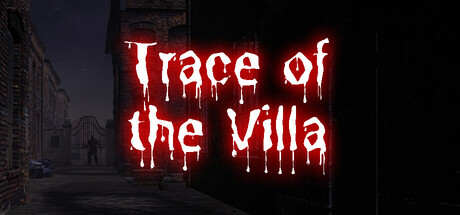
Trace of the Villa — Rooms as Puzzle Spaces and Story Containers
Trace of the Villa places you in a remote, decaying mansion where Jin — the protagonist named in the official Steam page — follows fragmented manifests and hints that suggest his missing sister may still be alive. Released on 28 May, 2026 by Steadyturtle Co., Ltd., the game frames each room as an investigative stage: objects, locked systems, and personal traces combine into clue-driven puzzles that reveal the house’s erased histories.

| Title | Trace of the Villa |
|---|---|
| Release date | 28 May, 2026 |
| Developer / Publisher | Steadyturtle Co., Ltd. |
| Genres | Action, Adventure, Indie |
| Steam categories | Single-player; Color Alternatives; Custom Volume Controls; Playable without Timed Input; Subtitle Options; Family Sharing |
Who this is for
If you favor atmospheric mystery adventure and slow-burn suspense on PC — players who appreciate environmental storytelling and puzzle-focused exploration — Trace of the Villa is clearly pitched at you. The Steam page frames the experience around a single-player, story-rich investigation rather than multiplayer or arcade action, so solo explorers who enjoy reading clues and assembling contextual puzzles will get the most from it.
What the game is
According to the official Steam description, Trace of the Villa follows Jin as he investigates a deliberately forgotten mansion and recovers manifests and hints that may point to his missing sister. The house is furnished as if occupants vanished mid-routine; locked doors, secured systems, safes and encrypted documents appear as the narrative devices that the player must interact with to reconstruct what happened.
When and where
Trace of the Villa launched on Steam on 28 May, 2026. The Steam store page lists it as a single-player PC release; the store appid is 3483660 (Steam link provided at the end of the piece).
Why the theme matters: rooms as containers of story
Rooms in Trace of the Villa act both as puzzle arenas and narrative containers. Furnishings left in mid-use, intentionally blank personal records, and secured systems that only reveal fragments once powered back up are not just set dressing — they are the primary language the game uses to tell its story. When identities are said to be “removed” and transfers and falsified records surface, the room-level details become evidence. That emphasis on micro-history — a ledger tucked in a drawer, a safe with partial code clues, a powered terminal that slowly reveals files — ties puzzle resolution directly to narrative progression.
How you read clues and progress
On the official page, progression is described as an investigative loop: restore systems, unlock compartments, gather fragments of encrypted documents and transfer records, and follow the manifests. That implies a puzzle design where object logic (how items relate to each other), clue reading (interpreting manifests and traces), and story puzzles (documents that change your understanding of the estate) are the engines of forward momentum. Expect multi-step puzzles where one solved lock or restored system yields the next clue rather than isolated, standalone riddles.
Player scenarios — who should wishlist it
- Story-first explorers: If you enjoy piecing together a timeline from environmental details and fragmented documents, this will match your habits.
- Puzzle readers: Players who like decoding safe combinations, following financial trails, and translating contextual clues into solutions will find the mansion’s rooms rewarding.
- Atmosphere seekers: If slow-burn tension and a suffocating sense of erasure in a single location appeal to you, add it to your wishlist.
- Not ideal if: You prefer multiplayer action, fast-paced combat loops, or lucky RNG progression — the Steam page emphasizes investigation and single-player exploration.
Comparison: Trace of the Villa versus similar puzzle/adventure approaches
Below is a brief editorial comparison on lawful criteria: genre, atmosphere, puzzle focus, exploration style, story tone and pacing. This is meant to help you decide which title better fits your preferences.
| Title | Genre / Tone | Puzzle focus | Exploration style | Pacing / Player fit |
|---|---|---|---|---|
| Trace of the Villa | Action / Adventure; psychological investigation; atmospheric mystery | Clue-driven: manifests, encrypted documents, safes, powered systems | Single-location mansion; rooms as narrative containers | Slow-burn investigation; best for patient explorers |
| The Room | Adventure / Indie; intimate, mechanical mystery | Object-centric mechanical puzzles (focus on physical safes and devices) | Single-room or single-attic focus; tactile puzzle boxes | Tight, deliberate pacing for puzzle solvers |
| The Room Two | Adventure / Indie; expanded mechanical mystery | Layered device puzzles with narrative beats | Multiple interlinked environments, continued emphasis on tactile puzzles | Progressive difficulty and immersive puzzle flow |
| Escape Simulator | Adventure / Casual; playful escape-room simulation | Highly interactive physical puzzles; move furniture and break objects | Multiple designed escape rooms, community-made content | Flexible pacing; solo or co-op; suited for tactile, sandbox puzzle play |
| Unpacking | Casual / Indie; zen, domestic storytelling | Block-fitting and contextual inference about a life through objects | Sequence of domestic spaces revealing biography | Low-pressure, reflective pacing; best for narrative ambient players |
Screenshots: visual cues you’ll be parsing

 View Trace of the Villa on Steam
YouTube discovery
For trailer and gameplay discovery, use YouTube search rather than relying on unverified embeds: Find Trace of the Villa trailer and gameplay searches on YouTube.
Leave a Reply