
Trace of the Villa — an escape-room mystery built around power, doors, and evidence
Trace of the Villa drops you into a decaying, off-the-grid mansion as Jin, a man following leads about his missing sister. The core loop is tactile and investigative: restore power, watch systems and locks come back to life, and follow clue chains that transform rooms from sealed tableaux into sources of evidence.

Quick facts
| Title | Trace of the Villa |
|---|---|
| Developer / Publisher | Steadyturtle Co., Ltd. |
| Release date | 28 May, 2026 |
| Genres | Action, Adventure, Indie |
| Steam categories / features | Single-player; Color Alternatives; Custom Volume Controls; Playable without Timed Input; Subtitle Options; Family Sharing |
| Steam page | Trace of the Villa on Steam |
Who should wishlist this
If you favor atmospheric mystery adventure with slow-burn suspense and environmental storytelling, Trace of the Villa is aimed at that playstyle. Players who like clue-driven exploration and psychological investigation — someone who enjoys reading a room for narrative fragments rather than action-only encounters — will find the mansion’s locked doors and reactivated systems rewarding.
It’s also suited to players who want accessibility options on PC: the Steam page lists subtitle options, color alternatives, and controls that do not require timed input, which helps if you prefer methodical, unhurried puzzling.
What the game is — the setup and the mechanics
Official Steam text frames the premise plainly: Jin has been searching for his missing sister for years and a lead takes him to a remote, deliberately forgotten mansion. Inside, rooms feel “erased” rather than merely abandoned. The gameplay loop the page describes centers on restoring power to the estate; when systems come back online, secured compartments unlock and safes yield fragments of encrypted materials.

Those mechanics position Trace of the Villa between escape-room style puzzle design and investigative adventure: each solved device or reconnected circuit reveals documents, transfer records, and encrypted fragments that extend the trail. The narrative puzzles are chained — one unlocked cabinet often supplies the clue needed to operate another system — so progress is cumulative rather than isolated riddles.
When and where
Trace of the Villa is available on Steam; the official release date listed on the Steam page is 28 May, 2026. The Steam page identifies Steadyturtle Co., Ltd. as both developer and publisher and lists the game under Action, Adventure, and Indie.
Why the mansion and the power-restoration loop matter
Thematically, restoring power is a clever gameplay metaphor: the act of switching circuits back on mirrors unearthing hidden history. The description emphasizes erased identities, falsified records, and a controlled flow of people through the property — which frames puzzles as forensic work rather than purely mechanical obstacles. If you enjoy environmental storytelling that makes tools and terminals into narrative devices, this setup promises that every unlocked system pushes the investigation forward.
How you progress — reading environments and reconstructing evidence
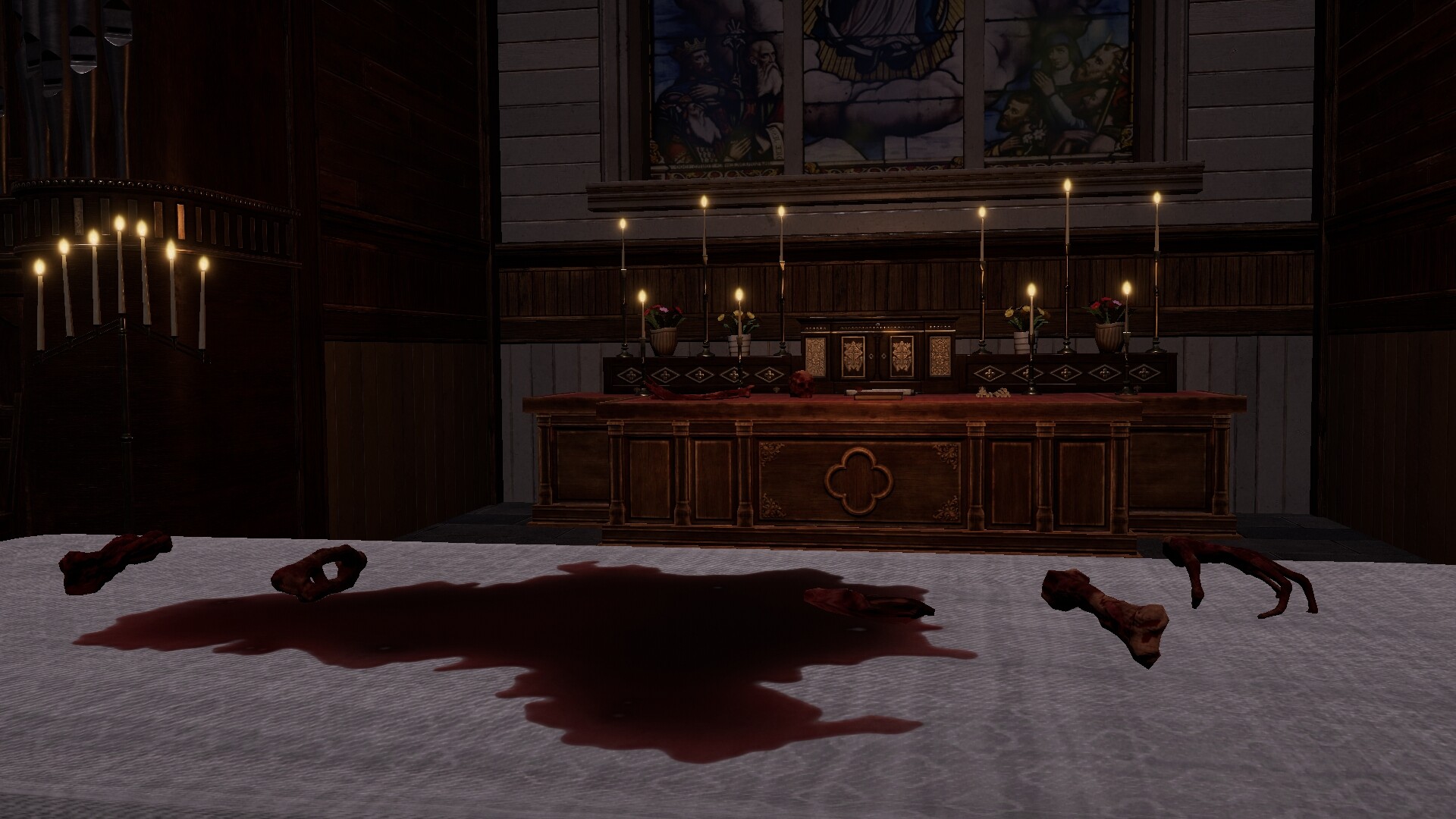
According to the official description, progression is about reconstructing a timeline: reactivated systems unlock hidden compartments, safes provide encrypted documents, and transfer records point to larger operations. That chain-based design rewards careful reading of environments — the same visual detail that makes a room feel “erased” also becomes a clue catalogue. The emphasis is on assembling fragments into a coherent narrative rather than on reflex tests; the Steam categories note that the game is playable without timed input.
Player scenarios — who will enjoy what
- Puzzle-first explorers: If you like multi-step solutions where an early clue only makes sense in a later room, this game’s chained puzzles will satisfy you.
- Slow-burn story seekers: Players who prefer uncovering story through documents, logs, and environmental cues — rather than through cutscenes — should wishlist it.
- Accessibility-minded players: If you need subtitles, color alternatives, or prefer no timed inputs, the Steam page lists those features explicitly.
- Not for you if: You want fast action, frequent combat, or isolated one-off puzzles; the emphasis here is atmosphere, reading, and reconstruction.
How it compares to other mystery/puzzle experiences
Below is a concise comparison on lawful editorial criteria: genre, atmosphere, puzzle focus, exploration style, story tone, pacing, and player fit. These comparisons rely on the publicly available descriptions of each title.
| Game | Genre / Vibe | Puzzle focus | Exploration style | Story tone / pacing | Player fit |
|---|---|---|---|---|---|
| Trace of the Villa | Action / Adventure / Indie — mansion mystery | Chained, evidence-driven puzzles tied to restoring systems | Environmental reading; rooms unlock as power returns | Slow-burn, investigative, forensic assembly of clues | Players who want atmospheric, narrative puzzle progression |
| The Room | Adventure / Indie — tactile safe-and-box puzzler | Mechanical puzzle boxes with layered interactions | Focused, single-room/box exploration | Mysterious, intimate, puzzle-led pacing | Players who love precision mechanical puzzles and locked-box aesthetics |
| The Room Two | Adventure / Indie — expanded mechanical mystery | Complex mechanical puzzles across interconnected spaces | Broader environments than The Room; still puzzle-centric | Atmospheric and escalating mystery | Players who enjoyed The Room and want larger-scale mechanical puzzles |
| Escape Simulator | Adventure / Simulation / Indie — interactive escape rooms | Highly interactive object-based puzzles; physics and manipulation | Room-by-room scenarios, often community-made | Varied pacing depending on room creator; typically puzzle-first | Players who enjoy tactile object interaction and co-op or solo escape-room play |
| Hi‑Fi RUSH | Action — rhythm-synced combat and vibrant presentation | Combat and rhythm mechanics rather than investigative puzzles | Linear action levels with music-synced challenges | Fast-paced, upbeat, and kinetic | Players who favor rhythm-action and high-energy pacing over environmental mystery |
YouTube discovery
If you want to see trailer or gameplay footage, use this YouTube search path to find videos related to Trace of the Villa (search results may include developer trailers and community captures): Search Trace of the Villa on YouTube.
Final take — deciding if it fits your tastes
Trace of the Villa markets itself around methodical investigation: restoring power is not only a mechanical goal but the narrative engine that unlocks both gameplay and story. If you prioritize environmental storytelling, clue chains, and forensic puzzle progression in a mansion setting, add it to your wishlist on Steam. If you prefer stand-alone puzzle boxes or high-tempo action, consider the comparison table above to match your preference.
Leave a Reply