
Trace of the Villa — an escape-room style mystery anchored by power, passageways, and paper trails
Trace of the Villa casts you as Jin, a man whose long search for a missing sister leads to a remote, decaying mansion where nothing is as it seems. The gameplay loop centers on restoring power, opening locked spaces, and reconstructing fragments of evidence to follow a chain of clues toward whatever — or whoever — remains at the end of the trail.

Quick facts
| Title | Trace of the Villa |
|---|---|
| Developer / Publisher | Steadyturtle Co., Ltd. |
| Release date | 28 May, 2026 |
| Genres | Action, Adventure, Indie |
| Steam categories | Single-player; Color Alternatives; Custom Volume Controls; Playable without Timed Input; Subtitle Options; Family Sharing |
| Premise (official short) | Jin has spent years searching for his missing sister, pursuing leads that took him to a remote, decaying mansion where he recovered manifests and hints that indicate his sister may still be alive, somewhere at the end of the trail he is about to follow. |
Who should play Trace of the Villa?
Players who like methodical, clue-driven exploration and atmospheric mystery adventure will find the central mechanics appealing. This is a good fit for people who enjoy locked-room thinking — parsing a confined environment for meaning — and for those who prefer investigation paced by uncovering systems rather than constant combat. Because the Steam listing highlights accessibility features such as custom volume controls and subtitle options, it also suits players who value configurable play conditions.
What the game is — atmosphere, stakes, and systems
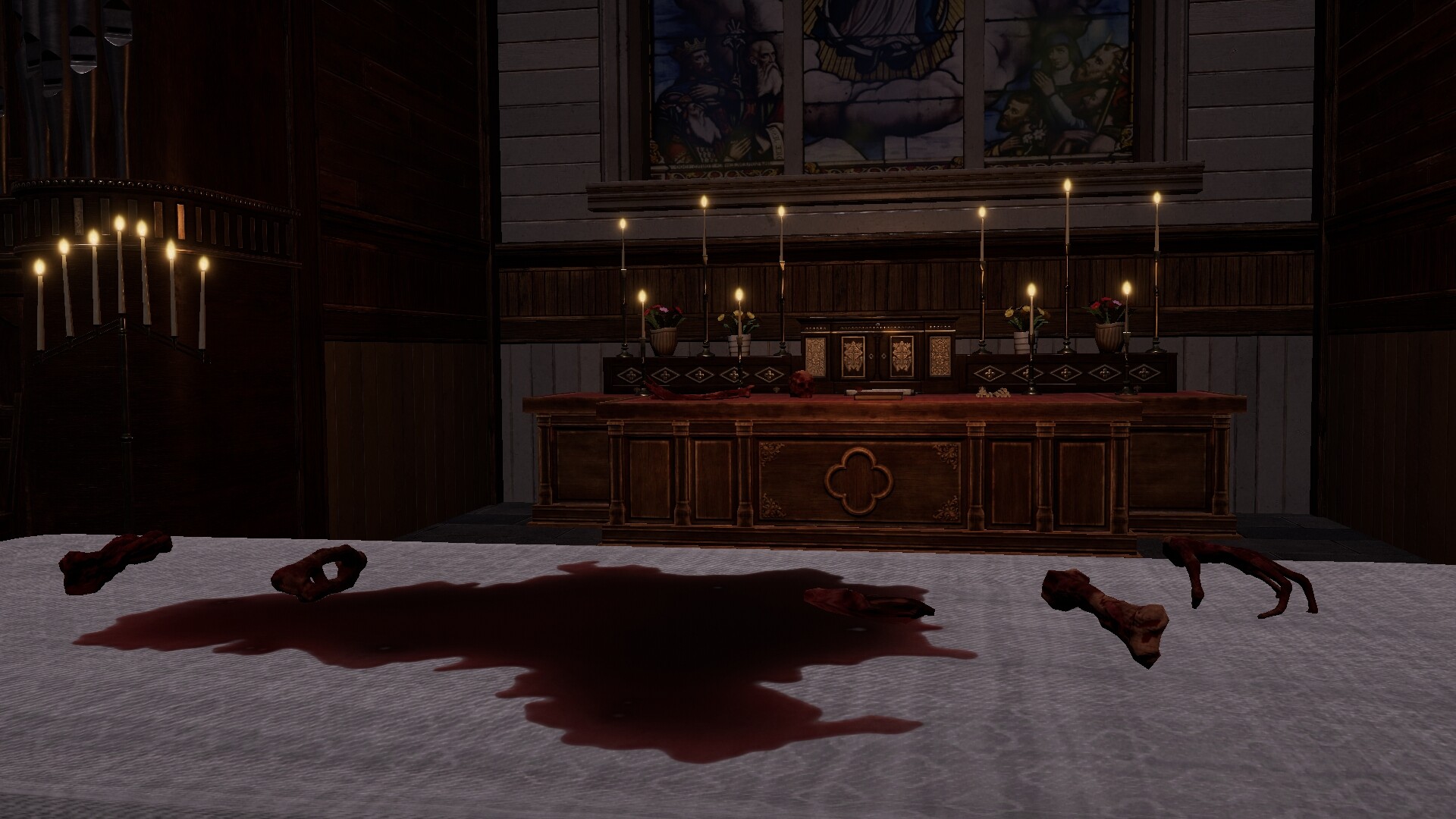
The official Steam description frames Trace of the Villa as a mansion mystery with a personal stake: Jin’s missing sister. Rooms feel “less abandoned than erased,” and a recurring conceit is that identities have been scrubbed — no photographs, no names. The house resists casual inspection: locked doors, secured systems, safes and encrypted fragments. Crucially, the game makes restoring power an explicit trigger for progression: when Jin brings systems back online, hidden compartments open, safes yield documents, and the estate’s concealed operation begins to appear.

That loop — restore power, unlock space, collect fragments, reconstruct evidence — is both tactile and investigative. Rather than solving isolated riddles, players build chains of inference: a manifest here corroborates a transfer record found in a safe there, which then suggests where a locked door may lead. The tone set by the Steam text suggests slow-burn suspense and psychological investigation more than action spectacle, even though the game’s genre tags include Action and Adventure.
When and where to play
Trace of the Villa is available on Steam with a release date of 28 May, 2026. It’s presented as a PC Steam indie title: the store page lists the developer and publisher as Steadyturtle Co., Ltd. and includes compatibility and accessibility categories aimed at single-player PC audiences.
Why the theme matters — identity, erasure, and reading the environment
The game’s premise — a property that appears intentionally anonymized — turns environmental storytelling into the primary narrative engine. When photographs, names and histories are absent, the artifacts that remain (manifests, transfer records, encrypted documents) become the evidence that players must reconstruct. That design choice positions the mansion itself as a witness whose testimony is fragmented until power and patience let you read it properly.
How progression works: locked-room thinking, clue chains, and environmental reading
Steam’s official description makes the flow explicit: secured systems come back online when you restore power; hidden compartments and safes then yield fragments of documents; each recovered item helps build the timeline. Expect a puzzle loop focused on systems-based unlocking rather than isolated minigames. Success depends on careful observation — cataloguing snippets of text, cross-referencing manifests and transfer records, and following the logical threads that unlock the next physical or electronic barrier.
Player scenarios — who will enjoy the loops in practice
- Analytical investigator: You like assembling timelines and tracing paper trails. The game’s emphasis on encrypted documents and manifests rewards piecing together partial evidence.
- Atmosphere-first explorer: You prefer slow, tense exploration over action-heavy encounters. The mansion’s “erased” ambience and staged interiors are designed for players who read rooms like pages.
- Puzzle minimalist: You avoid twitchy time-limited mechanics. The Steam categories include “Playable without Timed Input,” which aligns with a reflective, methodical playstyle.
- Accessibility-minded player: If subtitles and custom volume controls are important, the store page explicitly lists those options.
How it compares to nearby mystery and puzzle titles
Below is a concise editorial comparison to help decide if Trace of the Villa fits your taste. These comparisons focus on genre, atmosphere, puzzle focus, exploration style, story tone and pacing — not on sales or ratings.
| Title | Genre / Focus | Puzzle style | Exploration & Pacing | Player fit |
|---|---|---|---|---|
| The Room | Adventure / Indie — locked puzzle box | Mechanical, tactile safes and devices | Compact, focused rooms; deliberate pacing | Players who enjoy intimate, object-based puzzles |
| The Room Two | Adventure / Indie — expanded locked-room puzzles | Layered mechanical puzzles across rooms | Progressive revelation across connected spaces | Those who like escalating mystery in room-sized set pieces |
| Escape Simulator | Adventure / Simulation — high interactivity, co-op | Physical, inventory-driven puzzles with sandbox interaction | Variable pacing; community rooms span casual to fiendish | Players who want tactile manipulation and optional co-op |
| Hi‑Fi RUSH | Action — rhythm-action hybrid | Beat- and reflex-based systems, not investigation | Fast-paced, combat and rhythm forward | Not ideal for slow environmental reading; suits action/rhythm fans |
Deciding checklist — should you wishlist Trace of the Villa?
- Wishlist if you prioritize environmental storytelling, slow-burn suspense and investigative puzzle chains centered on documents and systems.
- Be cautious if you want light, pick-up-and-play escape rooms or multiplayer co-op; the Steam listing emphasizes single-player investigation and a narrative-led approach.
- Use the Steam categories (subtitles, custom volume, no timed input) to match your accessibility preferences before you buy.
YouTube discovery
If you want video impressions, search for Trace of the Villa trailers or gameplay on YouTube: YouTube search: Trace of the Villa trailer & gameplay. This link is provided as a discovery path; the store’s assets include a trailer thumbnail but do not certify a specific official video file in this article.
Final notes and legal
Trace of the Villa is developed and published by Steadyturtle Co., Ltd., and released on Steam on 28 May, 2026. The game’s core loop — restoring power to reveal locked spaces and reconstructing fragments of evidence — positions it as a story-rich adventure for players who enjoy locked-room thinking, clue chains, and reading environments for narrative payoff.
Disclaimer: referenced titles and trademarks belong to their respective owners. Comparisons in this article are editorial discovery only and not endorsements or claims of superiority.
Leave a Reply