
Trace of the Villa — an escape-room style mystery built around power, locks, and evidence
Trace of the Villa places you in a decaying, deliberately cut-off mansion where the act of bringing systems back online is the primary key to unlocking rooms, safes, and a concealed timeline. The game’s loop — restore power, open spaces, then reconstruct fragmented manifests and transfer records — is designed around chained clues and environmental reading rather than combat or timed reflexes.

| Title | Trace of the Villa |
|---|---|
| Steam appid | 3483660 |
| Release date | 28 May, 2026 |
| Developer / Publisher | Steadyturtle Co., Ltd. |
| Genres | Action, Adventure, Indie |
| Categories | Single-player; Color Alternatives; Custom Volume Controls; Playable without Timed Input; Subtitle Options; Family Sharing |
Who is this for?
If you prefer atmospheric mystery adventure and slow-burn suspense that rewards close reading of spaces, Trace of the Villa is aimed at you. The Steam page frames the protagonist’s work as investigative: Jin follows leads to a forgotten estate and pieces together evidence from manifests and secured systems, so players who like narrative puzzle design and story-rich exploration will find the premise familiar and focused.
What the game actually is
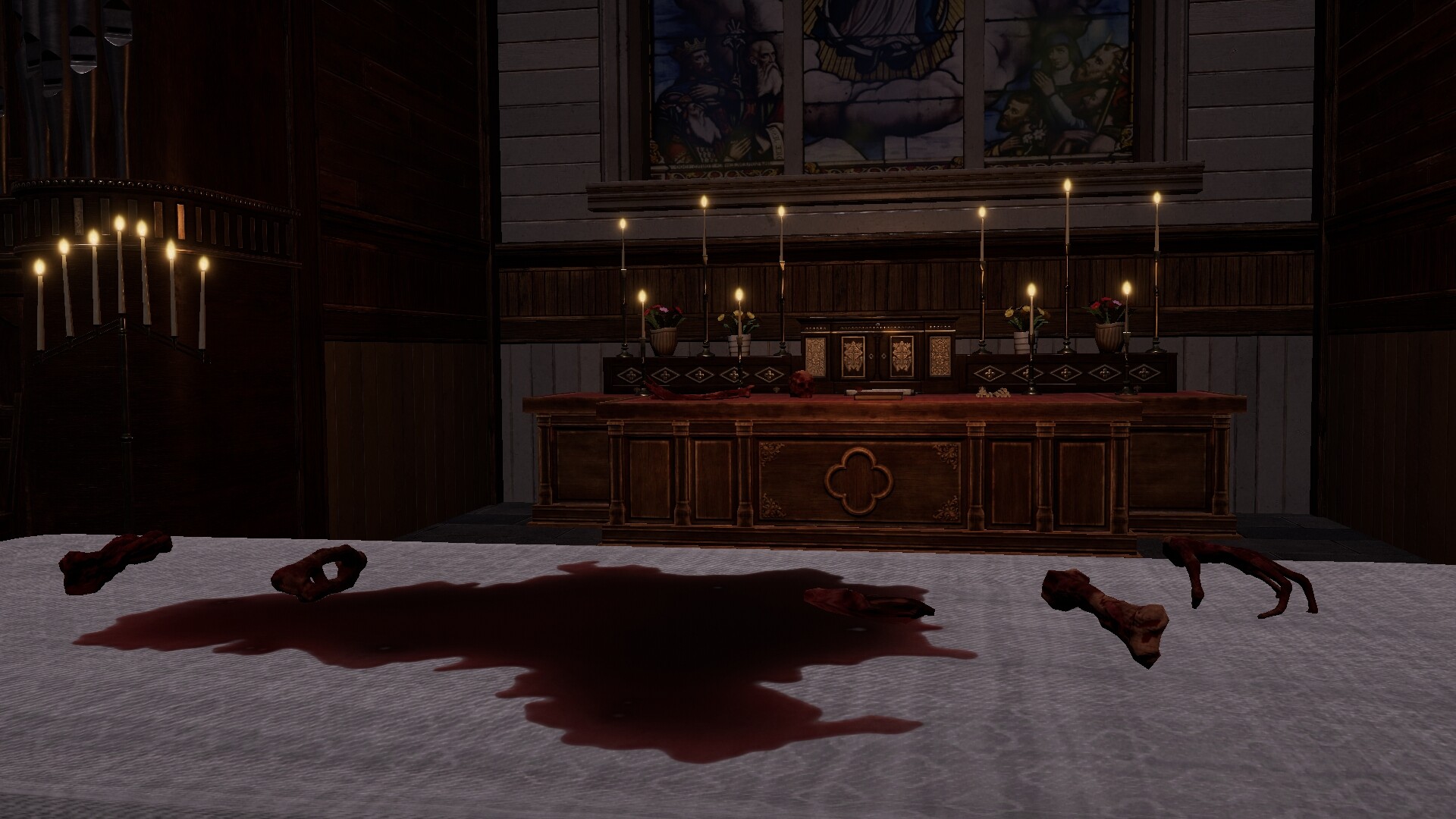
Trace of the Villa is a single-player narrative adventure about an investigator named Jin searching for his missing sister inside a remote mansion. The estate is “cut off from the grid and deliberately forgotten,” with rooms furnished but stripped of identity markers. According to the official description, restoring power is the central mechanical trigger: electricity brings systems back online, unlocks previously secured compartments, and yields fragments of encrypted documents and suspicious transfer records that form chained clues.

When and where — Steam specifics
Trace of the Villa released on Steam on 28 May, 2026. It’s published and developed by Steadyturtle Co., Ltd. The Steam page lists the game under Action, Adventure, Indie and marks it as single-player with accessibility options such as color alternatives, subtitle options, and playability without timed input.
Why the power-restoration loop matters
Restoring power as the main gating device reshapes the usual escape-room formula. Instead of isolated key-and-lock puzzles, Trace of the Villa layers systemic reactivation (lighting, secured systems, electronic locks) over environmental clues and documents. That design encourages players to think in chains: re-enable a circuit, access a terminal, decrypt a fragment, then use that fragment to reinterpret an earlier room. The result is investigation structured more like reconstructing evidence than simply solving an isolated puzzle.
How progression and clue-reading work
The official description outlines a clear progression pattern. Jin recovers manifests and hints; when power is returned, secured systems come back online and hidden compartments can be opened. Safes and encrypted documents yield fragments of a larger puzzle — falsified identities, suspicious transfer records, and movements that “lead nowhere.” Players are expected to collect those fragments and piece together a timeline of arrivals and departures to make sense of the mansion’s role in a larger operation.
Player scenarios — how different players will experience the loop
Scenario A: The methodical reader
Approaches each room as a dossier. Restores local power, exhausts the readable files and manifests, then cross-references transfer records. Best fit: players who enjoy slow-paced environmental storytelling and assembling a coherent timeline from partial records.
Scenario B: The systems-first solver
Targets breakers, generators, and terminals early to open new spaces quickly. Uses newly available devices to triangulate missing context. Best fit: players who like layered gating and the satisfaction of unlocking large swathes of content through a single mechanical breakthrough.
Scenario C: The atmospheric explorer
Moves slowly through lit and unlit rooms, treating furniture and staged living areas as character clues. The absence of photographs or names — noted in the official description — becomes a recurring mystery to interpret. Best fit: players who prioritize tone, mood, and implications over solving every technical puzzle immediately.
Compact comparisons — how Trace of the Villa sits among related games
| Title | Primary focus | Puzzle / interaction style | Tone / pacing | Player fit |
|---|---|---|---|---|
| The Room | Packed, tactile safe-and-box puzzles in a confined space (attic/iron safe motif) | Mechanical, object-based puzzles with intimate tactile detail | Mysterious, slow-burn | Players who like finely tuned, object-centric puzzles and isolated chamber mysteries |
| The Room Two | Continuation of tactile puzzle rooms in varied crypt-like environments | Object puzzles that expand into broader room interactions | Mysterious, exploratory | Those who enjoyed the first title’s methodical puzzle pacing and atmosphere |
| Escape Simulator | Highly interactive, physics-enabled escape rooms with community content | Moveable objects, breakable items, item combination; solo or co-op | Playful to tense depending on room, flexible pacing | Players who want hands-on object interaction, community-made rooms, or co-op escape experiences |
| Hi‑Fi RUSH | Action rhythm game with sync-to-music combat against a megacorp | Paced action and music-synced mechanics rather than investigative puzzles | Energetic, fast-paced | Players seeking arcade action and rhythm-driven combat, not puzzle-driven mystery |
Editorial note: the games above are invoked to clarify differences in puzzle focus, exploration style, and pacing. Trace of the Villa’s emphasis on power-as-key and document fragments aligns it more with methodical, story-driven mystery players than with pure object-puzzle or action-rhythm audiences.
Steam page
View Trace of the Villa on Steam
YouTube discovery
For trailer and gameplay discovery, use YouTube search rather than relying on unverified embeds: Find Trace of the Villa trailer and gameplay searches on YouTube.
Leave a Reply