
Trace of the Villa — an escape-room style mansion mystery built around power, doors, and evidence
Trace of the Villa (Steadyturtle Co., Ltd.) drops players into a cut-off, decaying mansion where Jin — searching for his missing sister — restores the estate’s systems and uncovers locked secrets. The game’s core loop revolves around bringing power back online to unlock spaces, reveal hidden compartments, and piece together financial and identity traces that suggest something larger at work.

Quick facts
| Title | Trace of the Villa |
|---|---|
| Steam AppID | 3483660 |
| Developer / Publisher | Steadyturtle Co., Ltd. |
| Release date | 28 May, 2026 |
| Genres | Action, Adventure, Indie |
| Key Steam categories | Single-player; Color Alternatives; Custom Volume Controls; Playable without Timed Input; Subtitle Options; Family Sharing |
| Official short premise | Jin has spent years searching for his missing sister, pursuing leads that took him to a remote, decaying mansion where he recovered manifests and hints that indicate his sister may still be alive, somewhere at the end of the trail he is about to follow. |
Who should wishlist Trace of the Villa?
This is for players who prize environmental storytelling and slow-burn suspense: those who enjoy methodical investigation rather than nonstop action. If you like following clue chains, reopening sealed rooms, and translating recovered documents into narrative beats, Trace of the Villa targets that puzzle-first, story-driven audience.
Player scenarios
- The methodical detective: You’ll appreciate restoring power, backtracking through newly lit corridors, and cataloguing fragments of encrypted files and transfer records as primary rewards.
- The environmental reader: Rooms frozen mid-routine — furnished but anonymized — invite close inspection. If you interpret props and layout as narrative evidence, the mansion’s staging will be satisfying.
- The narrative completionist: Jin’s personal stake (explicit in the official description) pushes the investigation beyond puzzles — you’re reconstructing a timeline as much as solving locks.
What the game is — the central loop and pacing
Trace of the Villa builds a gameplay loop around restoring the estate’s functionality. As Jin brings power back online, secured systems come back to life; locked doors and safes yield fragments of encrypted documents, suspicious transfer records, and manifests recovered during his initial search. These items form clue chains: one unlocked system reveals evidence that points to another sealed space, which in turn provides the next piece of the timeline.

That loop emphasizes exploration paced by access: power enables lights, lights reveal clues, clues open new areas. The result is a narrative puzzle design where solving a mechanical or logical challenge is also a step toward reconstructing what happened to the estate’s occupants.
Where and when — Steam availability
Trace of the Villa is available on Steam; the game released on 28 May, 2026. For players on PC, the Steam store page is the primary storefront and source for system details and media.
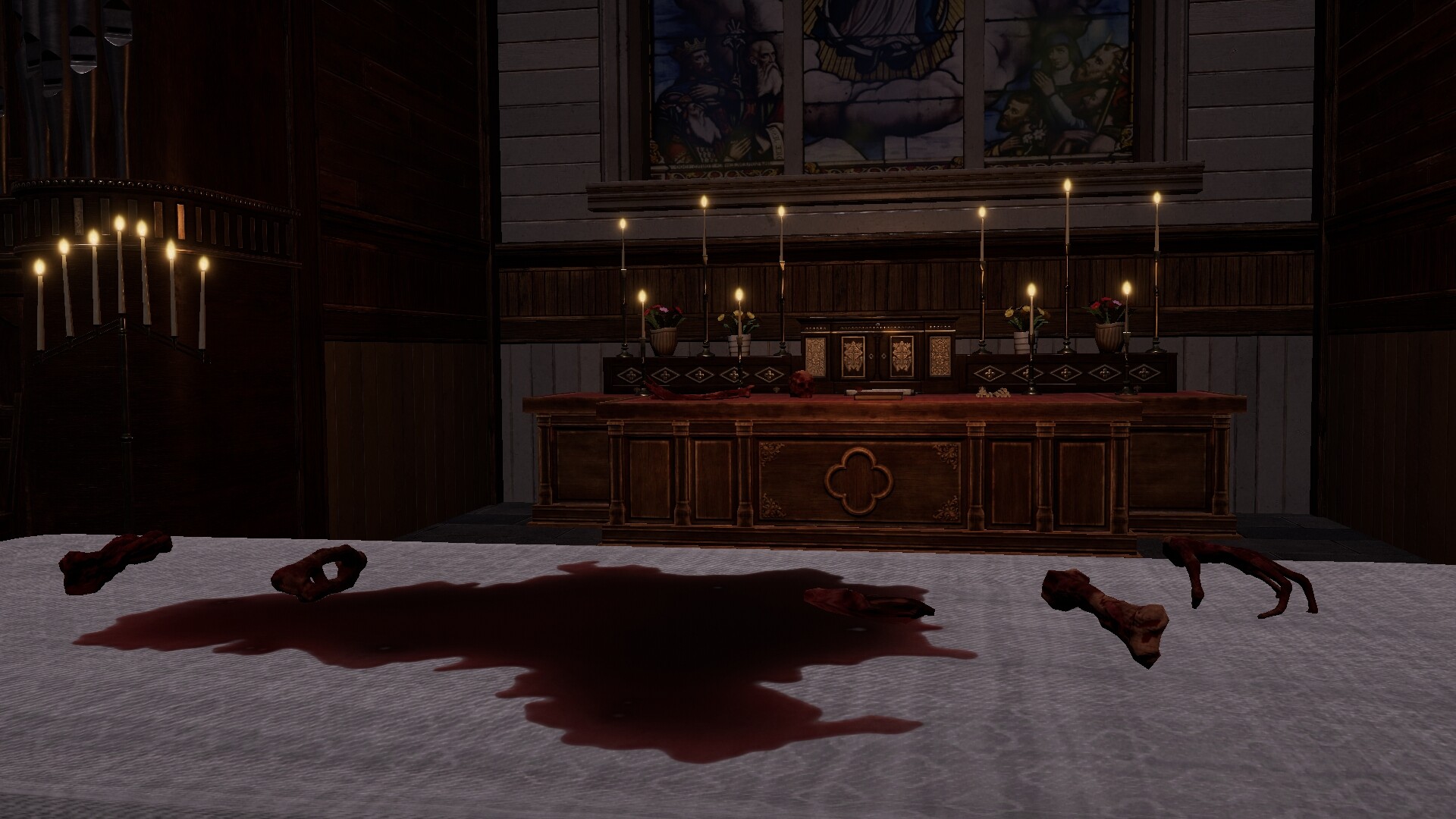
Why the mansion and the theme matter
The mansion’s state — deliberately cut off from the grid, with rooms staged as if occupants vanished mid-routine — turns architecture into a storyteller. Design choices that remove names and photographs create a psychological investigation: players must treat rooms as forensic scenes. That makes restoring infrastructure (power, systems) more than a convenience — it’s the mechanic by which hidden operations and falsified identities are exposed.
How you read clues and progress
Progress is anchored in tangible, layered discovery: physical puzzles and lockcraft lead to safes and secured terminals, which yield documents and transfer records. Those documents are the connective tissue between scenes — they point to new locations, verify timelines, or flag discrepancies. In practice, expect to alternate between tactile problem-solving (locks, switches, code puzzles) and cataloguing narrative fragments that reconstitute an obscured history.
How Trace of the Villa compares to nearby mystery and puzzle games
Below is a focused editorial comparison on structure, pacing, and player fit. These comparisons use genre and descriptive tone as criteria for players choosing between similarly styled experiences.
| Title | Genre / Focus | Atmosphere & Pacing | Puzzle Style | Play Mode |
|---|---|---|---|---|
| Trace of the Villa | Action / Adventure / Indie — clue-driven exploration | Slow-burn, investigative mansion mystery | Environmental puzzles, locked systems, document reconstruction | Single-player (Steam categories include Playable without Timed Input, Subtitle Options) |
| The Room | Adventure / Indie | Atmospheric, compact vignette-style puzzles | Mechanical, tactile safes and puzzle boxes | Single-player |
| The Room Two | Adventure / Indie | Expands the scale and variety of atmospheric locations | Elaborate mechanical puzzles and object-based solutions | Single-player |
| Escape Simulator | Adventure / Casual / Indie — highly interactive rooms | Fast to moderate pacing; player-directed room interaction | Inventory interaction, object manipulation, community rooms | Single-player & multiplayer (co-op) |
| Hi‑Fi RUSH | Action | Upbeat, rhythm-synced pace (not a narrative puzzle title) | Combat and rhythm-based mechanics rather than investigation | Single-player |
Editorial note: if you prefer tight, object-focused safes and box puzzles, The Room series is a close fit; if you want player-driven interaction and co-op options, Escape Simulator offers broader sandbox tooling. Trace of the Villa sits between these poles: it privileges layered narrative reconstruction and environmental reading over arcade action or pure mechanical puzzle loops.
Steam store & trailer discovery
Store page (Steam): View on Steam
Trailer / gameplay search: use this YouTube discovery path (search results may include trailers or community uploads; this is a search URL, not a certified official video):
Leave a Reply