
Trace of the Villa — an atmospheric, locked-room mystery built around power, access, and evidence
Trace of the Villa drops you into Jin’s long, quiet search for a missing sister inside a remote, decaying mansion where restoring power is the first key to discovery. The game’s loop centers on bringing systems back online, opening locked spaces, and assembling fragmented records until a pattern of falsified identities and concealed movements begins to emerge.

Quick facts
| Title | Trace of the Villa |
|---|---|
| Release date | 28 May, 2026 |
| Developer | Steadyturtle Co., Ltd. |
| Publisher | Steadyturtle Co., Ltd. |
| Steam appid | 3483660 |
| Genres | Action, Adventure, Indie |
| Notable Steam categories | Single-player; Color Alternatives; Custom Volume Controls; Playable without Timed Input; Subtitle Options; Family Sharing |
| Premise (official) | Jin has spent years searching for his missing sister, pursuing leads that took him to a remote, decaying mansion where he recovered manifests and hints that indicate his sister may still be alive, somewhere at the end of the trail he is about to follow. |
Who this is for
If you enjoy slow-burn suspense and environmental storytelling—where the house itself is the puzzle—Trace of the Villa will speak your language. It’s aimed at players who favour locked-room thinking and clue-chain puzzles over twitch reflexes (helpfully reflected by the Steam category “Playable without Timed Input”). The Action + Adventure genre tags signal there’s forward momentum, but the core satisfaction comes from observation, deduction, and methodical reconstruction.
What the game actually does (and where the core loop lives)
The official description frames progression as a technical and investigative sequence: when Jin restores power to the estate, secured systems reactivate, hidden compartments open, and safes yield fragments of encrypted documents and suspicious transfer records. That sequence—restore power → unlock systems → recover fragments → connect chains of evidence—is the game’s procedural heartbeat. Each solved lock or reactivated terminal unveils another layer of the mansion’s erased history, turning environmental reading into a primary means of storytelling.
When and where to find it
Trace of the Villa is available on Steam with a release date of 28 May, 2026. It’s published and developed by Steadyturtle Co., Ltd. and appears under Steam’s Action / Adventure / Indie tags and several accessibility/comfort categories suited for PC players.
Why the restoration loop matters
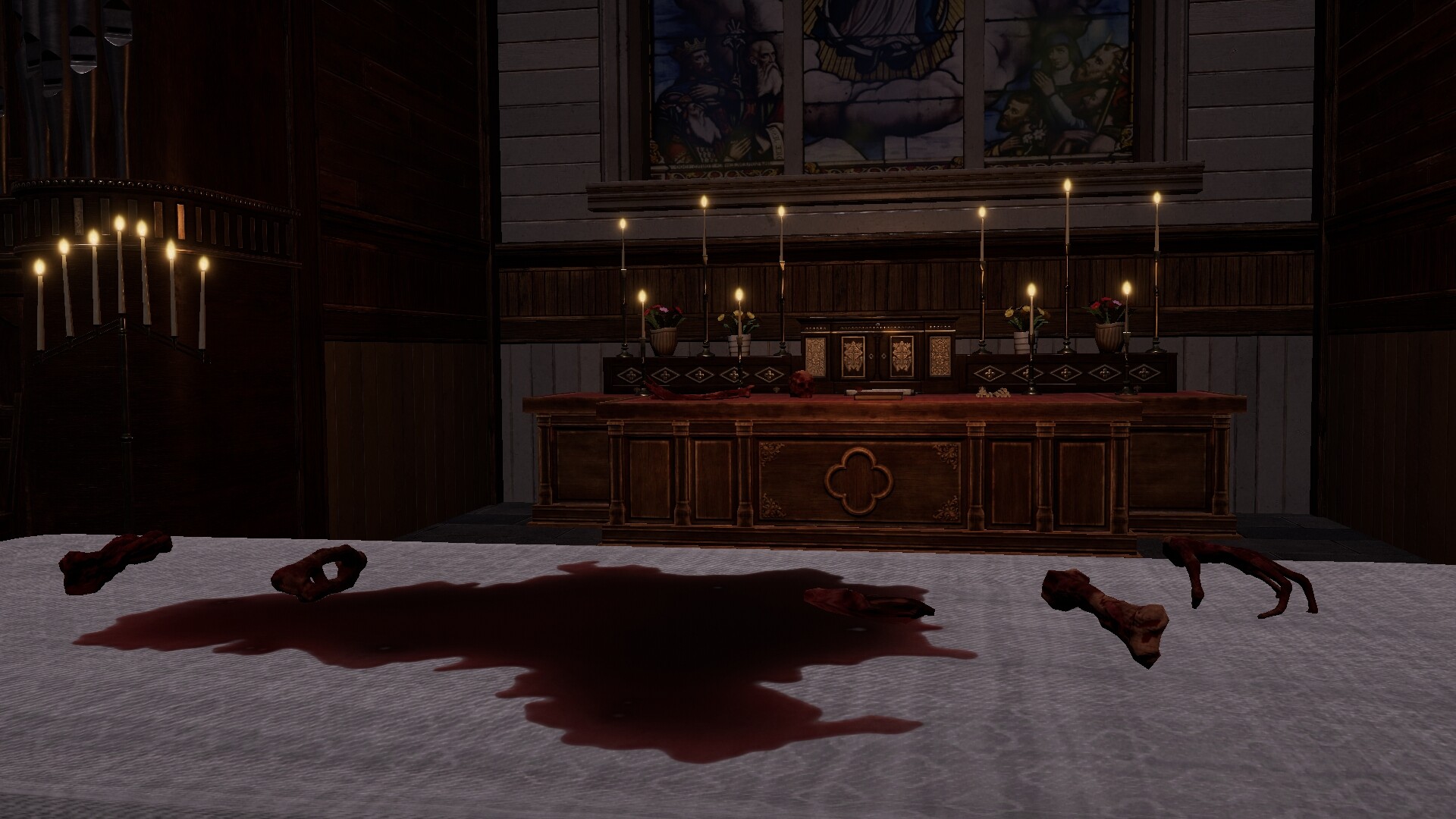
Using power restoration as a pacing device does more than gate progression: it restructures how players read the environment. Dark rooms conceal spatial relationships and minor props that become meaningful once lighting, alarms, or systems return. The game’s emphasis on secured systems and encrypted fragments also pushes the player toward forensic thinking—assembling a timeline of arrivals, departures, and falsified identities rather than relying on overt narrative beat-cues.
How you progress — reading clues, chaining evidence, unlocking spaces
Progression leans on three concrete activities, per the official text:
- Restoring power to the estate to reactivate secured systems and electronics.
- Searching unlocked rooms and compartments for manifests, transfer records, and encrypted fragments.
- Reconstructing those fragments into a timeline and pattern (arrivals without records, departures without witnesses) that explains what the mansion concealed.
That makes the game a puzzle of context: an object or file rarely exists in isolation—its meaning comes from linking it to other discoveries and to the estate’s regained systems.

Player scenarios — who should wishlist this
You like deliberate, forensic puzzle loops
Wishlist if you want a game where powering a breaker or reactivating a terminal materially changes what you can observe and how you can interrogate the environment.
You prefer environmental storytelling over explicit narration
If you enjoy drawing conclusions from props, manifests, and spatial relationships—rather than reading expository logs—this is aimed at your preferred pace.
You enjoy investigative arcs with rising revelations
Players who like to reconstruct timelines and piece together hidden operations—encrypted fragments, suspicious transfers, falsified identities—will get the most from the mansion’s layered reveals.
You want accessibility and options
Steam categories such as Color Alternatives, Custom Volume Controls, Subtitle Options, and “Playable without Timed Input” suggest a focus on player comfort and a slower puzzle tempo.
How Trace of the Villa compares to nearby mystery/puzzle games
Below is a focused editorial comparison on lawful criteria: genre, atmosphere, puzzle focus, exploration style, story tone, and pacing. This is discovery-based editorial context, not a claim of superiority.
| Game | Genre / Tone | Puzzle focus | Exploration style | Who it’s for (player preference) |
|---|---|---|---|---|
| The Room | Adventure / Indie — intimate, tactile mystery | Mechanical safes and single-room contraptions; object-based puzzles | Focused, room-by-room inspection | Players who love tactile, self-contained puzzle boxes and curious mechanisms |
| The Room Two | Adventure / Indie — broader, atmospheric puzzle progression | Multi-stage puzzle sequences with interlocking devices | Sequential environments with escalating complexity | Fans of sustained puzzle escalation and mood-driven locales |
| Escape Simulator | Adventure / Casual / Indie — interactive escape-room design | Highly interactive item use, physics, cooperative puzzles | Room scenarios built like escape-room modules (solo or co-op) | Players who want high interactivity and sandbox puzzle play, including co-op options |
| Hi‑Fi RUSH | Action — upbeat, rhythm-synced combat and pacing | Action and rhythm mechanics rather than environmental puzzles | High-energy, combat-forward levels | Players seeking action and musical pacing rather than slow investigative reading |
| Trace of the Villa | Action / Adventure / Indie — mansion mystery, slow-burn suspense | Clue chains, restoring systems, decrypted fragments, environmental forensics | Exploratory mansion with gated areas unlocked by restoring power and systems | Players who prioritise locked-room thinking, evidence reconstruction, and atmospheric reading |
Steam page
View Trace of the Villa on Steam
YouTube discovery
For trailer and gameplay discovery, use YouTube search rather than relying on unverified embeds: Find Trace of the Villa trailer and gameplay searches on YouTube.
Leave a Reply