
Trace of the Villa review primer: where locked-room reasoning meets forensic restoration
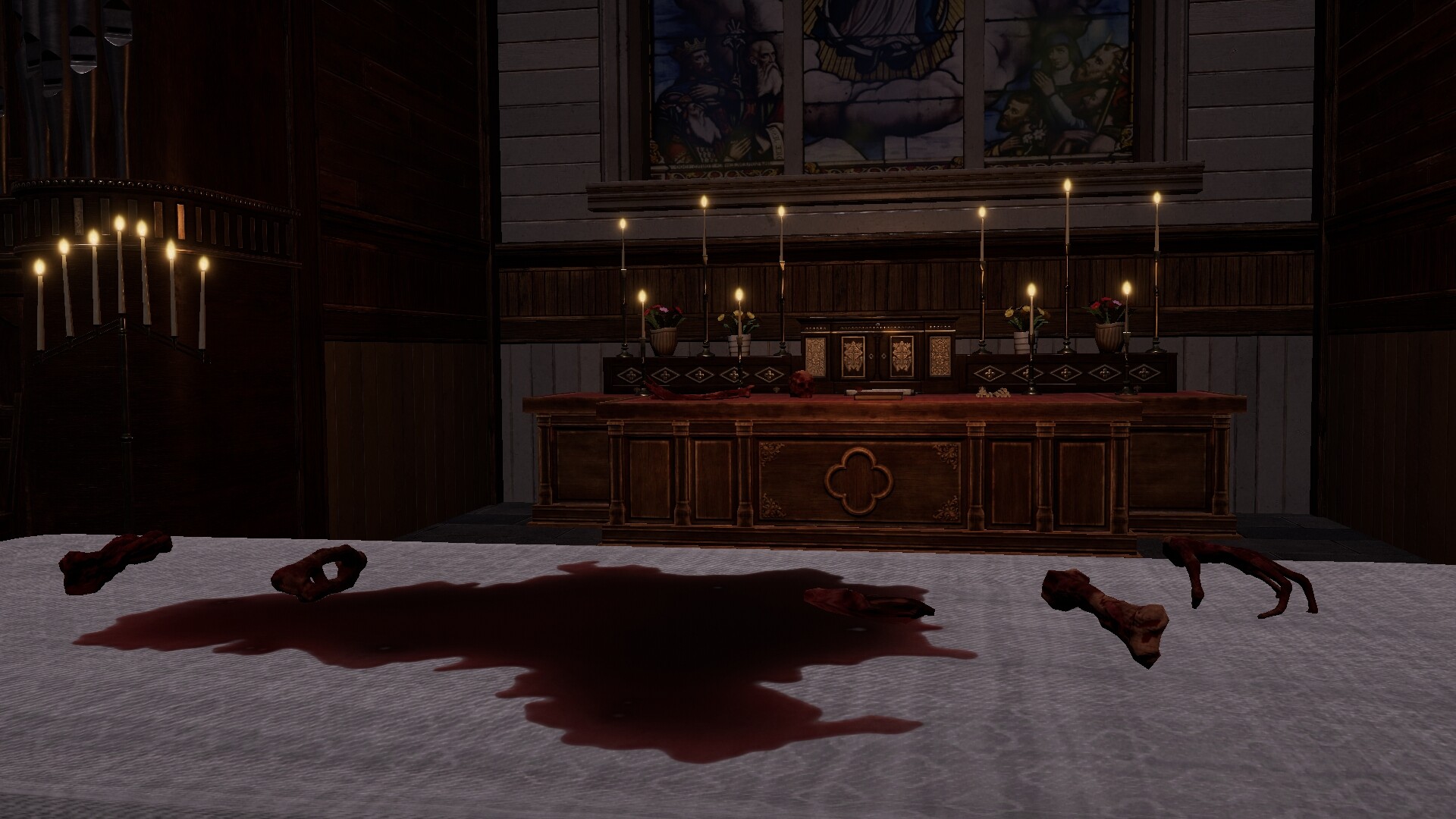
Trace of the Villa casts you as Jin, a lone investigator hunting for a missing sister inside a decaying, off-grid mansion. Restoring power, unlocking sealed spaces, and piecing together fragmented documents form a gameplay loop built around environmental reading and chained clues.

Quick facts
| Title | Trace of the Villa |
|---|---|
| Developer | Steadyturtle Co., Ltd. |
| Publisher | Steadyturtle Co., Ltd. |
| Release date | 28 May, 2026 |
| Steam appid | 3483660 |
| Genres | Action / Adventure / Indie |
| Categories | Single-player; Color Alternatives; Custom Volume Controls; Playable without Timed Input; Subtitle Options; Family Sharing |
What Trace of the Villa is — and what it is not
Official Steam materials describe Jin’s search leading him to “a decaying mansion…cut off from the grid” where rooms feel “less abandoned than erased.” The formal conceit is investigative: when Jin restores power to the estate, secured systems come back online, hidden compartments unlock, and safes yield fragments of encrypted documents and suspicious transfer records. That sequence — restore power → reveal systems → unlock new spaces → recover evidence — is the spine of the experience as presented.

Who should wishlist Trace of the Villa?
Consider adding this to your Steam wishlist if you prefer slow-burn, clue-driven exploration where environment and documents do the talking. Players who enjoy reconstruction of timelines, connecting financial or identity threads, and methodical unlocking of new areas by reactivating estate systems will find the stated loop appealing. The game’s Steam categories—single-player, subtitle options, and no requirement for timed input—also suggest accessibility for players who like to take notes and think without pressure.
When and where to buy / play
Trace of the Villa released on Steam on 28 May, 2026. It’s presented as an indie Action/Adventure on the Steam store page; the Steam appid is 3483660 for direct referencing.
Why the theme matters: erasure, control, and environmental testimony
The official description frames the mansion less as a home and more as an operation that deliberately obscured identities: “no photographs, no names, no history — as if identities themselves were removed.” That emphasis on erased records and falsified movements makes the core theme about reconstructing people from traces — manifests, transfer records, encrypted fragments — rather than pure jump-scare horror. If you value puzzles that double as forensic reconstruction, the premise promises that the environment itself is the primary witness.
How the gameplay loop uses locked-room thinking and clue chains
The promotional text lays out a clear mechanical rhythm: restoring power to the estate triggers secured systems to come back online; those systems then unlock compartments, safes, and devices that store fragments of evidence. Each recovered fragment becomes a link in a chain: a manifest hints at a transfer, a transfer suggests a false identity, a false identity points to a number or a key, a key opens a sealed space with more records. That is locked-room thinking applied to exploratory investigation — puzzles aren’t isolated setpieces but nodes in an evidentiary network that reconstructs a timeline and a hidden operation.
Mechanically, that means expect to alternate between environmental reading (examining rooms for out-of-place items), systems work (power, terminals, secured locks), and document work (assembling fragments to reveal next objectives). The Steam page emphasizes restored systems and encrypted documents as catalysts for progression, so players who enjoy chaining small deductions into larger revelations should be well served.
Player scenarios — who will enjoy specific beats
- If you’re a methodical puzzler: You’ll appreciate reading sparse rooms for narrative signposts and following clue chains that demand patience over reflexes — the Steam categories list “Playable without Timed Input.”
- If you prefer narrative forensics: The game centers on uncovering falsified identities and financial trails; players who like building a case from fragments are the intended audience.
- If you like broader interactivity or co-op puzzle sandboxes: This is presented as a single-player, story-led experience rather than a physics sandbox or community-level editor.
- If you want fast action or rhythm-driven combat: The Steam genre listing includes Action, but the official copy emphasizes investigation and environmental revelation rather than combat spectacle.
How Trace of the Villa compares to nearby mystery and puzzle titles
Below is a compact editorial comparison focusing on genre, atmosphere, puzzle focus, exploration, story tone, and pacing to help you decide fit rather than declare one superior.
| Game | Genre / Tone | Puzzle focus | Exploration style | Pacing / Player fit |
|---|---|---|---|---|
| Trace of the Villa | Action / Adventure / Indie — atmospheric mansion mystery | Evidence reconstruction, locked systems, chained clues | Single-player, rooms reveal new areas when systems restored | Slow-burn, forensic; suits players who like reading environment and documents |
| The Room | Adventure / Indie — tactile, single-location mystery | Mechanical safes and layered object puzzles | Focused, single-room-to-chamber progression | Very puzzle-centric; ideal for players who like tight, self-contained puzzles |
| The Room Two | Adventure / Indie — extended tactile puzzle atmosphere | Multi-stage mechanical puzzles with narrative framing | Series of connected environments with escalating complexity | For players who want a longer sequence of tactile puzzles and atmosphere |
| Escape Simulator | Adventure / Casual / Indie — interactive escape-room physics | Highly interactive object manipulation, community rooms | Room-based puzzles; sandbox interaction and co-op options | Best for players who want direct object interaction and multiplayer options |
| Hi-Fi RUSH | Action — music-synced combat and upbeat tone | Action-focused timing and rhythm mechanics rather than environmental puzzles | Linear action stages with a strong audiovisual identity | For players who prioritize rhythm and fast-paced combat over clue work |
| Football Manager 2022 | Simulation / Sports — management and long-term planning | Data-driven decision-making, no environmental puzzles | Abstract, UI-driven rather than spatial exploration | Appeals to strategists and planners, not puzzle explorers |
YouTube discovery
If you want to see footage or a trailer search on YouTube using this query URL (useful for trailer or gameplay clips; we do not assert an official channel video here): Search Trace of the Villa on YouTube.
Leave a Reply