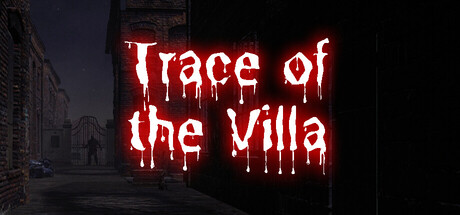
Trace of the Villa — How puzzles let the story speak without giving it away
Trace of the Villa drops you into a decaying mansion where the act of reading clues and manipulating objects gradually builds a case, not a spoiler. Developed and published by Steadyturtle Co., Ltd., the game uses environmental puzzles and recovered manifests to hand players evidence one fragment at a time.

Quick facts
| Title | Trace of the Villa |
|---|---|
| Release date | 28 May, 2026 |
| Developer / Publisher | Steadyturtle Co., Ltd. |
| Genres | Action, Adventure, Indie |
| Key Steam categories | Single-player; Color Alternatives; Custom Volume Controls; Playable without Timed Input; Subtitle Options; Family Sharing |
| Steam appid | 3483660 |
Who this is for
If you enjoy slow-burn mansion mysteries where inference matters more than jump scares, this is aimed at you. Players who favor environmental storytelling, clue-driven exploration, and puzzle solutions that reveal fragments of evidence will find Trace of the Villa aligned with those tastes. The Steam listing highlights accessibility touches (subtitles, color alternatives, no timed input) that make the experience approachable for methodical players.
What the game is — without spoilers
From the official short description: Jin has spent years searching for his missing sister and follows a lead to a remote, decaying mansion where manifests and hints imply she may still be alive. The plain description on Steam describes a property “deliberately forgotten” where restoring power and solving secured systems uncovers encrypted documents, safes, and fragments of transfer records. In other words, puzzles are the evidence chain: solve a lock, power a system, open a compartment — and you receive a new piece of the puzzle rather than a narrative summary.
When and where
Trace of the Villa is available on Steam; it released on 28 May, 2026. The Steam store page includes official images and screenshots that communicate the mansion’s atmosphere and interface conventions.

Why the theme matters
The game’s premise — a house that feels “erased,” rooms frozen mid-routine, and records that point to a hidden operation — makes the puzzle design central to storytelling. Instead of spoon-feeding exposition, Trace of the Villa uses manifests, safes, and secured systems as primary narrative devices. Each solved puzzle yields documentary fragments (financial trails, falsified identities, encrypted notes) that allow players to assemble a theory, preserving suspense while still advancing the plot.
How clue-reading and object logic shape the experience
Trace of the Villa emphasizes three puzzle pillars that control how narrative evidence is revealed:
- Clue reading: recovered manifests and hints act like courtroom exhibits — partial, context-dependent, and open to interpretation. The player’s job is to collect and cross-reference, not to be told what to believe.
- Object logic: interacting with furnishings and personal effects yields implied backstory. The Steam description notes rooms left “as if occupants vanished mid-routine” — that presentation turns mundane objects into forensic details.
- Secured systems and progression puzzles: restoring power and unlocking safes produces tangible evidence (encrypted documents, transfer records). These puzzle beats are discrete revelations rather than long expository monologues, so players build narrative understanding incrementally.
Because story beats are tied to puzzle resolution, the game lets you infer motive and timeline from evidence rather than being led to a single conclusion too early. That design keeps mysteries intact while rewarding careful attention.
Player scenarios — who should wishlist it
- For the methodical detective: If you like assembling timelines from fragments and enjoy careful cross-referencing of documents and objects, Trace of the Villa fits your workflow.
- For atmosphere-first players: If moody, decaying manors and slow-burn tension are your focus, the game’s environmental storytelling will deliver consistent tone without relying on loud shock moments.
- For accessibility-minded players: The Steam categories show subtitle options, color alternatives, and “playable without timed input” — those signals suggest the pacing is friendly to players who need or prefer a non-rushed experience.
- Not ideal if you want constant action or quick narrative payoff: the premise and puzzle-forward design reward patience and piecemeal evidence gathering.
Comparison: Trace of the Villa vs. nearby puzzle-adventure experiences
| Title | Core puzzle focus | Atmosphere / tone | Exploration style | Best for |
|---|---|---|---|---|
| Trace of the Villa | Clue-driven document recovery, locked systems, object logic | Decaying mansion, slow-burn investigative tension | Environmental forensics; progress through restoring systems and opening safes | Players who prefer evidence-first storytelling and methodical clue reading |
| The Room | Tactile, puzzle-box mechanisms built around safes and locks | Focused mystery with a tactile, intimate dread | Isolated, puzzle-chamber progression | Players who like intricate mechanical puzzles and close-up manipulation |
| Unpacking | Object-placement and contextual reading of possessions | Zen, domestic, quietly narrative | Room-by-room item discovery that reveals a life story | Players who enjoy object-based narrative inference without traditional puzzles |
| Escape Simulator | Highly interactive escape-room puzzles and physics interactions | Varied, playful to tense depending on room design | Room-scale puzzles with heavy object interaction and community-made content | Players who prefer tactile problem-solving and modular room variety (including co-op) |
How the design reveals evidence without spoiling
Trace of the Villa’s approach is editorial: it parcels out primary sources (manifests, transfer records, encrypted fragments) as discrete rewards for puzzle completion. That lets players form hypotheses that can be revised as new fragments arrive. Puzzle solutions typically unlock artifacts or systems rather than delivering full scenes of narrative exposition, which keeps major reveals shielded until enough evidence accumulates. The framing — a house that seems “erased” of names and photographs — encourages reading the environment as testimony rather than narrative summary.
YouTube discovery
If you want trailers or gameplay clips, search for Trace of the Villa trailers and gameplay on YouTube: https://www.youtube.com/results?search_query=Trace+of+the+Villa+trailer+gameplay. Use that search path to find publisher- or creator-posted videos; the store metadata does not assert a particular official video link.
Leave a Reply