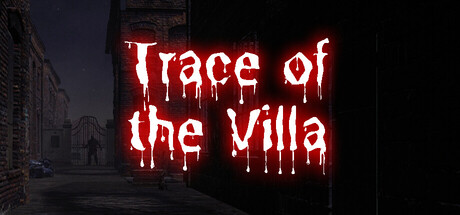
Trace of the Villa — how clue-reading, object logic, and story puzzles reveal evidence without spoiling the mystery
Trace of the Villa places you inside a decaying mansion where the act of solving puzzles is the primary way the plot hands you evidence. Its puzzle systems emphasize reading clues, assembling object logic, and unlocking narrative fragments so players can reconstruct events without being told the whole story at once.

What the game is
Trace of the Villa is a narrative-led puzzle adventure developed and published by Steadyturtle Co., Ltd. The Steam listing frames it as an atmospheric investigation: Jin, searching for his missing sister, discovers a remote, deliberately forgotten mansion and recovers manifests and hints suggesting she may still be alive.
| Title | Trace of the Villa |
|---|---|
| Developer / Publisher | Steadyturtle Co., Ltd. |
| Release date | 28 May, 2026 |
| Steam appid | 3483660 |
| Genres | Action · Adventure · Indie |
| Key Steam categories | Single-player · Color Alternatives · Custom Volume Controls · Playable without Timed Input · Subtitle Options · Family Sharing |
| Official short description | Jin has spent years searching for his missing sister, pursuing leads that took him to a remote, decaying mansion where he recovered manifests and hints that indicate his sister may still be alive, somewhere at the end of the trail he is about to follow. |
When and where you can play it
Trace of the Villa is available on Steam with a release date listed as 28 May, 2026. The Steam page lists PC-friendly accessibility and presentation options including subtitle options and custom volume controls; it is categorized as single-player and playable without timed input.
Why the mansion mystery matters here
The mansion setting in Trace of the Villa is used as an evidentiary space: rooms are preserved as if occupants vanished mid-routine, and the environment itself stores fragments of identity and operation that the player uncovers. That emphasis turns exploration into investigation — each object, journal entry, or locked system is a piece of story evidence rather than pure set dressing.
How puzzles reveal story evidence without spoiling plot beats
Based on the official description, the game structures discovery so that systems come back online and hidden compartments unlock as you restore power and solve puzzles. This design lets the game parcel out evidence: encrypted documents, manifests, and suspicious transfer records appear as isolated clues. Because those clues are revealed through player actions — decoding, finding keys, restoring systems — the pacing of story information is tied to what you can logically infer from objects, not a linear cutscene dump.


That delivery method — evidence appearing as a consequence of puzzle solutions — preserves surprise. Players control the rhythm of revelation: solve slowly and piece together motive and timeline from scattered fragments, or progress faster and assemble the picture sooner. Either way, the puzzles act as a sieve that filters what you learn and when.
Who this is for
Trace of the Villa will most appeal to PC players who prioritize atmospheric mystery adventure and clue-driven exploration over action spectacle. If you prefer environmental storytelling, methodical puzzle-solving, and psychological investigation where objects and documents supply narrative weight, this fits that taste. The presence of accessibility options like subtitles and no-timed-input support also makes it appropriate for players who value readable, patient puzzle design.
Player scenarios — how it plays for different tastes
Scenario: You like slow-burn mansion mysteries
Play at your own pace, examine rooms, restore power, and let the house yield its controlled revelations. The puzzle loop ties directly to narrative progress, so investigation feels purposeful.
Scenario: You enjoy object-centric puzzle logic
Expect puzzles that rely on reading manifests, using found items in systems, and decrypting fragments. The object logic will reward close inspection and note-taking rather than reflex or twitch skills.
Scenario: You want story without spoilers handed to you
Because evidence appears as a byproduct of solving puzzles — safes opening to reveal documents, systems coming back online to display logs — the game emphasizes inference. You assemble the narrative from clues, preserving the discovery experience without scripted exposition.
How it compares — short editorial comparison
To help decide whether to wishlist Trace of the Villa, here are lawful editorial comparisons focused on genre, atmosphere, puzzle focus, exploration style, story tone, and pacing.
| Title | Core puzzle style | Atmosphere / story tone | Player fit |
|---|---|---|---|
| Trace of the Villa | Environmental puzzles, object logic, document fragments unlocked by systems | Decaying mansion, investigative, slow-burn suspense | Players who want clue-driven exploration and piecemeal evidence |
| The Room | Mechanical puzzle boxes and tactile object puzzles | Mysterious, intimate puzzles with a focus on a single locked object | Players who enjoy concentrated, tactile puzzle-solving |
| Escape Simulator | Highly interactive room-scale escape puzzles, physics and object interactions | Playful to tense depending on room — focused on interaction depth | Players who like hands-on object manipulation and co-op or community content |
| Unpacking | Slow, observational object placement revealing life through possessions | Zen, domestic, narrative revealed by possessions rather than explicit plot | Players who enjoy quiet, personal storytelling via items and space |
These comparisons are editorial and intended to highlight how Trace of the Villa positions itself among other puzzle-driven experiences: it leans into environmental and document-based investigation more than single-object mechanical puzzling or block-fitting design.
Trailer and gameplay search
If you want to see how the game’s pacing and visual storytelling look in motion, search for trailers or gameplay on YouTube: Trace of the Villa — YouTube search. (Use the search as a discovery path; this link is not labeled as a verified official video.)
Deciding and wishlist call-to-action
If clue-reading, environmental storytelling, and piecemeal evidence appeal to you, Trace of the Villa (released 28 May, 2026) is worth adding to your Steam wishlist so you can follow community impressions and updates on the Steam page.
Legal and editorial notes
Referenced facts (title, release date, developer/publisher, genres, categories, and official short description) come from the game’s Steam page. Other titles mentioned are used for lawful editorial comparison on genre, atmosphere, puzzle focus, exploration style, story tone, and pacing only. Referenced titles and trademarks belong to their respective owners; comparisons are editorial discovery only.
Leave a Reply