Trace of the Villa: how clue-reading, object logic and story puzzles reveal evidence without spoiling the mystery
Trace of the Villa positions you as Jin, a searcher whose long hunt for a missing sister leads to a remote, decaying mansion where manifests, encrypted fragments and locked systems hint that she may still be alive. The release on Steam on 28 May, 2026 by Steadyturtle Co., Ltd. folds investigative puzzlework into environmental storytelling so each solved device becomes another piece of admissible evidence rather than a blunt plot reveal.

Who, what, when and where: the basics
| Title | Trace of the Villa |
|---|---|
| Steam App ID | 3483660 |
| Release date | 28 May, 2026 |
| Developer / Publisher | Steadyturtle Co., Ltd. |
| Genres | Action, Adventure, Indie |
| Categories | Single-player; Color Alternatives; Custom Volume Controls; Playable without Timed Input; Subtitle Options; Family Sharing |
| Short premise | Jin searches a decaying, off-grid mansion and recovers manifests and hints that indicate his missing sister may still be alive. |
Why the theme matters: investigative puzzles as story evidence
Trace of the Villa frames puzzles as investigative procedures. According to the official description, when Jin restores power the house “begins to reveal what it was hiding”: systems come online, hidden compartments unlock and safes yield fragments of encrypted documents and suspicious transfer records. Those are not just gatekeeping obstacles — they are discrete story evidence. The game’s pacing and room design steer discovery toward assembling a timeline and corroborating details rather than handing you a single narrative reveal.
How the puzzles communicate the story without spoiling plot beats
The game uses three complementary mechanics that let players infer context while protecting major beats:
- Clue reading. Manifests, transfer records and encrypted fragments are presented as artifacts. They convey partial data — dates, transaction notes, redacted lines — that invite hypothesis rather than answer everything at once.
- Object logic. Rooms are furnished as if occupants vanished mid-routine; interacting with objects (switching power, opening compartments, accessing safes) produces incremental revelations. Each unlocked object is evidence that refines player theories about who belonged here and why.
- Story puzzles. Encrypted documents and secured systems require deliberate, often multi-step solutions. Completing them restores more of the estate’s systems and yields fragments of context; the structure delays global exposition while rewarding methodical players.
Because evidence is dispersed and often incomplete, the game encourages interpretation. That design choice keeps the player’s sense of discovery intact: you accumulate corroborating details rather than being led to a single forced explanation.
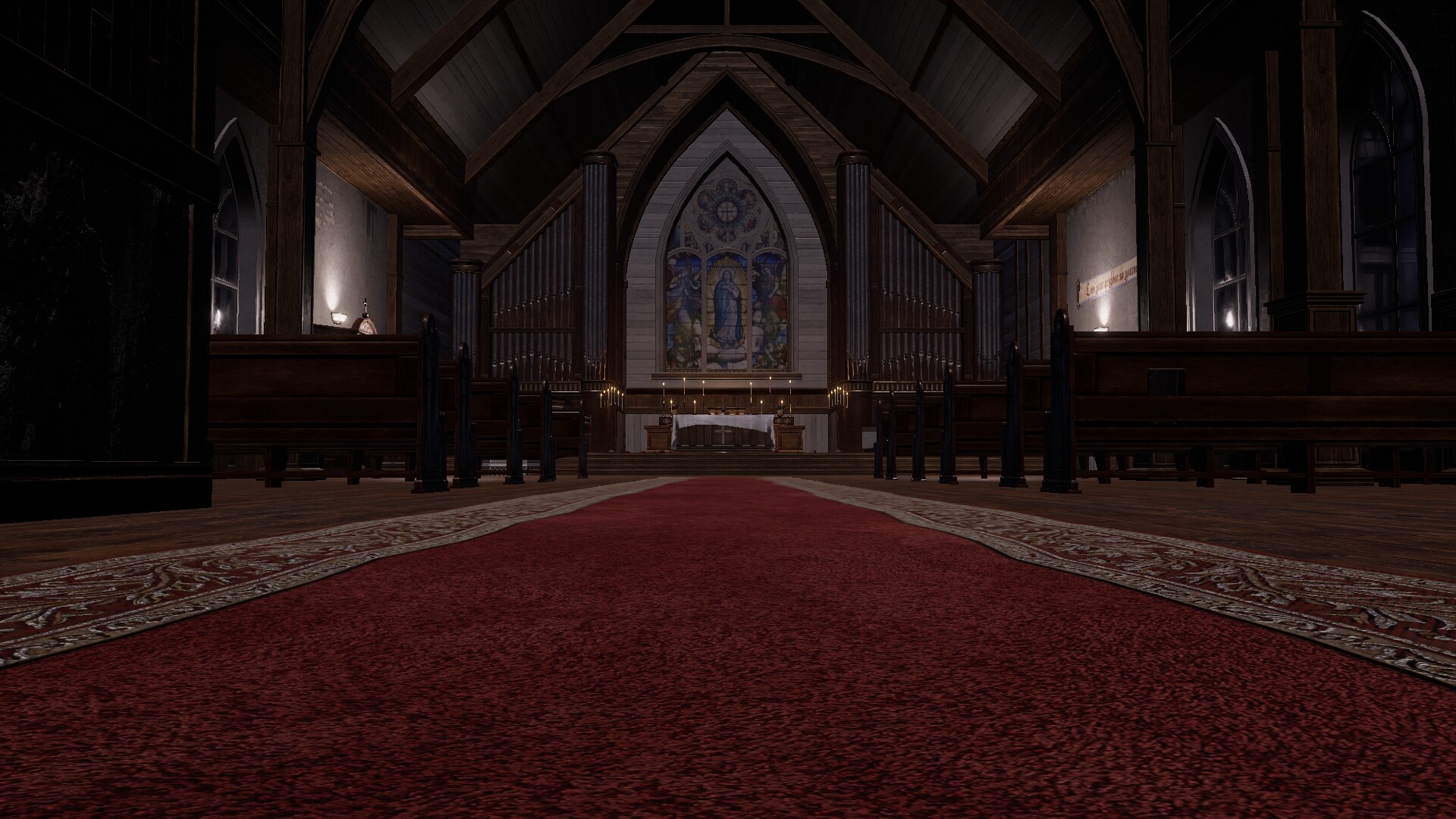
Screenshots: atmosphere and interface

Who should wishlist this on Steam
- Players who prefer slow-burn suspense and environmental storytelling over action spectacle. The mansion is described as “decaying” and “deliberately forgotten,” with identity erasures and redacted histories.
- Investigation-first players who enjoy reading fragments — manifests, transfer logs, encrypted documents — and forming theories from partial evidence.
- Puzzle players who like their solutions to meaningfully affect the world (power restoration, hidden compartments, safes) rather than just unlocking a new hallway.
- Those who value accessibility options: Trace of the Villa lists Color Alternatives, Custom Volume Controls, Subtitle Options and “Playable without Timed Input” among its categories.
How it compares: neighbouring puzzle-adventure experiences
Below is a focused editorial comparison that highlights genre, puzzle emphasis, atmosphere and the kind of player who will likely enjoy each title. Comparisons are editorial discovery only.
| Title | Genre / Focus | Puzzle style | Atmosphere & exploration | Player fit |
|---|---|---|---|---|
| Trace of the Villa | Action / Adventure / Indie — mansion investigation on Steam | Object logic, document fragments, secured systems (power, safes, hidden compartments) | Decaying, off-grid mansion; identity erasures and redacted histories; slow-burn reveal | Players who like environmental storytelling and assembling evidence from partial artifacts |
| The Room | Adventure / Indie | Mechanical, tactile puzzle boxes and safes; tactile object manipulation | Mysterious, focused set-piece rooms with an intimate, occult tone | Players who enjoy single-room mechanical puzzles and tactile problem-solving |
| Escape Simulator | Adventure / Casual / Indie — high interactivity | Highly interactive escape-room puzzles; physics and item interaction | Bright, highly manipulable rooms; puzzle-focused with community-made levels | Players who prefer sandbox interaction, co-op options and physics-based solutions |
| Unpacking | Casual / Indie — observation & placement | Non-traditional puzzle: object placement and inference about a life | Zen, domestic scenes that reveal biography through belongings | Players who like gentle, narrative puzzles that reveal a character’s life via objects |
Specific player scenarios
- If you enjoy evidence-first mysteries: You’ll appreciate Trace of the Villa’s manifests and transfer records as incremental proof rather than expository dumps.
- If you like tactile, mechanical puzzles: Expect safes and secured systems that require steps to bring the estate back online, similar in satisfaction to mechanical puzzle loops but embedded in a larger detective arc.
- If you prefer rapid narrative closure: This may feel deliberately paced — the design privileges layered discovery and corroboration over immediate answers.
YouTube discovery
If you want to watch trailers or gameplay impressions, use the Steam/Youtube search path: search Trace of the Villa trailer & gameplay on YouTube. This is a YouTube search route for discovery; specific videos should be checked for official verification.
View Trace of the Villa on Steam
Referenced titles and trademarks belong to their respective owners. Comparisons here are editorial discovery only and not endorsements.
Leave a Reply