
Trace of the Villa: why silence, environmental dread and unsettling rooms do the heavy lifting in psychological horror
Trace of the Villa places you in a remote, decaying mansion as Jin, a man following leads that might finally point to his missing sister. Rather than leaning on jump scares, the Steam page and official description emphasize emptied rooms, erased identities, and a slow recovery of power, safes and documents that build an atmosphere of quiet dread.

Quick facts
| Title | Trace of the Villa |
|---|---|
| Release date | 28 May, 2026 |
| Developer | Steadyturtle Co., Ltd. |
| Publisher | Steadyturtle Co., Ltd. |
| Genres | Action, Adventure, Indie |
| Steam categories | Single-player; Color Alternatives; Custom Volume Controls; Playable without Timed Input; Subtitle Options; Family Sharing |
| Steam app | 3483660 |
| Steam storefront | No user reviews on Steam at time of writing |
Who, what, when, where, why, and how
Who is this for?
Players who prefer slow-burn suspense to non-stop shocks: those who value atmospheric mystery adventure, narrative puzzle design and environmental storytelling over loud set-piece scares. If you enjoy clue-driven exploration—searching rooms for manifests, encrypted fragments and hidden compartments—Trace of the Villa aligns with that taste.
What is the game?
Trace of the Villa is a story-rich adventure about Jin investigating a remote, deliberately forgotten mansion. The official description highlights furnished rooms frozen in mid-routine, missing personal identifiers, locked doors and systems that reveal more when power is restored. The investigation unearths encrypted documents, suspicious transfer records and hints that the protagonist’s sister may still be alive.
When and where can you play?
The game released on Steam on 28 May, 2026. It is presented on Steam with standard PC storefront assets and supports single-player play with subtitle options and accessibility-related categories like custom volume controls and non-timed input.
Why do quiet tension and uncertainty matter here?
Trace of the Villa’s central mechanic—restoring power, unlocking safes and uncovering administrative traces—turns environment into narrator. Silence and the absence of identity (no photographs, names or clear ownership) make players fill in gaps with suspicion. That uncertainty does more psychological work than a sudden scream: it keeps you alert, magnifies small anomalies and makes ordinary details feel threatening. Environmental dread is cumulative; each discovered ledger or humming server adds to a sense of a larger, controlled operation.
How you read clues and progress
The Steam description explicitly notes systems coming back online, hidden compartments unlocking, safes yielding fragments and puzzle-driven reveals. Progress is built around exploration and investigation rather than timed reflexes—categories list the game as playable without timed input—so expect methodical searching, document analysis and puzzle work that pieces together a timeline. The mansion itself is the primary puzzle: room layout, preserved routines and removed identities are the narrative hooks you interrogate.
Screenshots: environment and room design
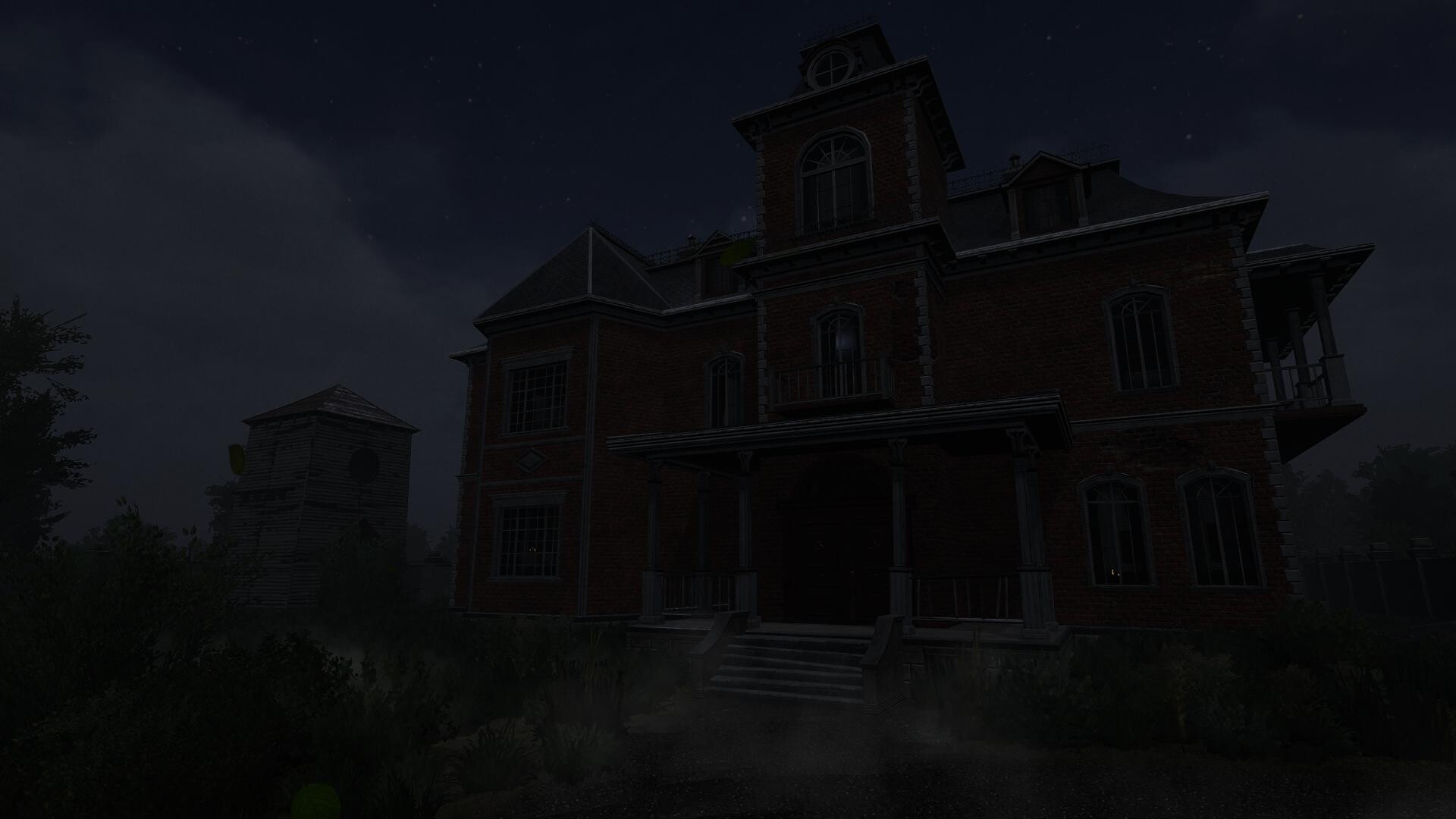

Player scenarios — who should wishlist this?
- Slow-explorers: You like to search every shelf, read documents and reconstruct timelines from fragments. The game’s emphasis on manifests and encrypted records is built for you.
- Environmental-storytelling fans: If you appreciate room composition, props-as-clues and a house that feels like an archive of erasure, the mansion’s design will reward patient observation.
- Investigation-first players: You prefer puzzles tied to narrative evidence over combat or chase sequences; the categories show playable without timed input and subtitle options to support focused reading and analysis.
- Those who avoid constant jump scares: The Steam description leans into silence and suffocating absence—this is tension through atmosphere rather than repeated shocks.
How Trace of the Villa compares to nearby titles
Below is a compact editorial comparison on lawful criteria: genre, atmosphere, puzzle focus, exploration style, story tone and pacing. These comparisons are descriptive, not endorsements.
| Title | Release | Core vibe | Puzzle / Investigation | Exploration style | Pacing |
|---|---|---|---|---|---|
| Trace of the Villa | 28 May, 2026 | Decaying mansion, environmental dread, erased identities | Document fragments, safes, restored systems; clue-driven | Room-by-room, archival search | Slow-burn, methodical |
| Amnesia: The Dark Descent | 8 Sep, 2010 | Immersive first-person survival horror | Environmental puzzles with sanity and survival stakes | Open-feeling castle exploration | Slow to tense, survival pressures |
| SOMA | 21 Sep, 2015 | Sci‑fi underwater horror, existential questioning | Puzzles mixed with narrative discovery and audio logs | Corridor and facility exploration with scripted reveals | Measured, narrative-driven |
| Layers of Fear (2016) | 15 Feb, 2016 | Victorian mansion, psychological storytelling | Atmospheric puzzles tied to the protagonist’s psyche | Shifting rooms that reflect the story | Psychological, often surreal pacing |
| Poppy Playtime | 12 Oct, 2021 | Abandoned toy factory, tense encounters with threats | Tool-based puzzles (GrabPack) with hazard avoidance | Puzzle-rooms inside a larger facility | More action-adjacent, tense set-pieces |
Deciding whether to wishlist
Wishlist Trace of the Villa if you want a Steam indie horror that trades loud scares for sustained unease, focused on environmental storytelling, document-driven puzzles and slow revelation. If you prefer survival mechanics, frequent chase sequences, or high-intensity action, the game’s emphasis on investigation and atmosphere may not match that appetite.
YouTube discovery
For trailers and gameplay clips, search YouTube: Trace of the Villa trailer & gameplay on YouTube. This link is a discovery path; individual videos should be checked for official confirmation.
View Trace of the Villa on Steam
Disclaimer: referenced titles and trademarks belong to their respective owners. Comparisons are editorial discovery only.
Leave a Reply