
Trace of the Villa — an escape-room style mystery built around power, locks, and piecing together evidence
Trace of the Villa drops you into a decaying, off-the-grid mansion where Jin follows a trail of manifests and hints that his missing sister may still be alive. The game’s progression is deliberately puzzle-forward: restore power, bring systems back online, unlock sealed rooms and safes, and reconstruct a timeline from fragments of encrypted documents and suspicious transfer records.

Quick facts
| Title | Trace of the Villa |
|---|---|
| Steam App ID | 3483660 |
| Release date | 28 May, 2026 |
| Developer / Publisher | Steadyturtle Co., Ltd. |
| Genres | Action, Adventure, Indie |
| Key Steam categories | Single-player; Color Alternatives; Custom Volume Controls; Playable without Timed Input; Subtitle Options; Family Sharing |
Who should wishlist or buy this
Players who prefer slow-burn suspense and story-rich adventure built around environmental storytelling and puzzle-driven exploration will be most at home. If you enjoy methodical, clue-chain puzzles where each unlocked circuit or opened safe reveals another layer of narrative — rather than frenetic combat or timed reflex tests — Trace of the Villa targets that player fit.
What the game is — tone, premise, and structure
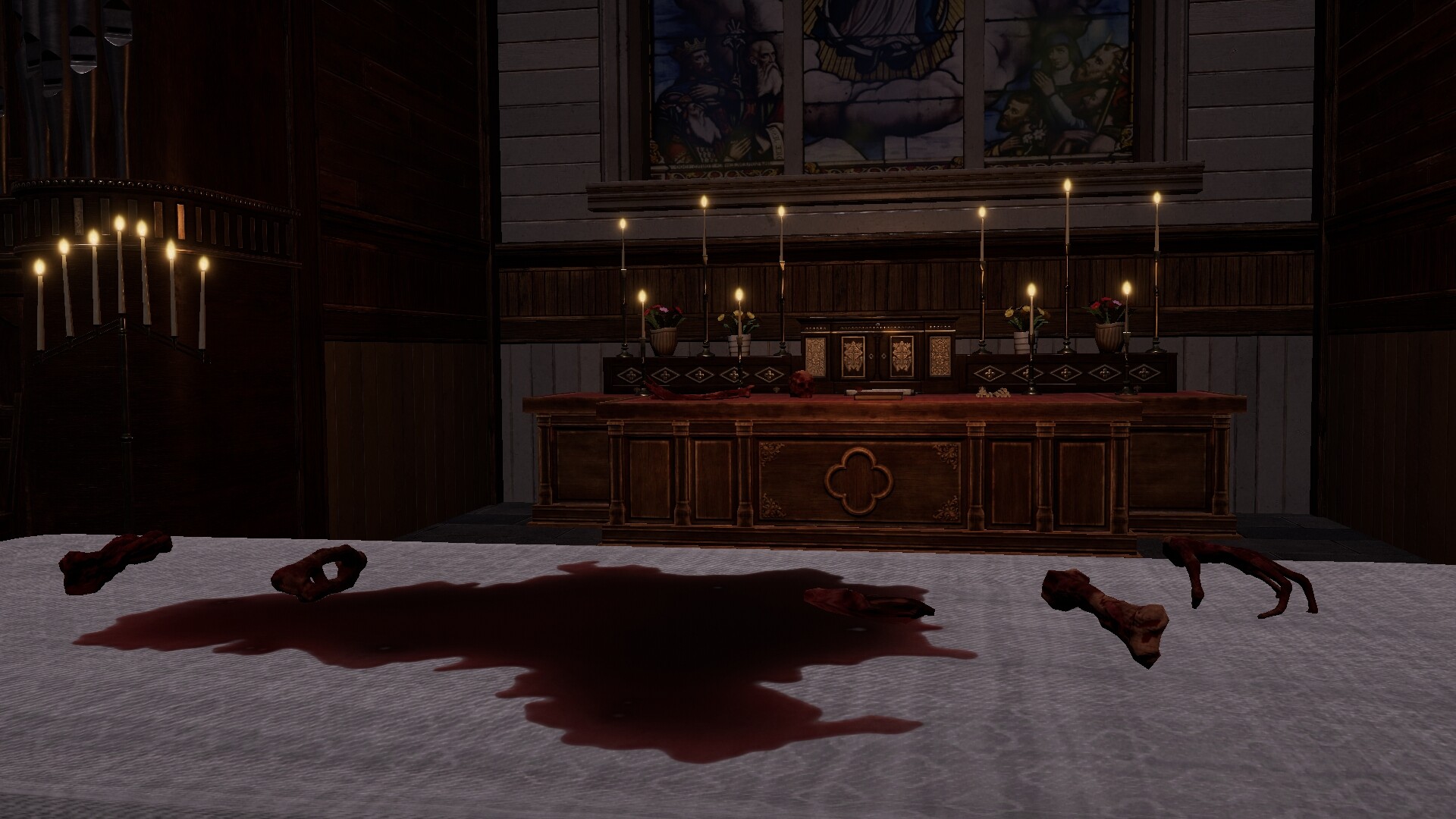
Officially, Trace of the Villa follows Jin, who has spent years searching for his missing sister and arrives at a remote, deliberately forgotten mansion. The estate is cut off from the grid and appears erased: furnished rooms with no names or photographs, locked doors that hide hurriedly secured secrets, and traces of an operation rather than a household. The game emphasizes reconstructing evidence: when Jin restores power to the estate, secured systems and hidden compartments begin to reveal encrypted documents, transfer records, and falsified identities.

When and where: Steam context
Trace of the Villa released on 28 May, 2026 on Steam. It’s presented as a PC indie adventure with accessibility options such as subtitle support, color alternatives, and custom volume controls, and it’s listed as single-player and playable without timed input — useful signals for players who want a contemplative, puzzle-led pace.
Why the power/lock/evidence loop matters
The central loop — restore power, unlock spaces, reconstruct evidence — reframes standard escape-room mechanics into a layered investigation. Restoring electricity is not just a gating mechanic; it’s the narrative trigger that makes the house talk. Secured systems powering up can change the environment, reveal new inspection targets, and let you cross-reference documents or transaction records. That chain is effective for players who enjoy piecing together a timeline from discrete, interlocking clues rather than relying on a single master puzzle.
How you read clues and progress
- Environmental reading: rooms feel “erased” rather than abandoned, so visual detail and object placement are the first clues to motive and timeline.
- Systems as puzzles: restoring power brings locked systems back online, which can reveal encrypted fragments and new interactions — a multi-stage unlock rather than a one-shot key problem.
- Clue chains: safes and revealed documents point to financial trails, falsified identities, and arrivals/departures that lack records — each discovery suggests follow-up locations and targets within the mansion.
- Evidence reconstruction: rather than a single solution, progress depends on collecting fragments (manifests, transfer records, encrypted notes) and assembling them into a probable sequence of events.
Player scenarios
The methodical detective
Spends hours scanning rooms, cross-checking manifests against safes and systems that came back online. Values subtitle support and the lack of timed inputs to take deliberate notes and map out the estate’s hidden logistics.
The environmental reader
Focuses on visual storytelling—empty photographs, missing names, and staged rooms. Restoring power is satisfying because it animates the environment and rewards careful observation with new surfaces to investigate.
The escape-room enthusiast who likes narrative
Enjoys chained locks and multi-step puzzles where flipping a breaker is half the solution. Prefers games where unlocking a door changes more than scenery — it creates new investigative vectors and adds to a slowly clarifying story.
How Trace of the Villa compares to nearby mystery/puzzle games
Below is a compact editorial comparison focused on genre, atmosphere, puzzle focus, exploration style, story tone, pacing, and likely player fit. These comparisons are meant to help readers decide whether Trace of the Villa’s blend of environmental mystery and evidence reconstruction matches their tastes.
| Title | Genre / Atmosphere | Puzzle focus | Exploration style | Story tone & pacing | Best for |
|---|---|---|---|---|---|
| Trace of the Villa | Action / Adventure / Indie — atmospheric mansion mystery | Clue chains triggered by restoring power and unlocking systems; evidence reconstruction | Single-player, methodical room-by-room investigation; systems reactivated over time | Slow-burn, investigative, tense; reveals via documents and systems coming online | Players who want narrative puzzles tied to environmental systems and forensics |
| The Room | Adventure / Indie — claustrophobic, object-focused mystery | Mechanical and tactile puzzle boxes with intricate internal mechanisms | Focused, single-chamber exploration of puzzle devices | Mysterious and compact; puzzle-driven reveals with a consistent, tactile pace | Players who love intricate object puzzles and tactile problem solving |
| The Room Two | Adventure / Indie — expands the same tactile, puzzle-box approach | Multi-stage mechanical puzzles and interlocking devices | Several interconnected scenes with focused device puzzles | Procedural escalation of mystery; measured pacing | Those who enjoyed The Room and want larger-scale puzzle sequences |
| Escape Simulator | Adventure / Casual / Indie — interactive escape rooms | Highly interactive object puzzles; community-created rooms broaden variety | Room-based with physical manipulation; supports co-op and editor | Varied pacing depending on community maps; often playful and mechanical | Players who favor hands-on manipulation and cooperative escape-room play |
| Hi‑Fi RUSH | Action — rhythm-driven combat and set-piece encounters | Combat and rhythm timing rather than environmental puzzles | Linear, action-focused levels | Fast-paced, upbeat, high-energy | Players seeking action and rhythm mechanics, not puzzle investigation |
YouTube discovery
If you want to see trailer or gameplay clips, search YouTube: Trace of the Villa trailer & gameplay (YouTube search). This link is provided as a discovery path and does not assert any single official video.
Decision checklist — is this for you?
- If you prize environmental storytelling and building a timeline from fragments rather than fast action, this fits your tastes.
- If you dislike timed inputs and prefer to explore at your own pace, the Steam listing
Steam page
Leave a Reply