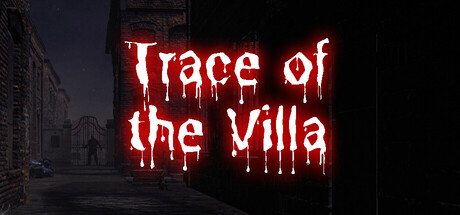
Trace of the Villa and the Power of Quiet Dread
Trace of the Villa is a slow-burning, story-rich adventure that trades jump scares for the mounting unease of a decaying, deliberately forgotten mansion. Its tension comes from silence, empty rooms and the sense that every recovered document or restored circuit nudges you closer to something that wants to stay buried.

Quick facts
| Title | Trace of the Villa |
|---|---|
| Developer / Publisher | Steadyturtle Co., Ltd. |
| Release date (Steam) | 28 May, 2026 |
| Genres | Action, Adventure, Indie |
| Key Steam categories | Single-player; Color Alternatives; Custom Volume Controls; Playable without Timed Input; Subtitle Options; Family Sharing |
| Steam App ID | 3483660 |
Who it’s for
If you prefer environmental storytelling and slow-burn suspense over spectacle, Trace of the Villa is aimed at you. Players who enjoy clue-driven exploration, assembling timelines from documents and systems, and probing a mystery room-by-room—rather than twitchy combat or scripted jump-scare hits—will find its pacing and tone appealing. The presence of subtitle options, custom volume controls and “playable without timed input” also suggests it’s accessible to players who like to read and think through problems at their own pace.
What the game is
Trace of the Villa follows Jin, who has spent years searching for his missing sister. A lead brings him to a remote, decaying mansion cut off from the grid where manifests and other hints suggest his sister may still be alive somewhere along the trail he’s about to follow. The house is furnished as if people vanished mid-routine; identities and recent records are missing. Restoring power and systems reveals locked compartments, safes and fragments of encrypted documents—each puzzle nudging the narrative forward and exposing a pattern of arrivals without records, departures without witnesses, falsified identities and suspicious transfer records.


When and where
Trace of the Villa launched on Steam on 28 May, 2026. The Steam page lists Steadyturtle Co., Ltd. as both developer and publisher and classifies the title under Action, Adventure, Indie with single-player and several accessibility and control-friendly categories.
Why quiet tension and spatial design matter
Psychological horror that relies on environmental dread earns its scares by placing the player inside a system of unknowns: a room with a single light bulb, a locked drawer with a ledger, an audio playback that loops undercutting silence. Trace of the Villa’s premise—missing identities, falsified records and systems that click back to life when power returns—makes environmental storytelling the core mechanic. The game’s tension is cumulative: each undisturbed personal item or blank roster amplifies uncertainty. That creates a sustained dread that is often more memorable than acute shock because it lets your imagination do the heavy lifting between clues.
How you progress
The Steam description frames progress as investigative: restore power, unlock secured systems, solve puzzles, and piece together encrypted documents and suspicious transfer records. Clue-driven exploration and puzzle solving appear to be the engines for narrative advancement—each discovery opens a new layer of hidden operations and financial trails that point to a larger, concealed system. The presence of subtitle options and “playable without timed input” indicates a pacing-friendly design for thoughtful players rather than reflex-based sequences.
Player scenarios — should you wishlist it?
- If you like slow-burning mystery: Wishlist if you enjoy tracing timelines from paper and systems, and letting atmosphere and small details create dread.
- If you prefer action-first horror: Consider your tolerance for investigative pacing—this is built around exploration and narrative puzzles rather than constant combat.
- If accessibility matters: Wishlist if subtitle support, custom volume and the option to avoid timed inputs are important to your playstyle.
- If you want a mansion mystery with puzzle focus: Wishlist for the combination of environmental storytelling and document-led revelations that map a broader operation beyond a single household.
How it compares
Below is a concise, editorial comparison focused on atmosphere, pacing, puzzle focus and player fit. These comparisons are meant as discovery, not endorsement.
| Title | Release | Core focus | Atmosphere & pacing | Player fit |
|---|---|---|---|---|
| Amnesia: The Dark Descent | 8 Sep, 2010 | First-person survival horror; immersion and dread | Immediate dread with resource and sanity mechanics; claustrophobic | Players seeking immersive fear mechanics and high tension |
| SOMA | 21 Sep, 2015 | Sci‑fi horror with philosophical narrative | Slow, contemplative dread driven by setting and story | Players who want existential themes with exploration |
| Layers of Fear (2016) | 15 Feb, 2016 | Psychological horror focused on a shifting mansion and story | Atmospheric, surreal, art-house pacing | Players who enjoy narrative ambiguity and evolving environments |
| Poppy Playtime | 12 Oct, 2021 | Horror/puzzle adventure in an abandoned factory | Puzzle-driven with more overt creature encounters and set pieces | Players who like puzzle tools with moments of confrontation |
YouTube discovery
For trailers and gameplay searches related to Trace of the Villa, try this YouTube discovery link (use as a search path): Search Trace of the Villa on YouTube. This is provided as a discovery tool; it does not guarantee an official video.
Recommended reading list for players
- Players who want sustained tension — prioritize environmental and document-based mystery titles like Layers of Fear or SOMA.
- Players who prefer mechanic-driven fear — titles like Amnesia may be a closer match.
- Players who enjoy puzzle elements with occasional encounters — Poppy Playtime offers a different balance with set-piece moments.
View Trace of the Villa on Steam
Disclaimer: Referenced titles and trademarks belong to their respective owners. Comparisons are editorial discovery only and not endorsements.
Leave a Reply